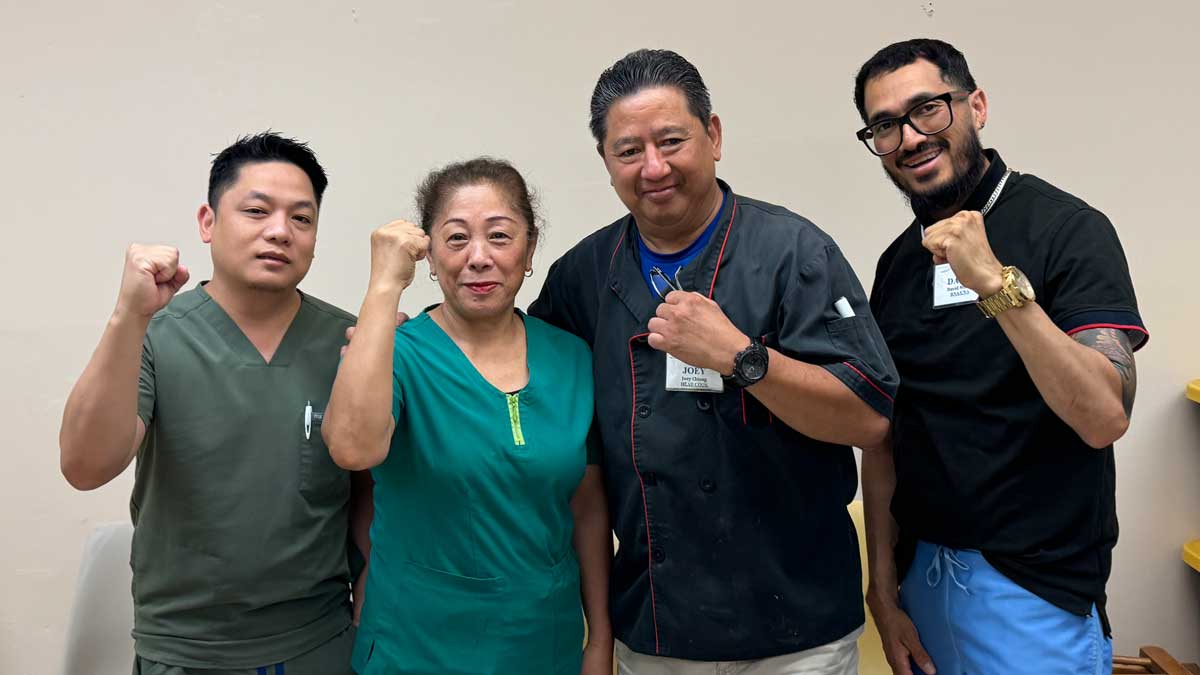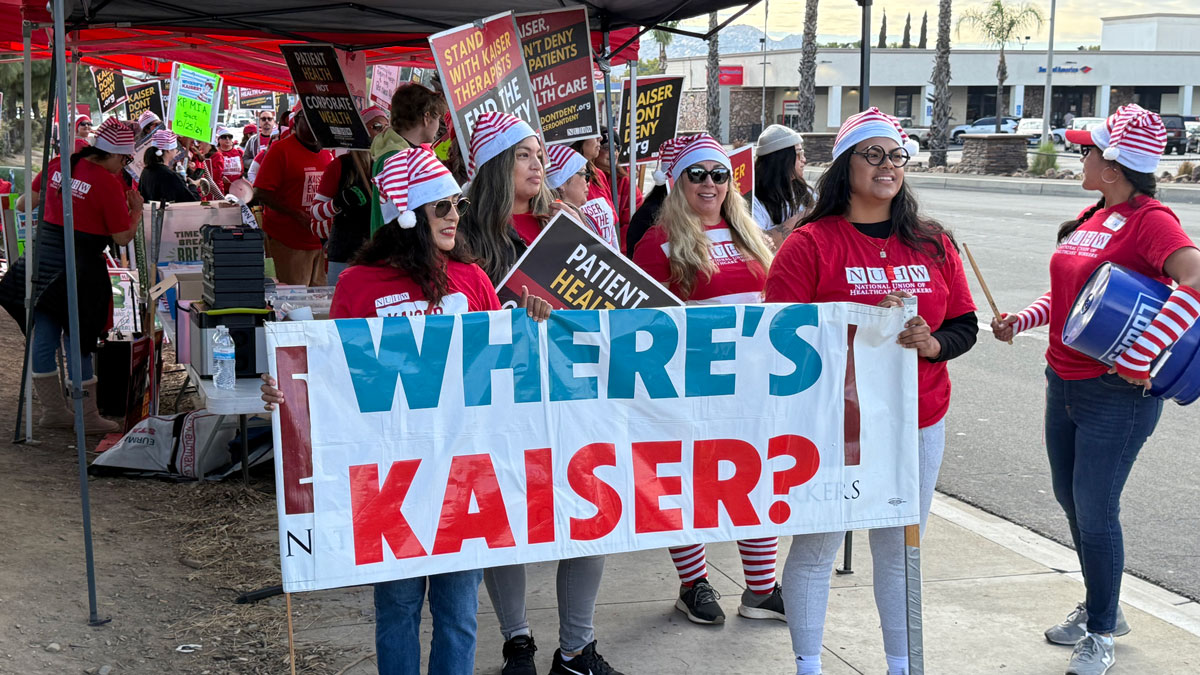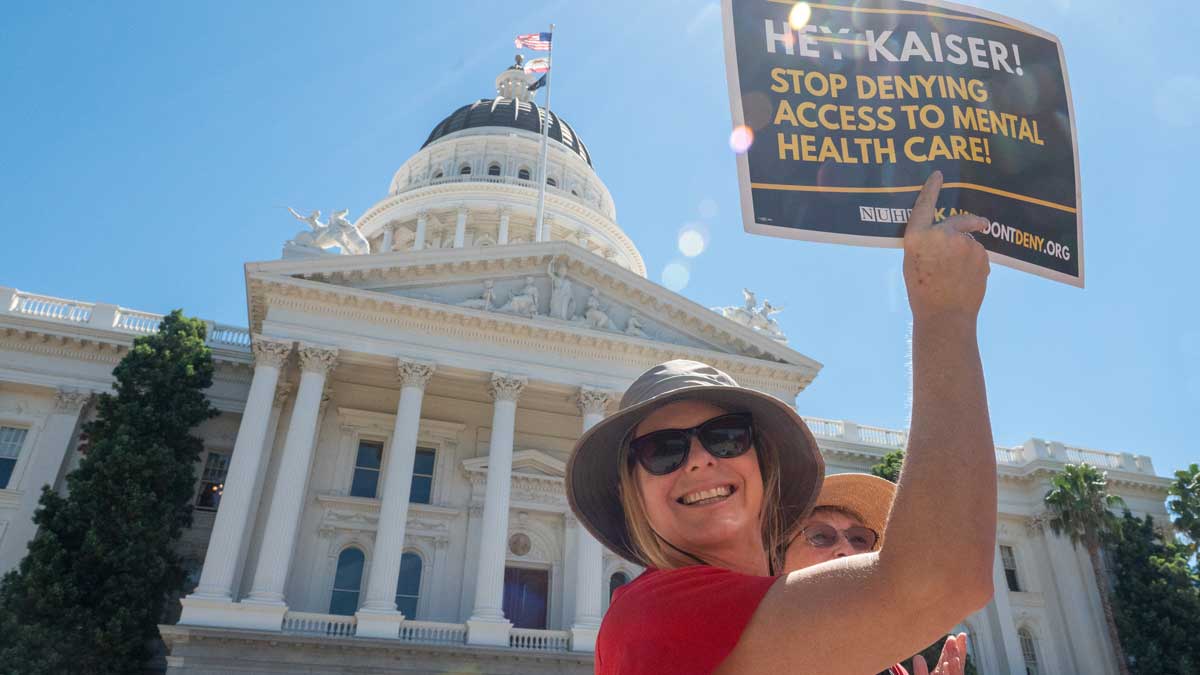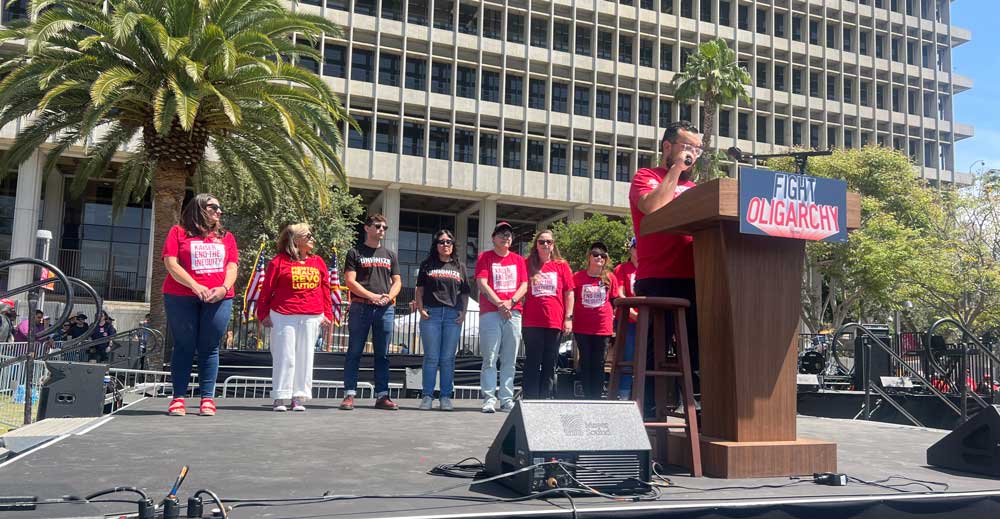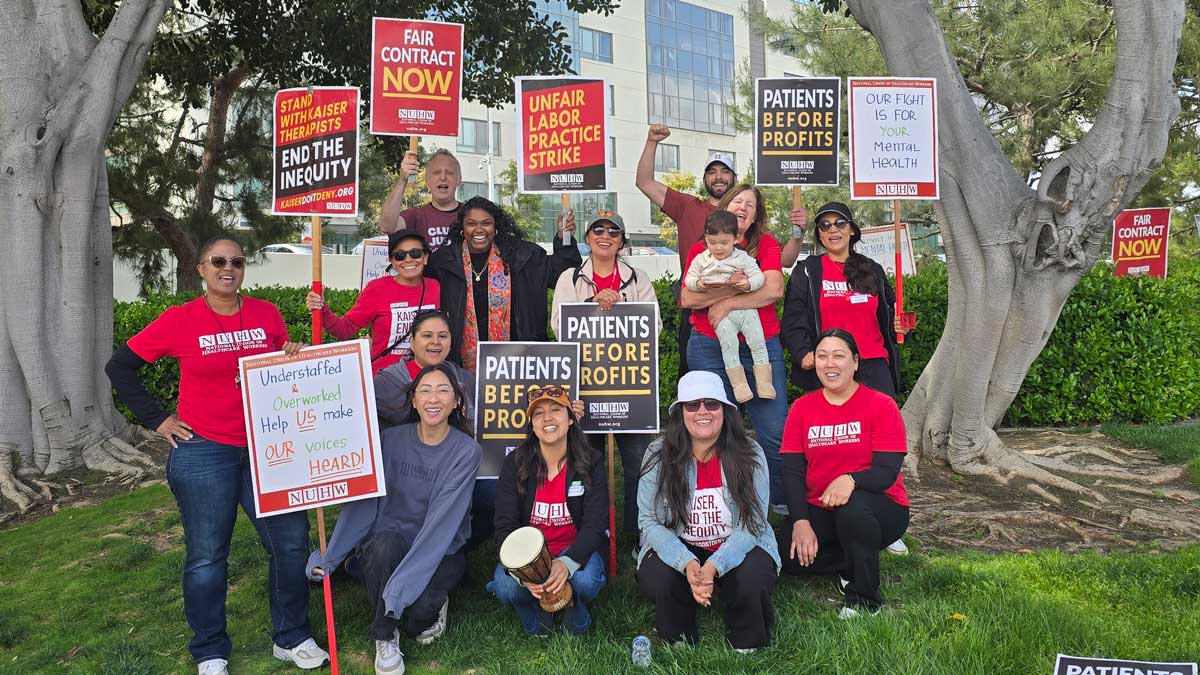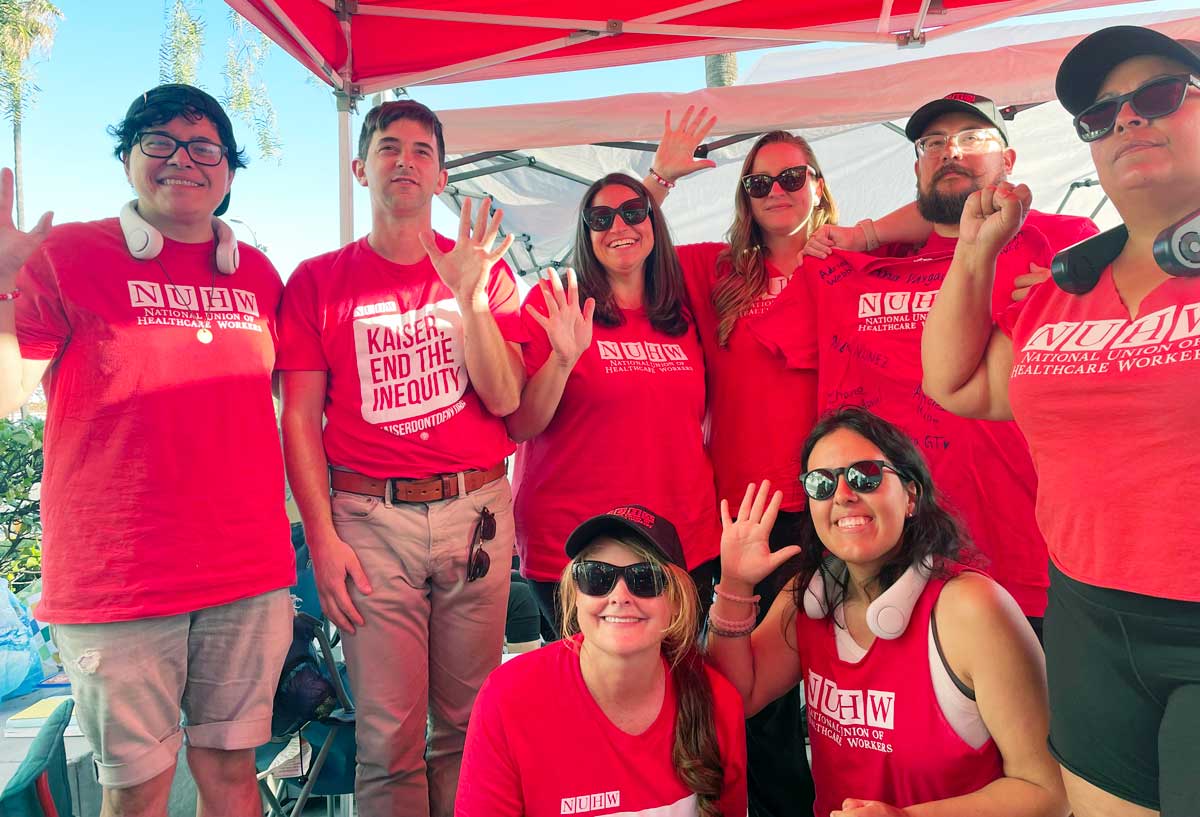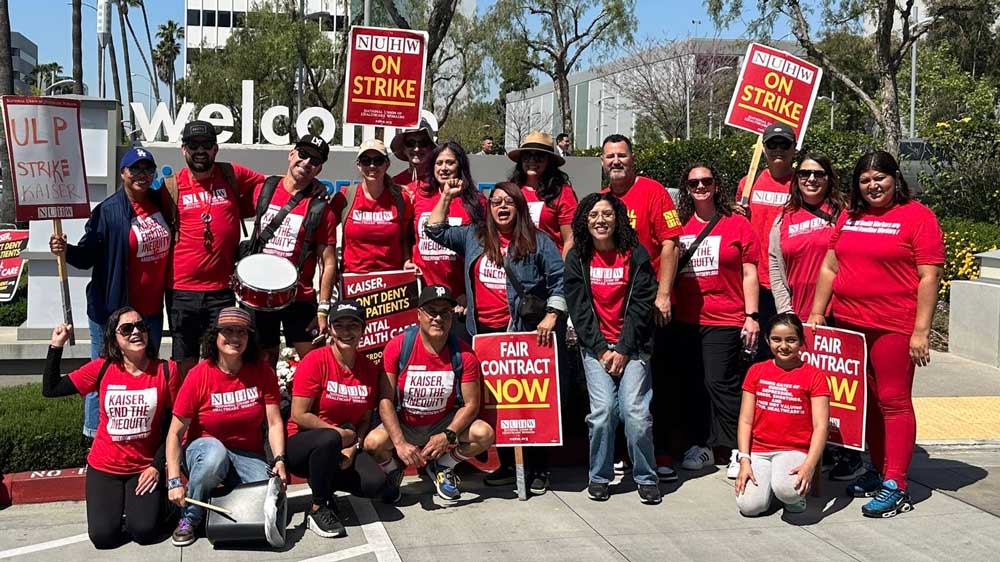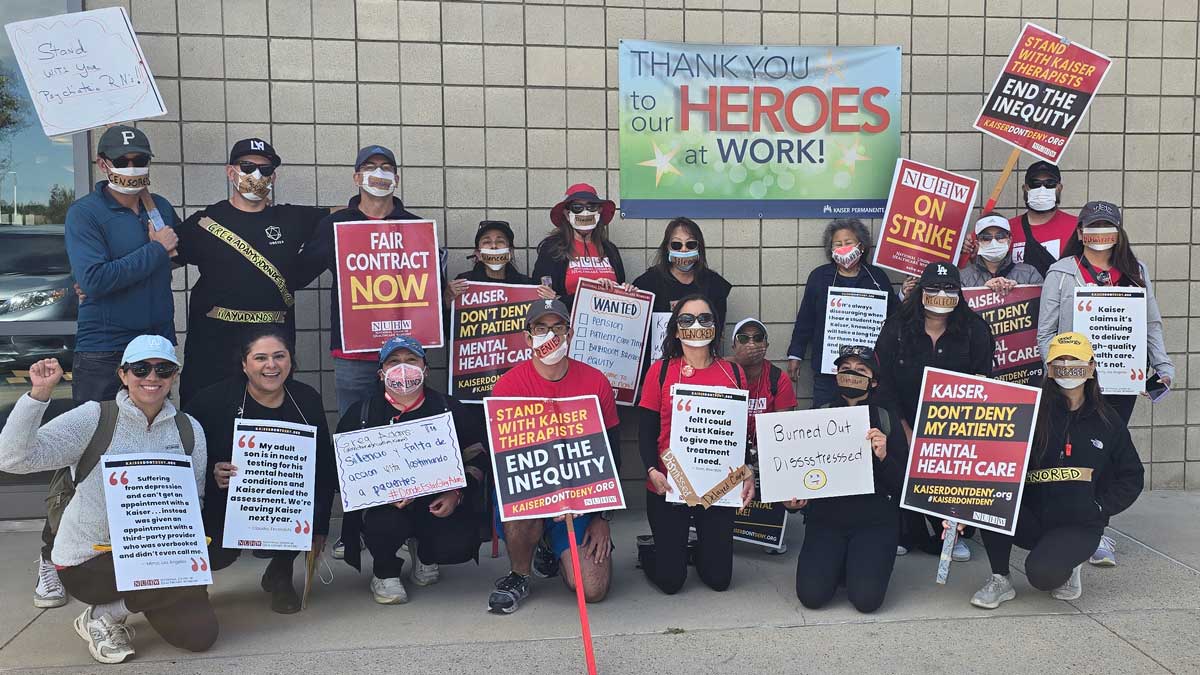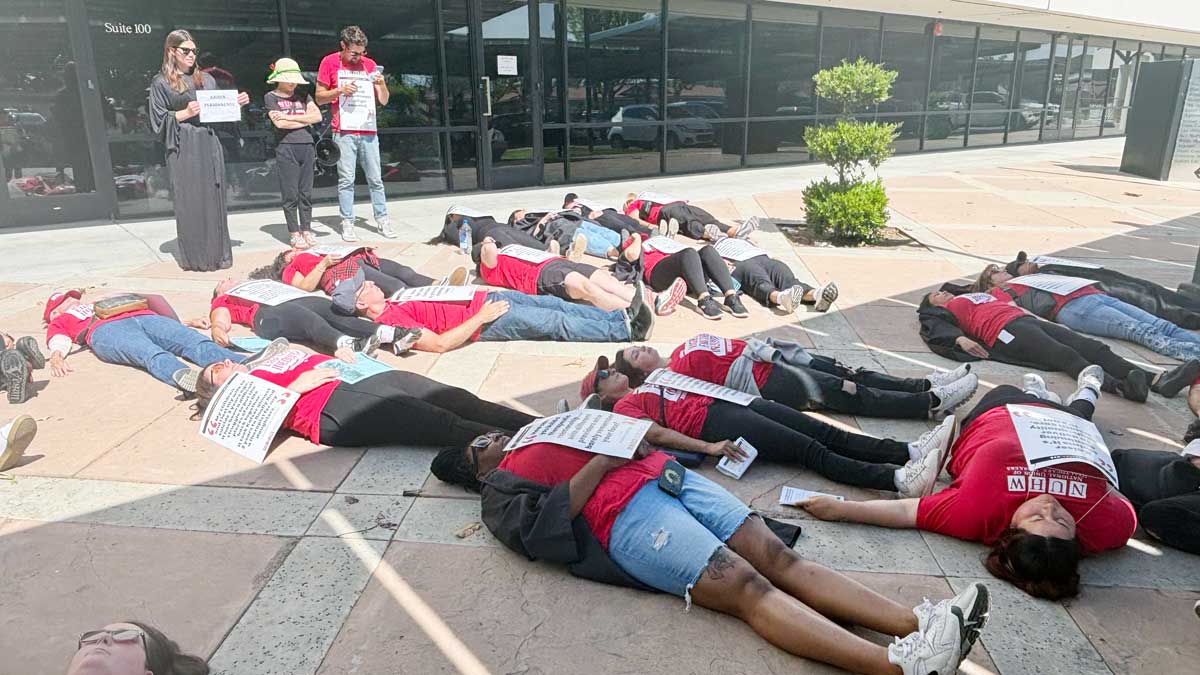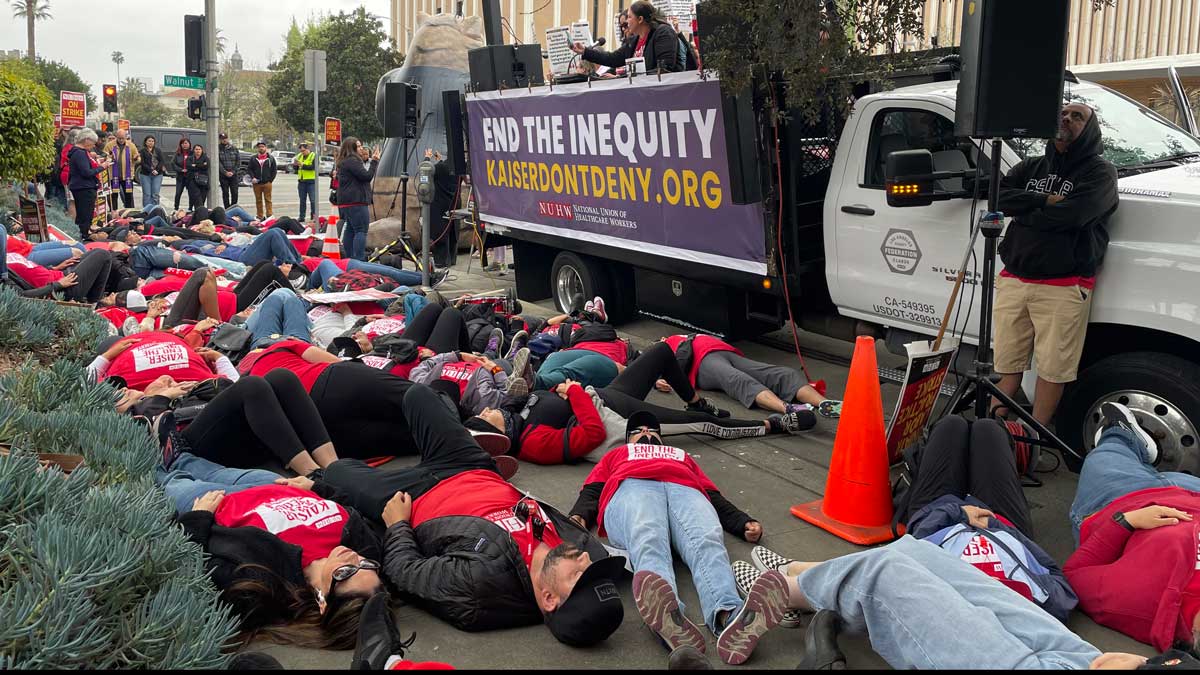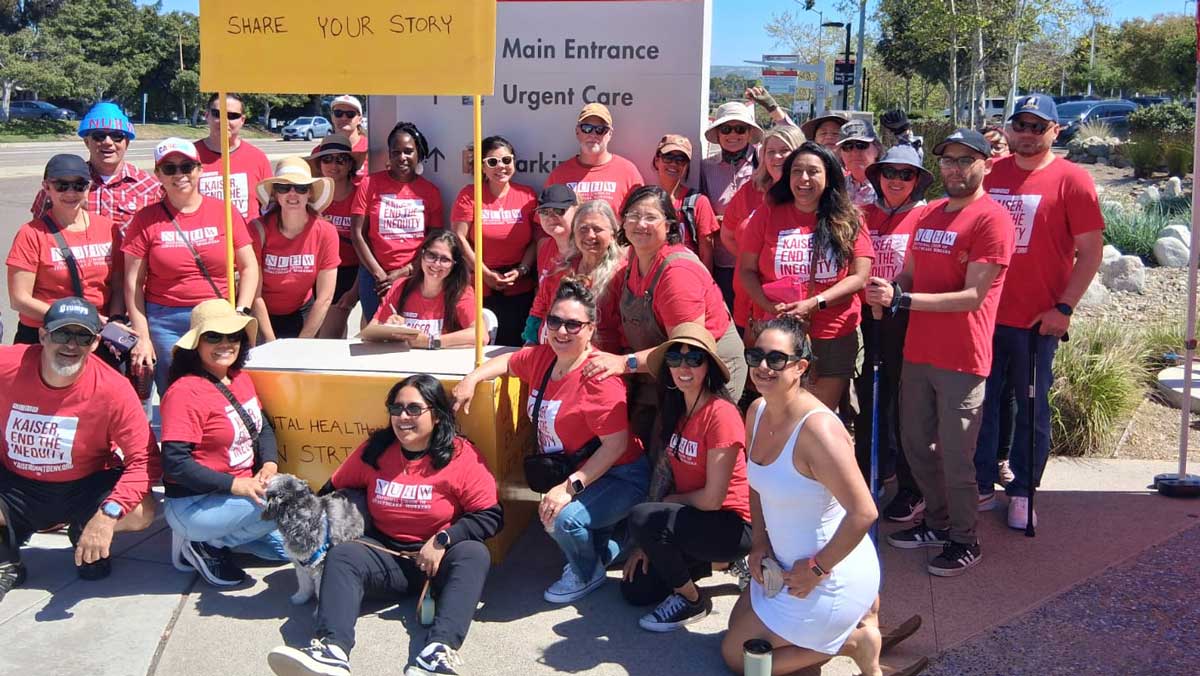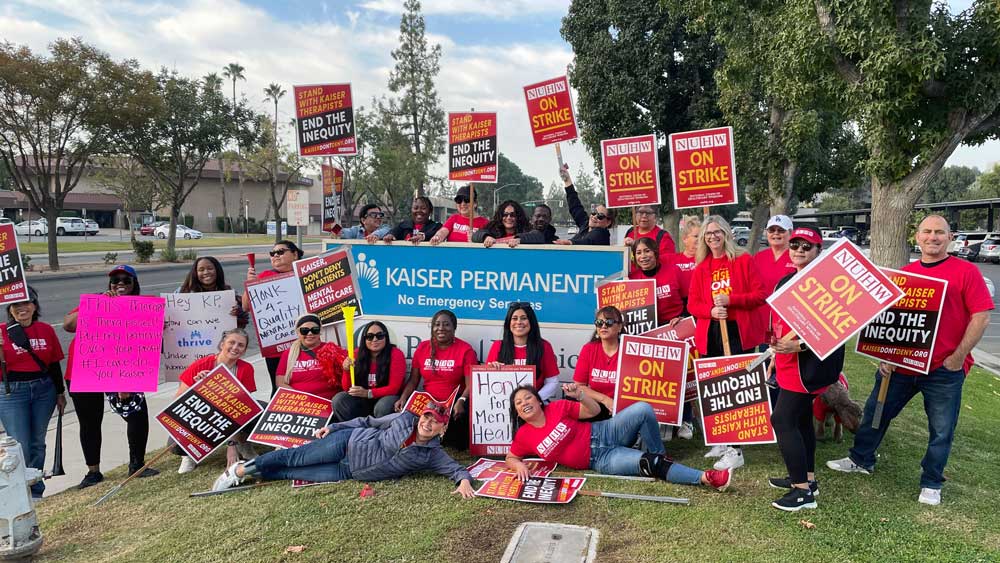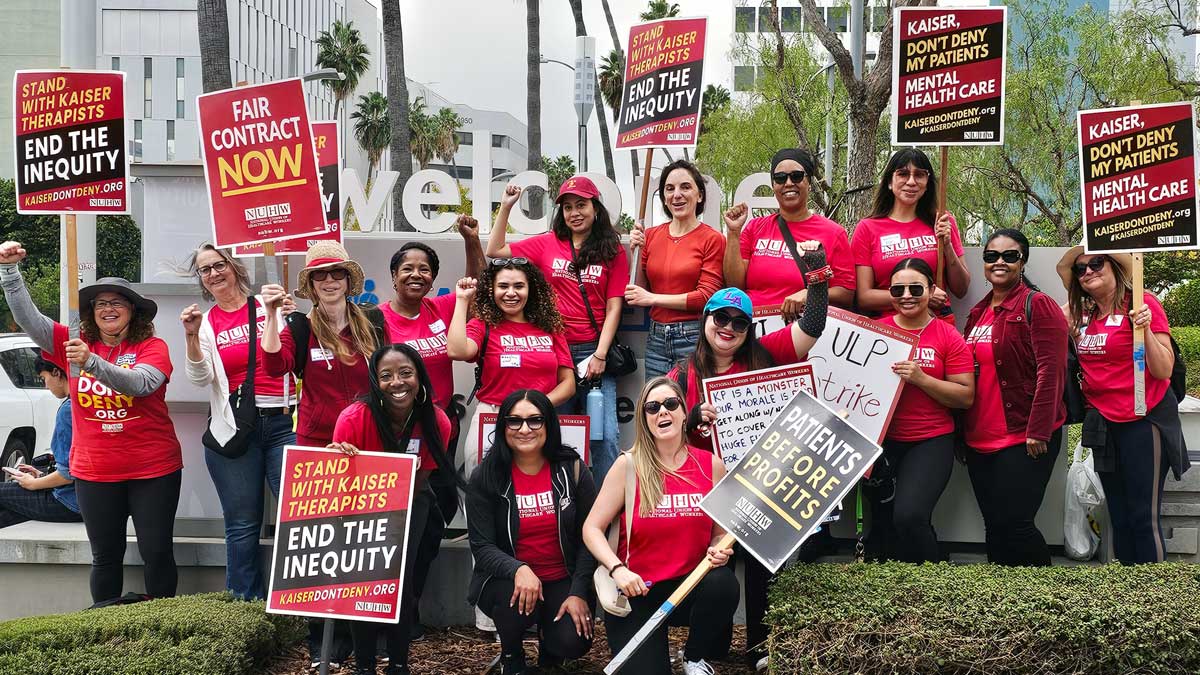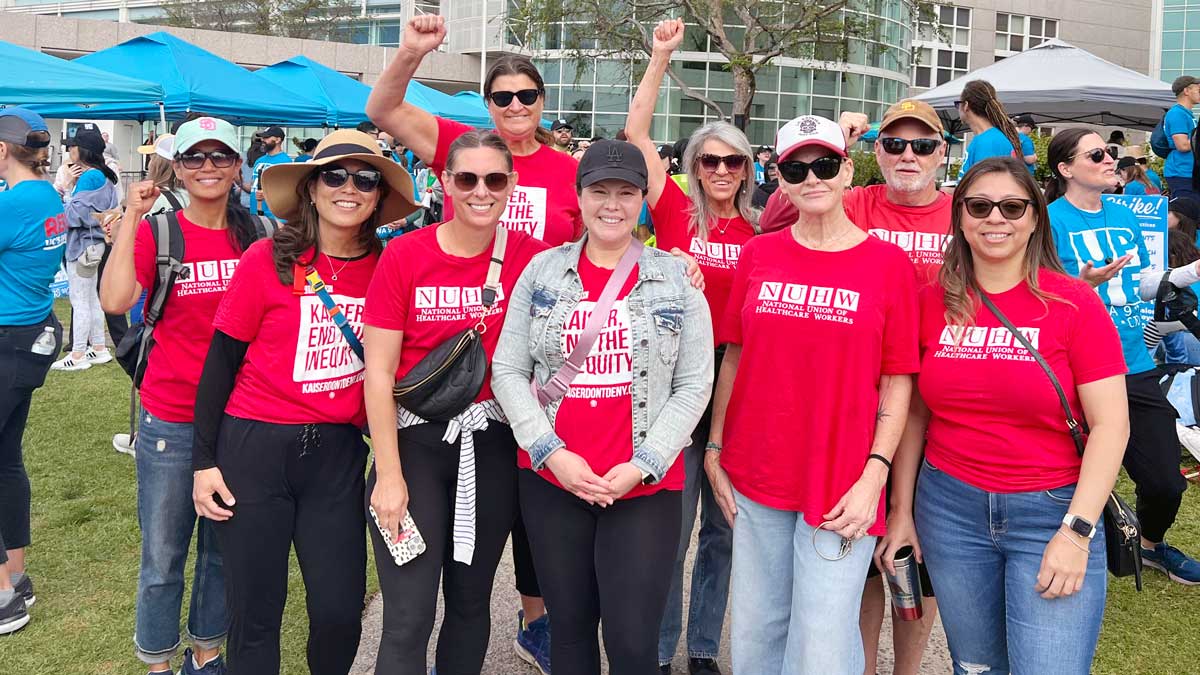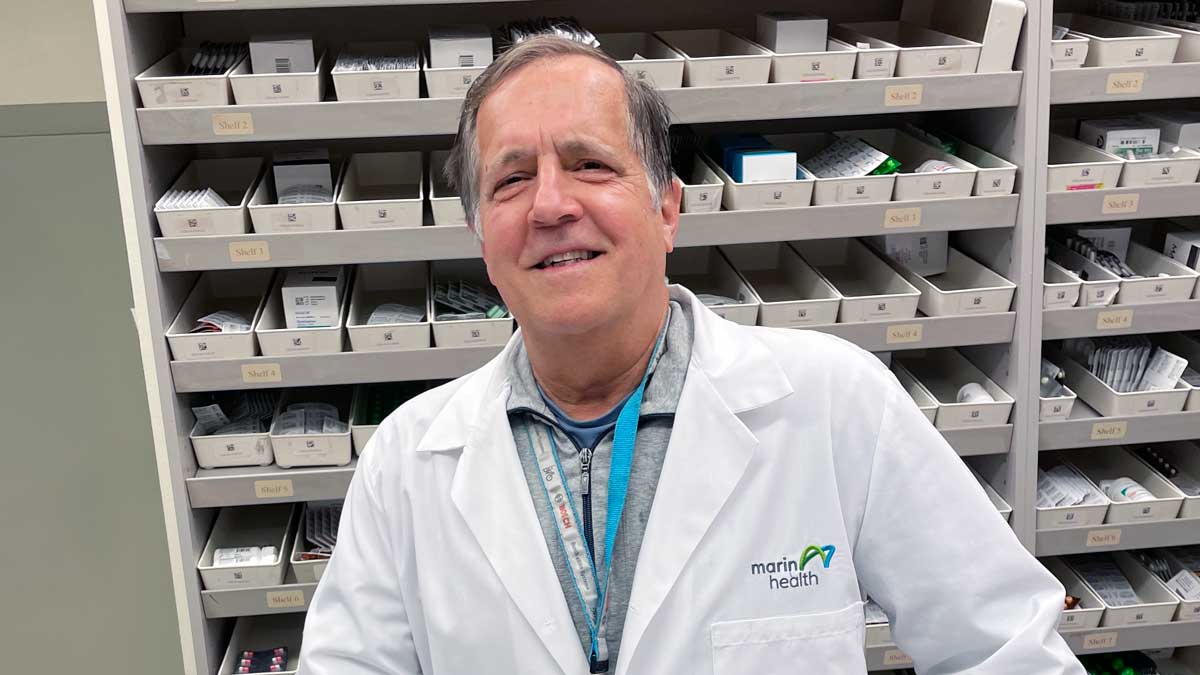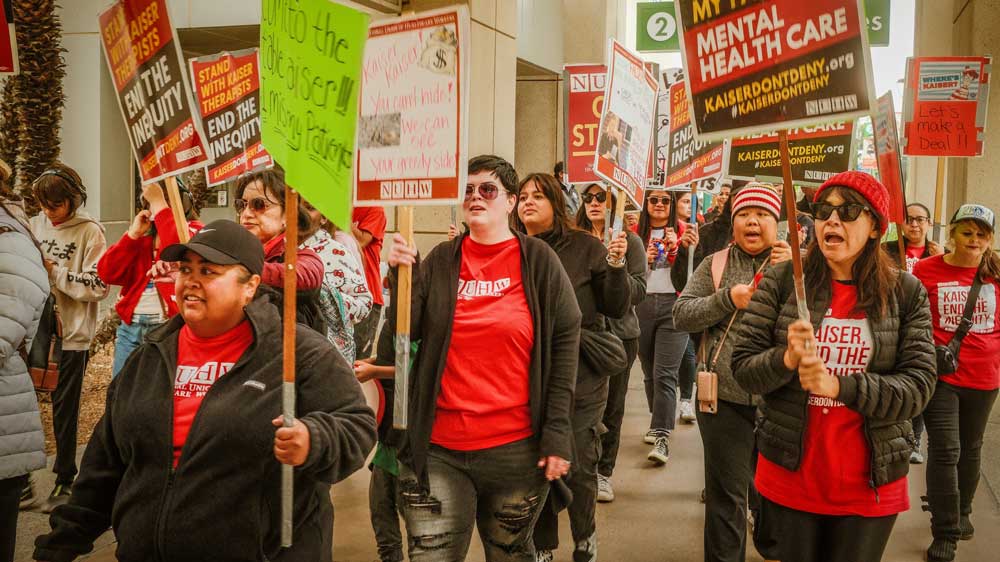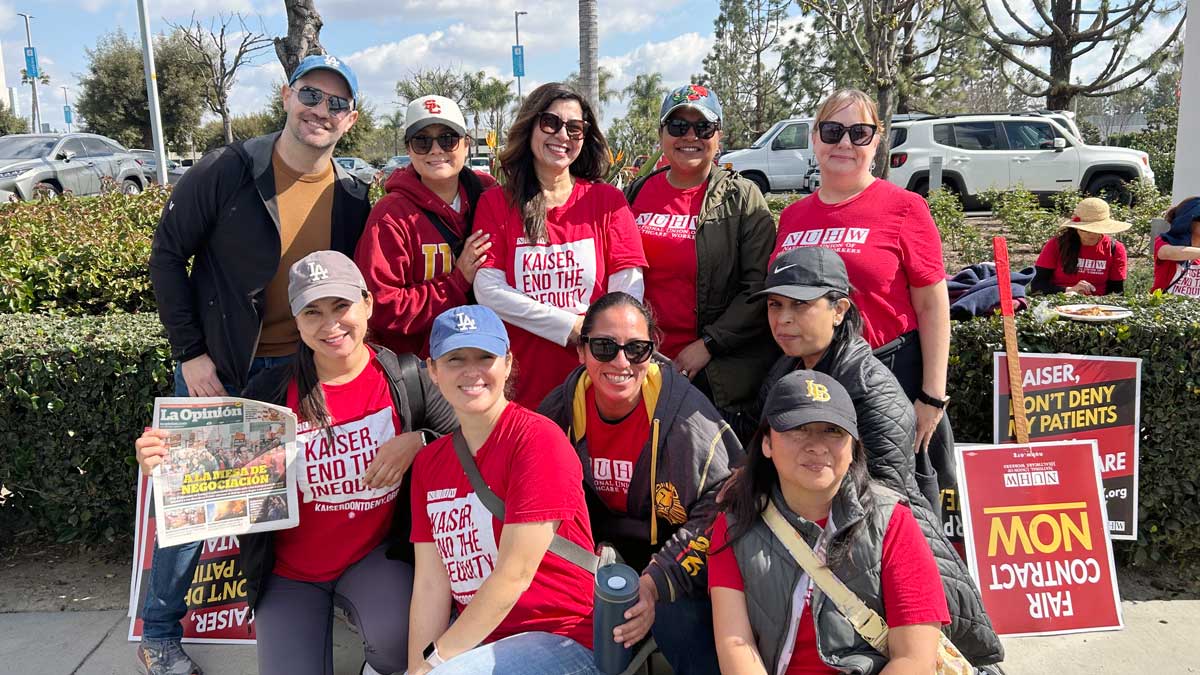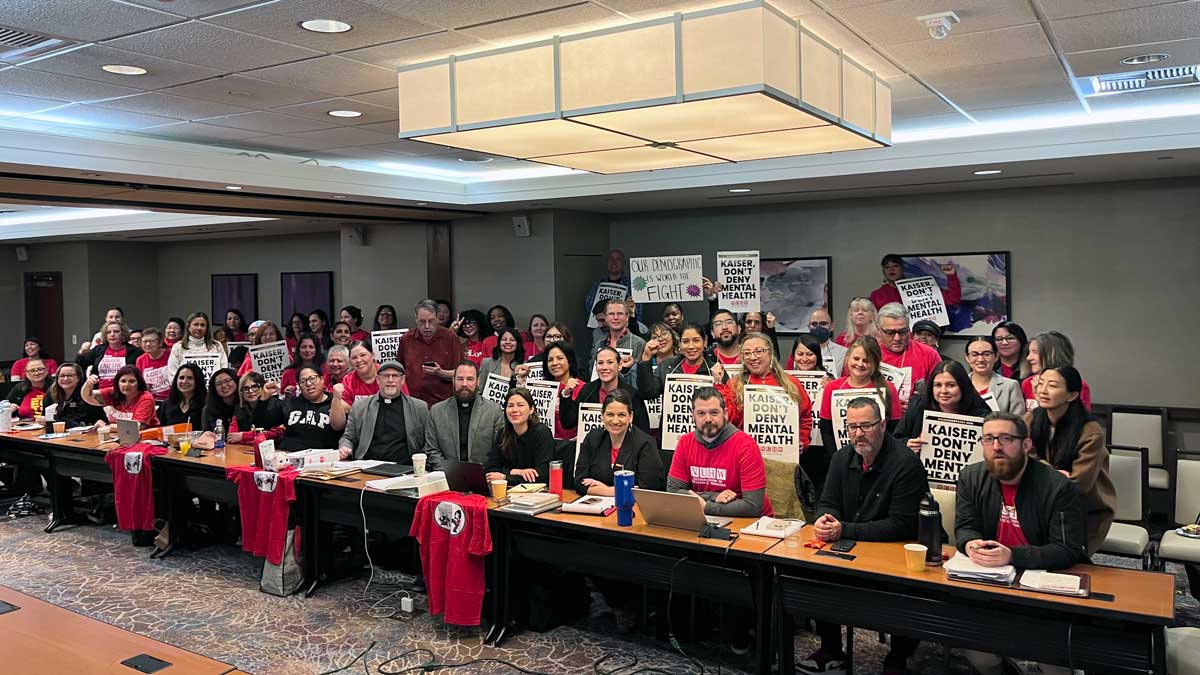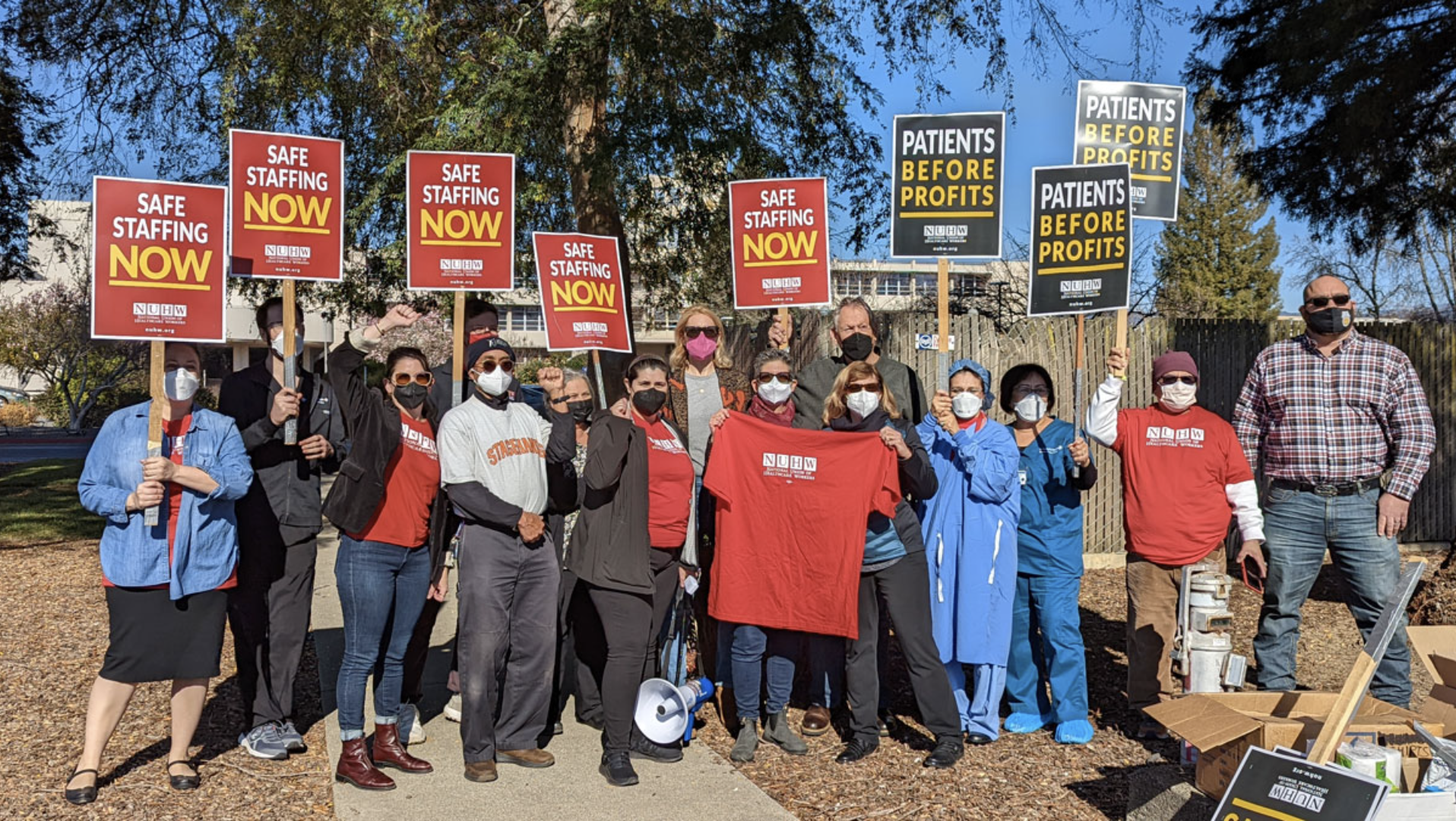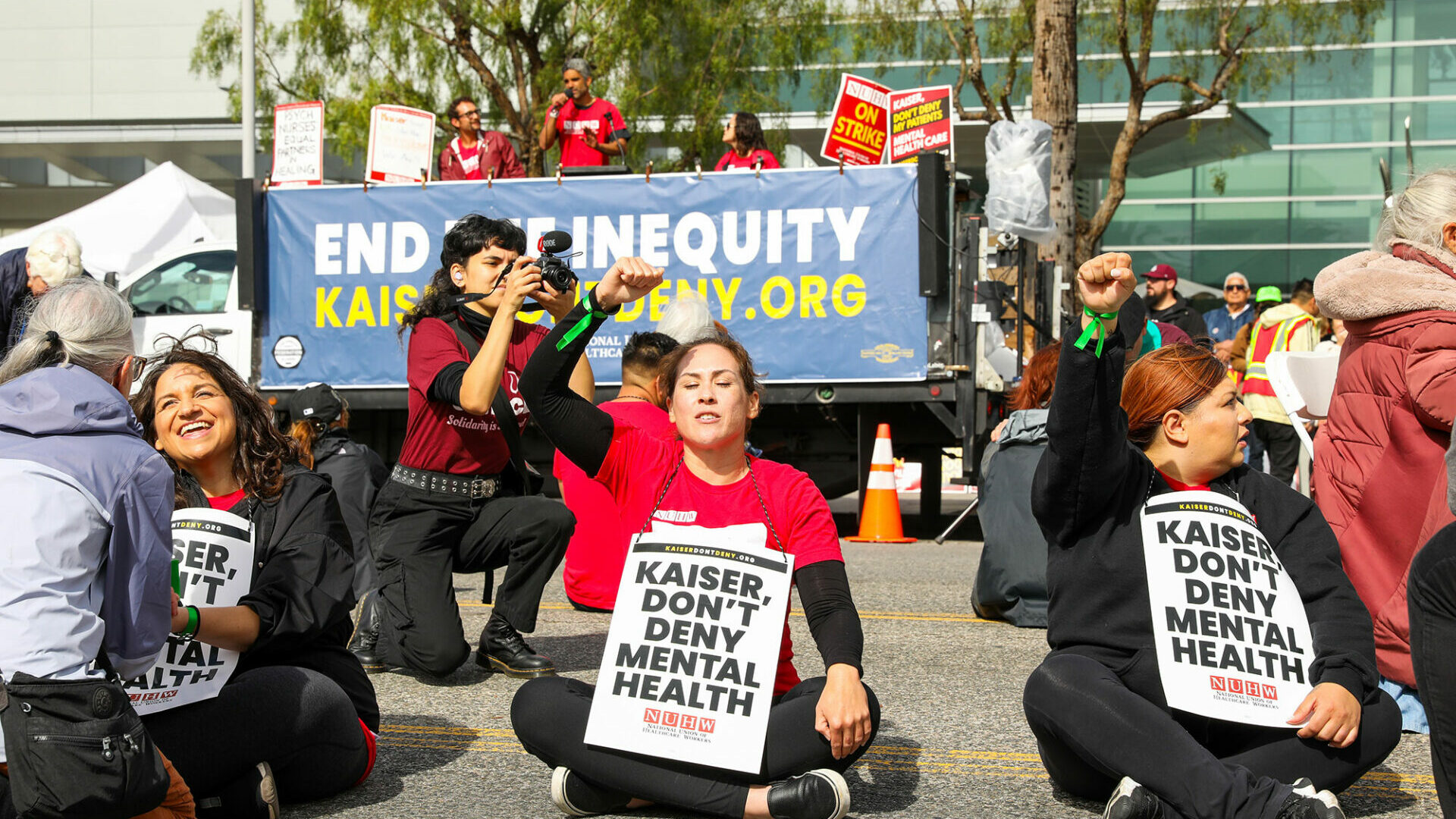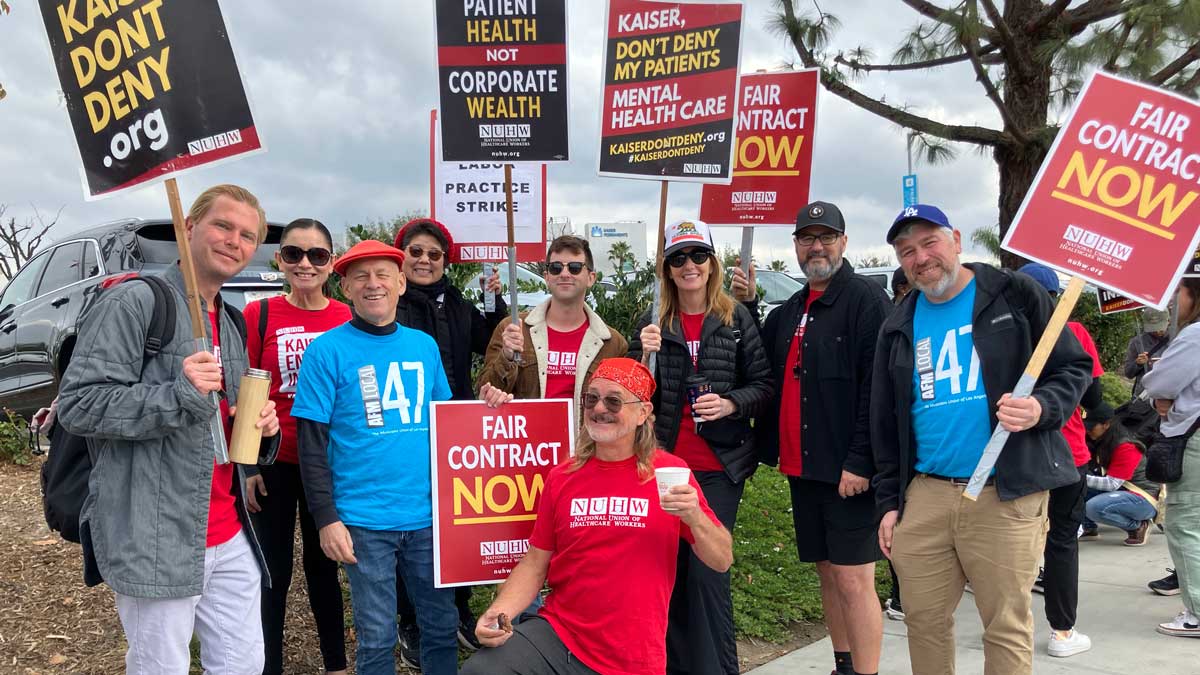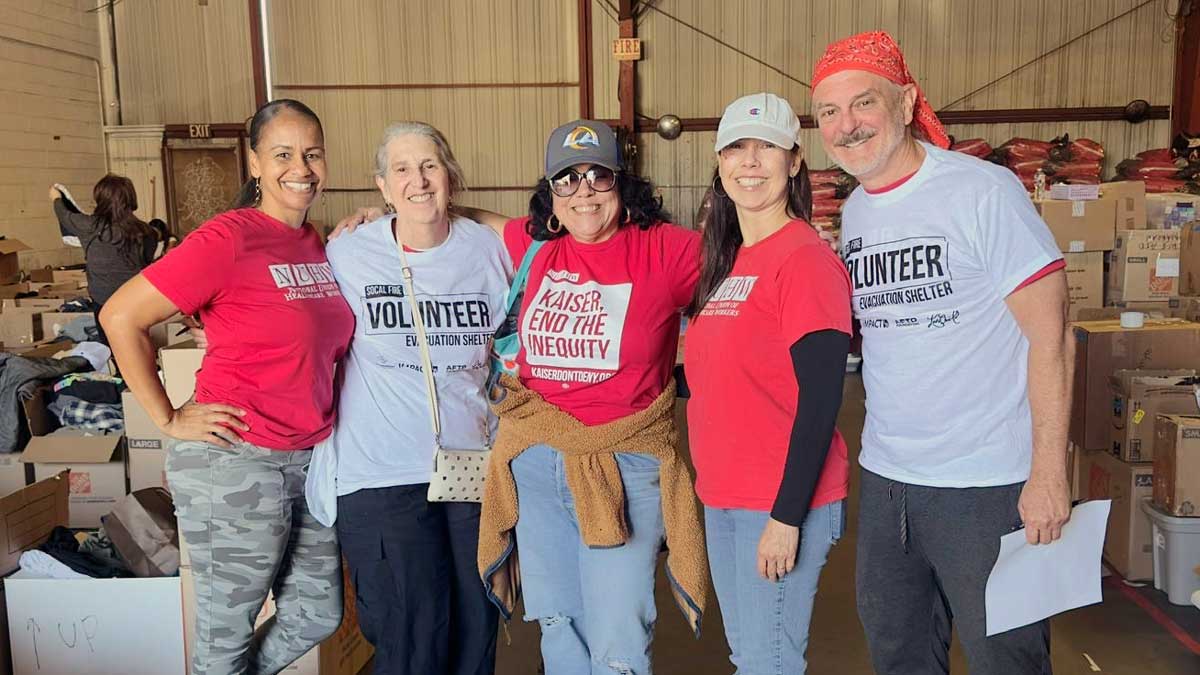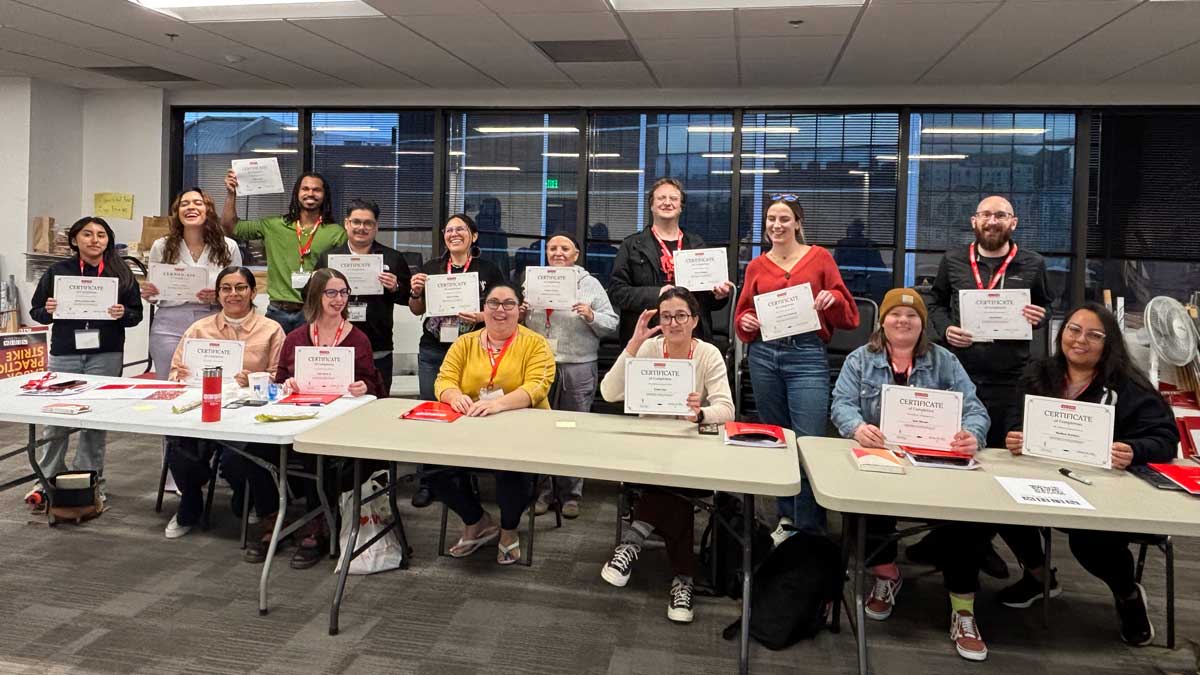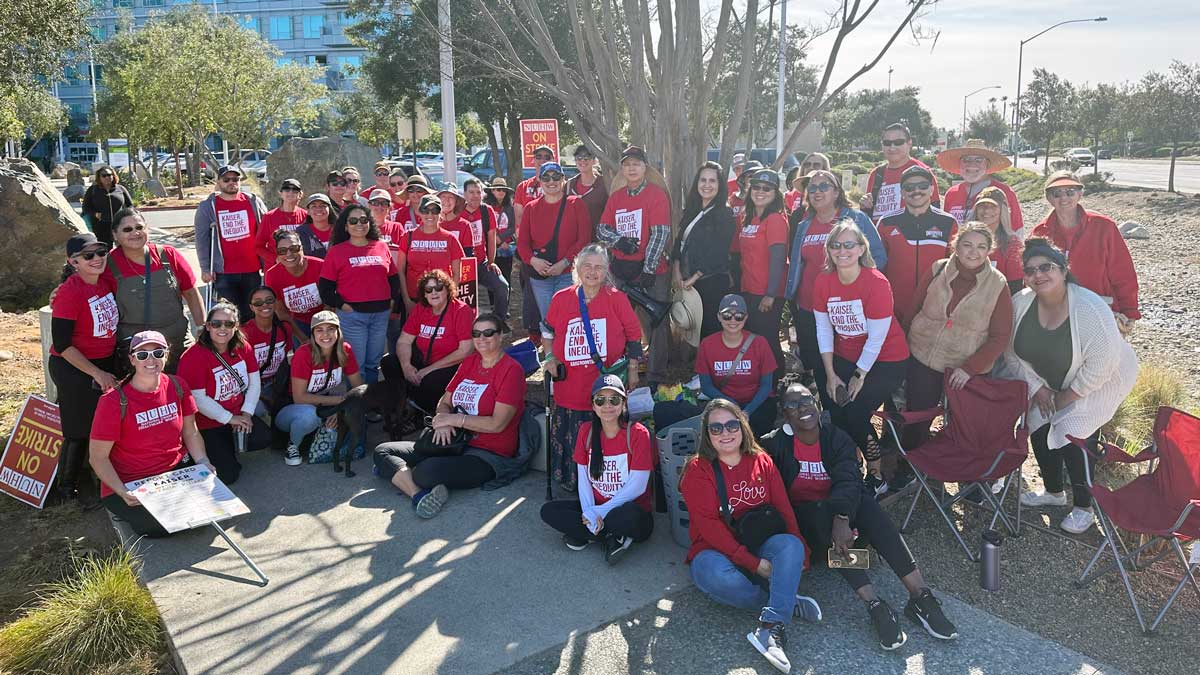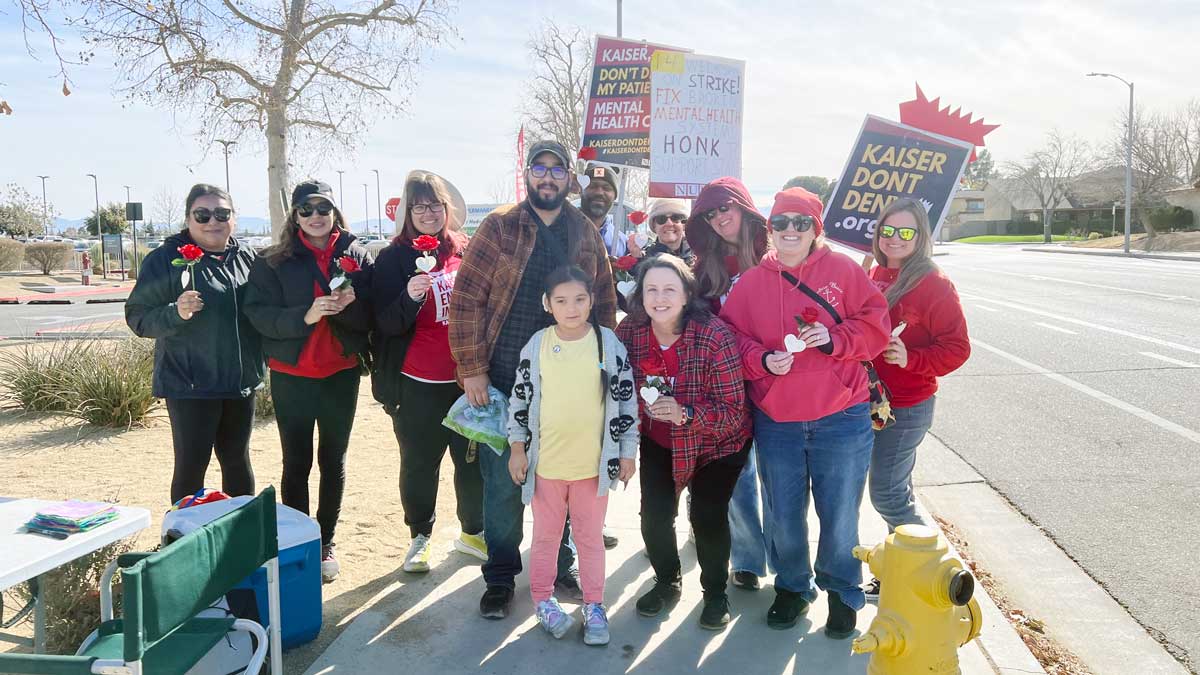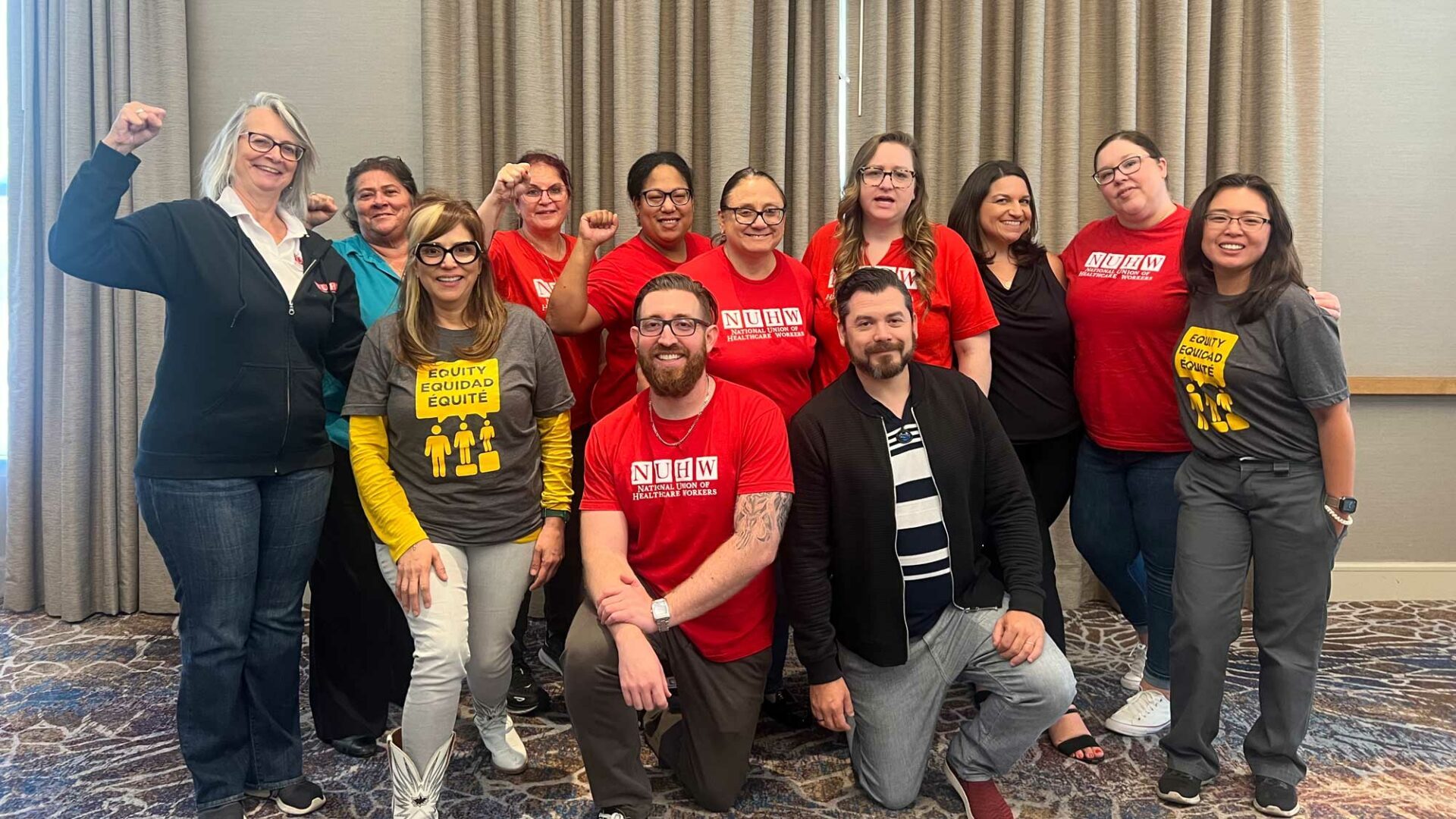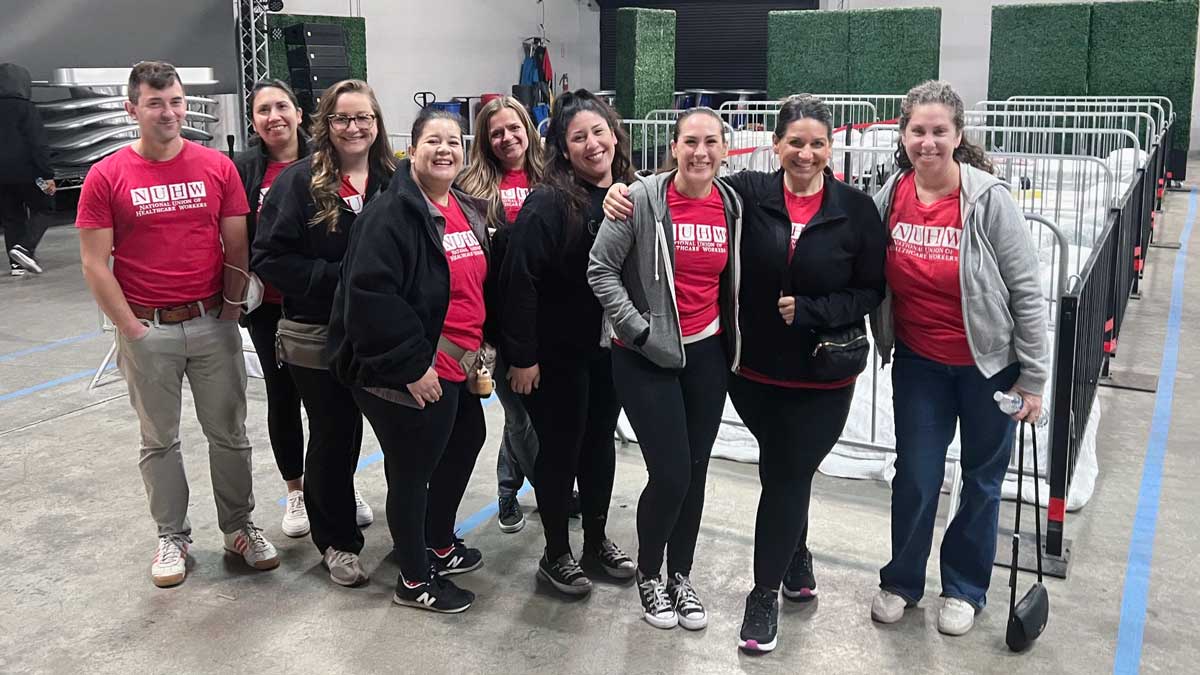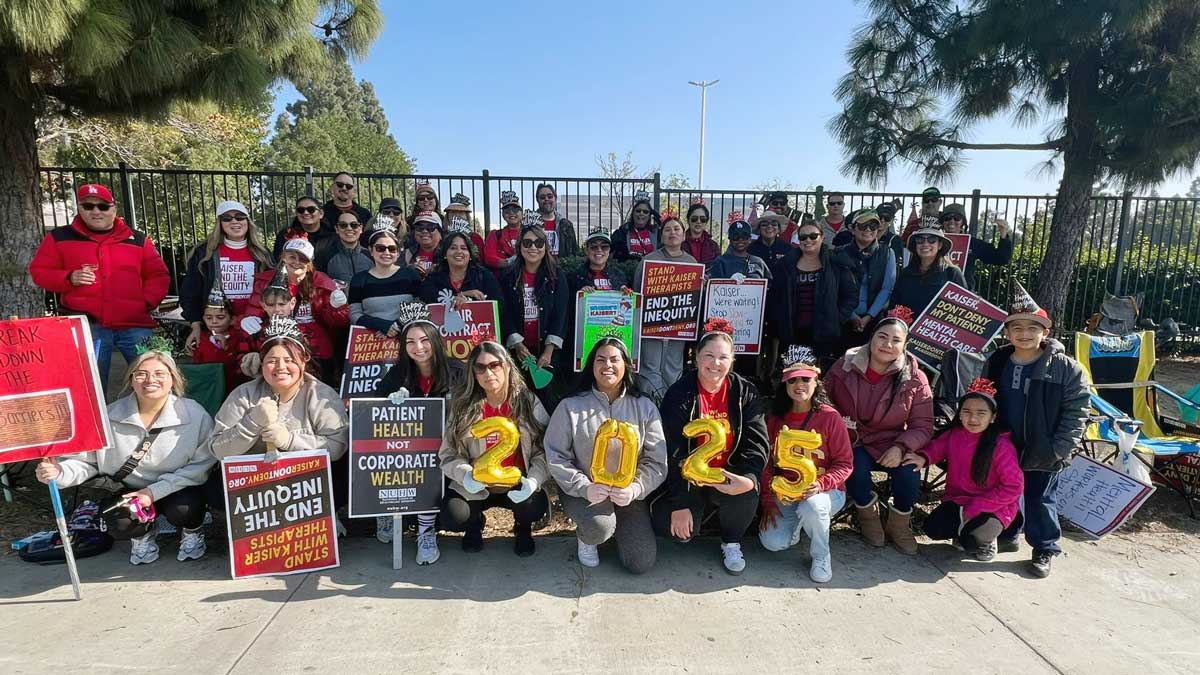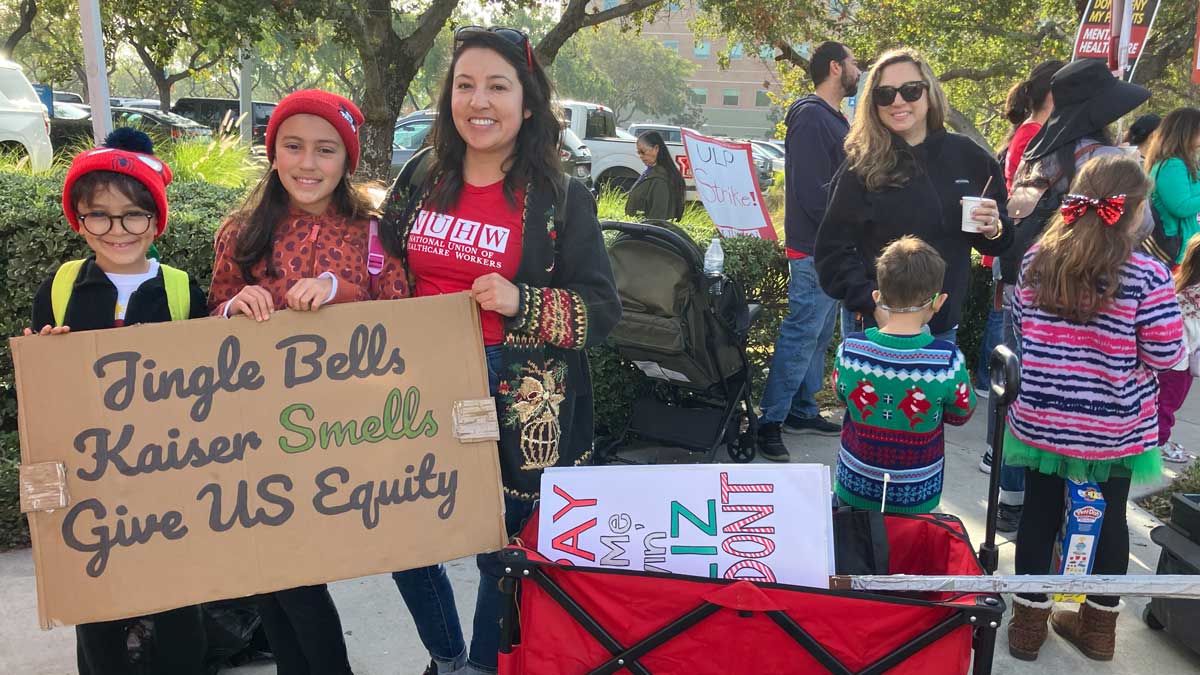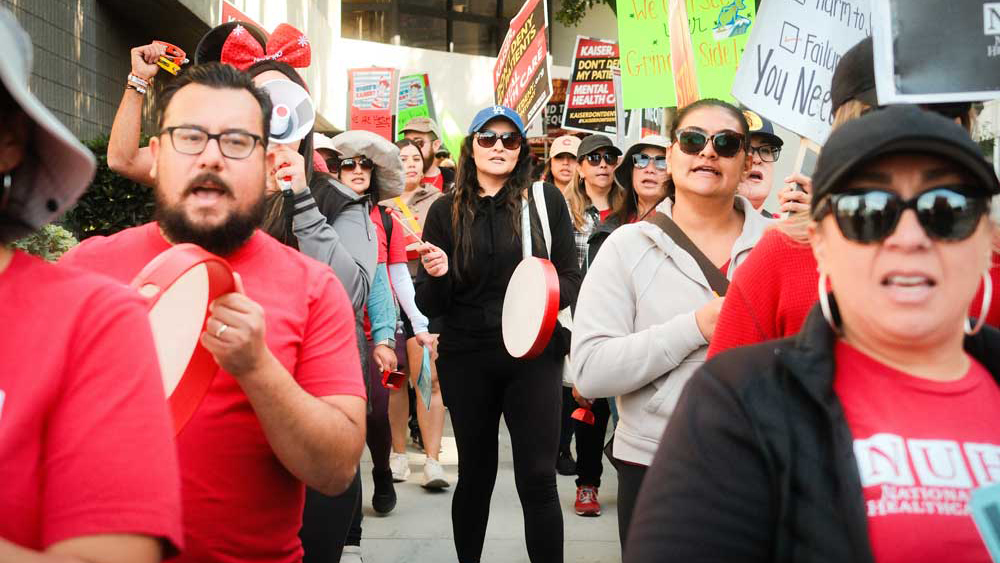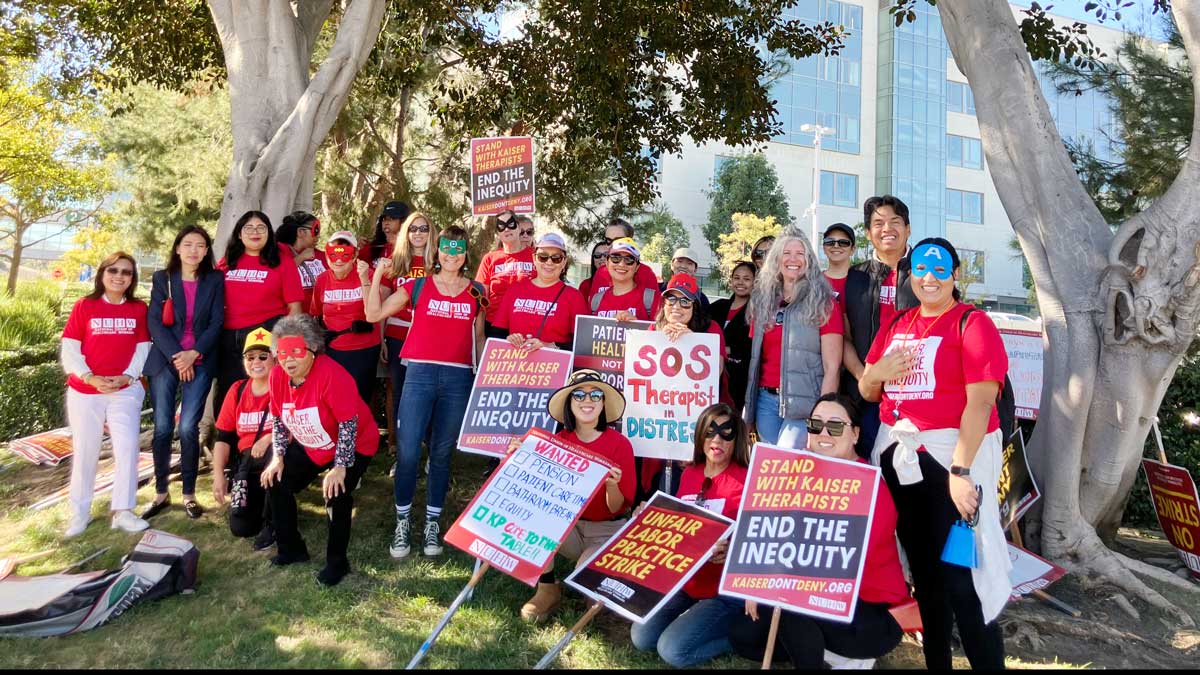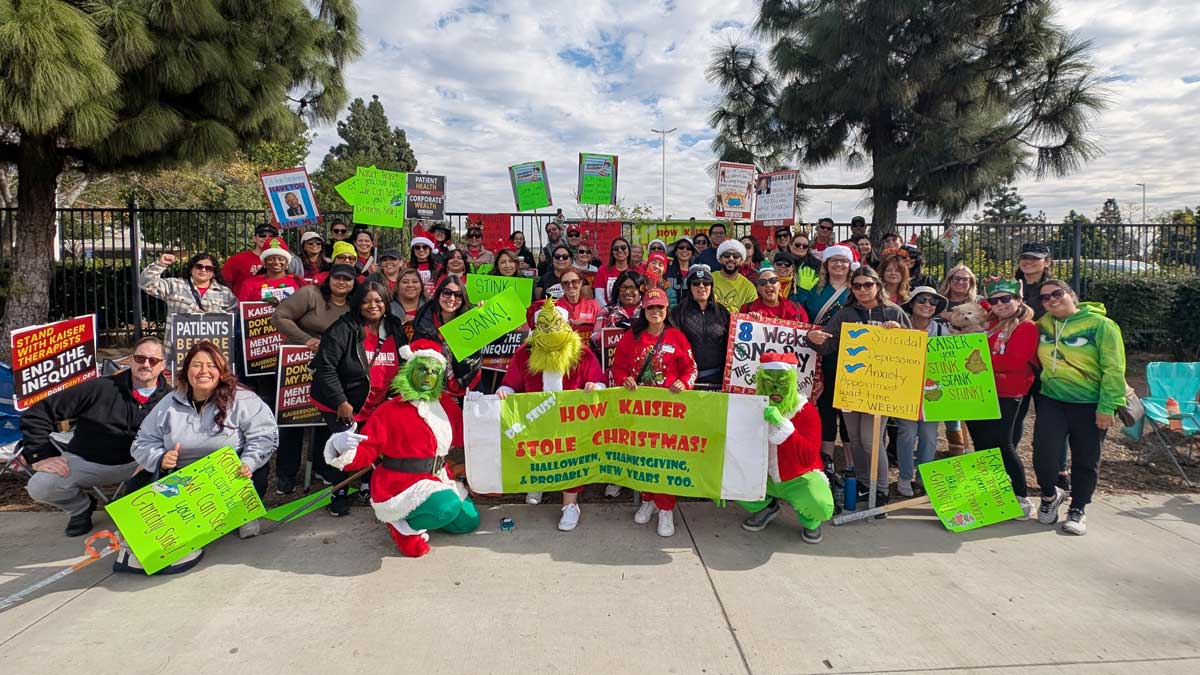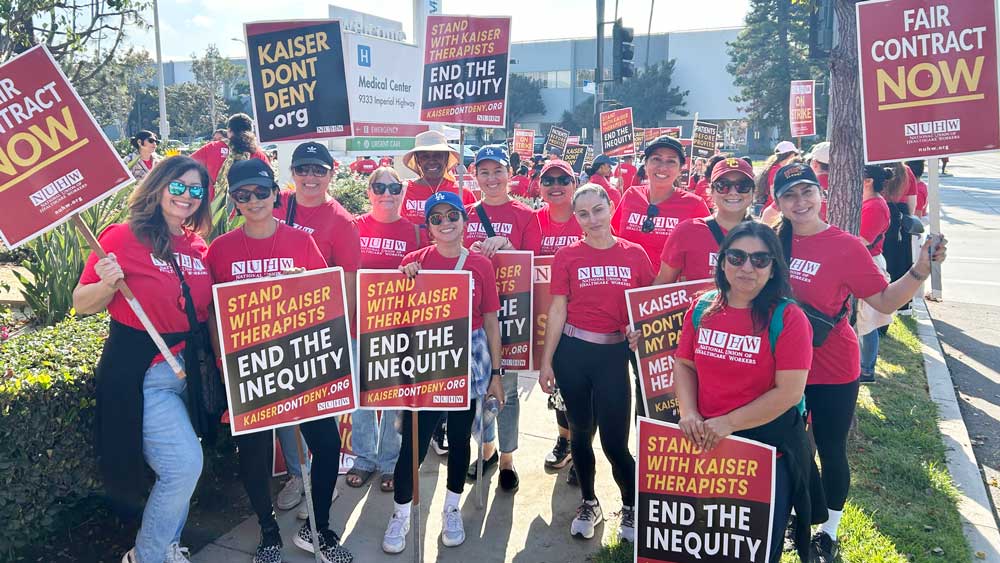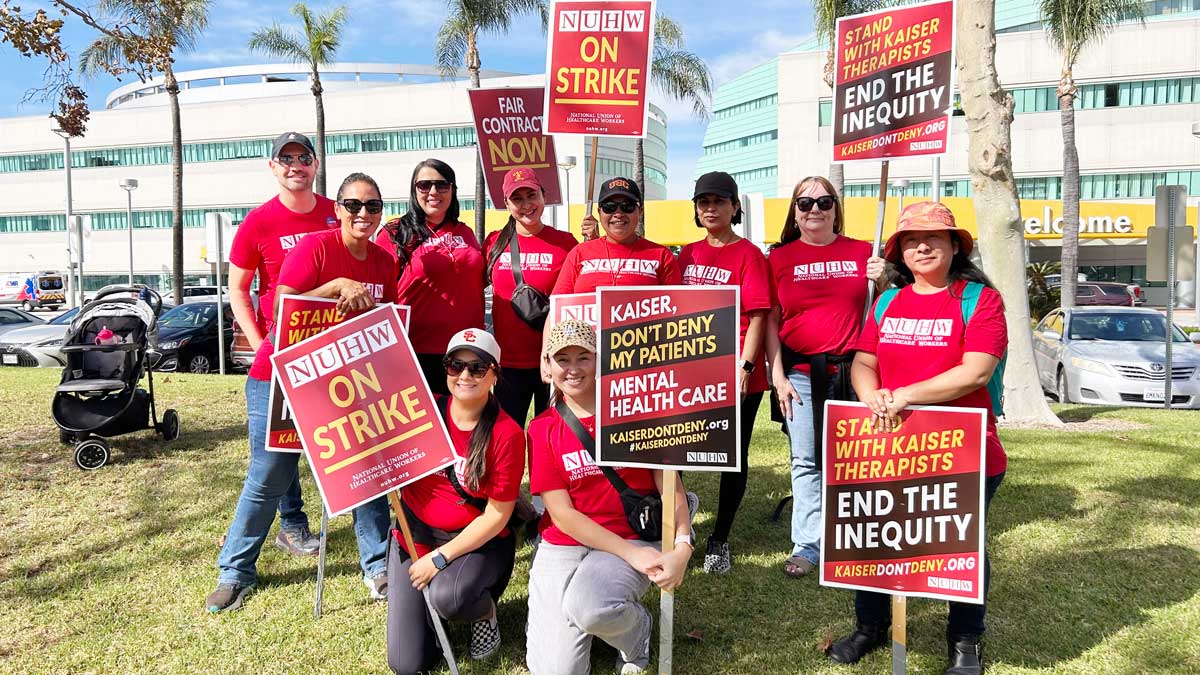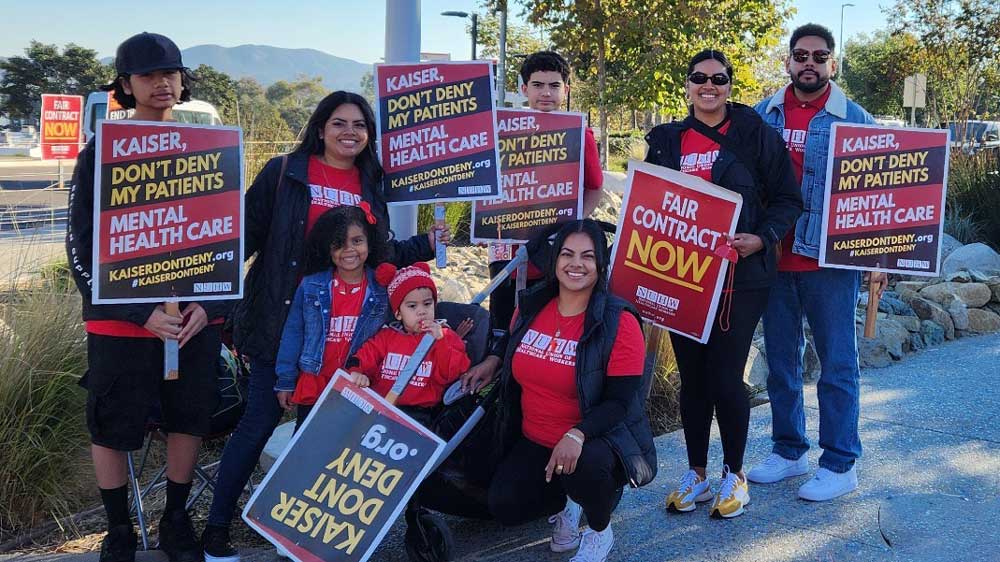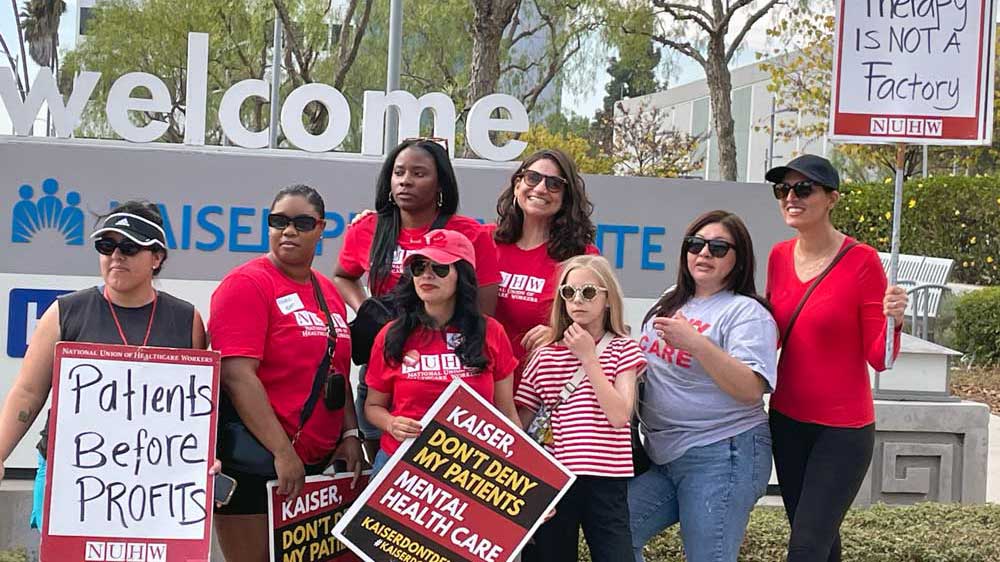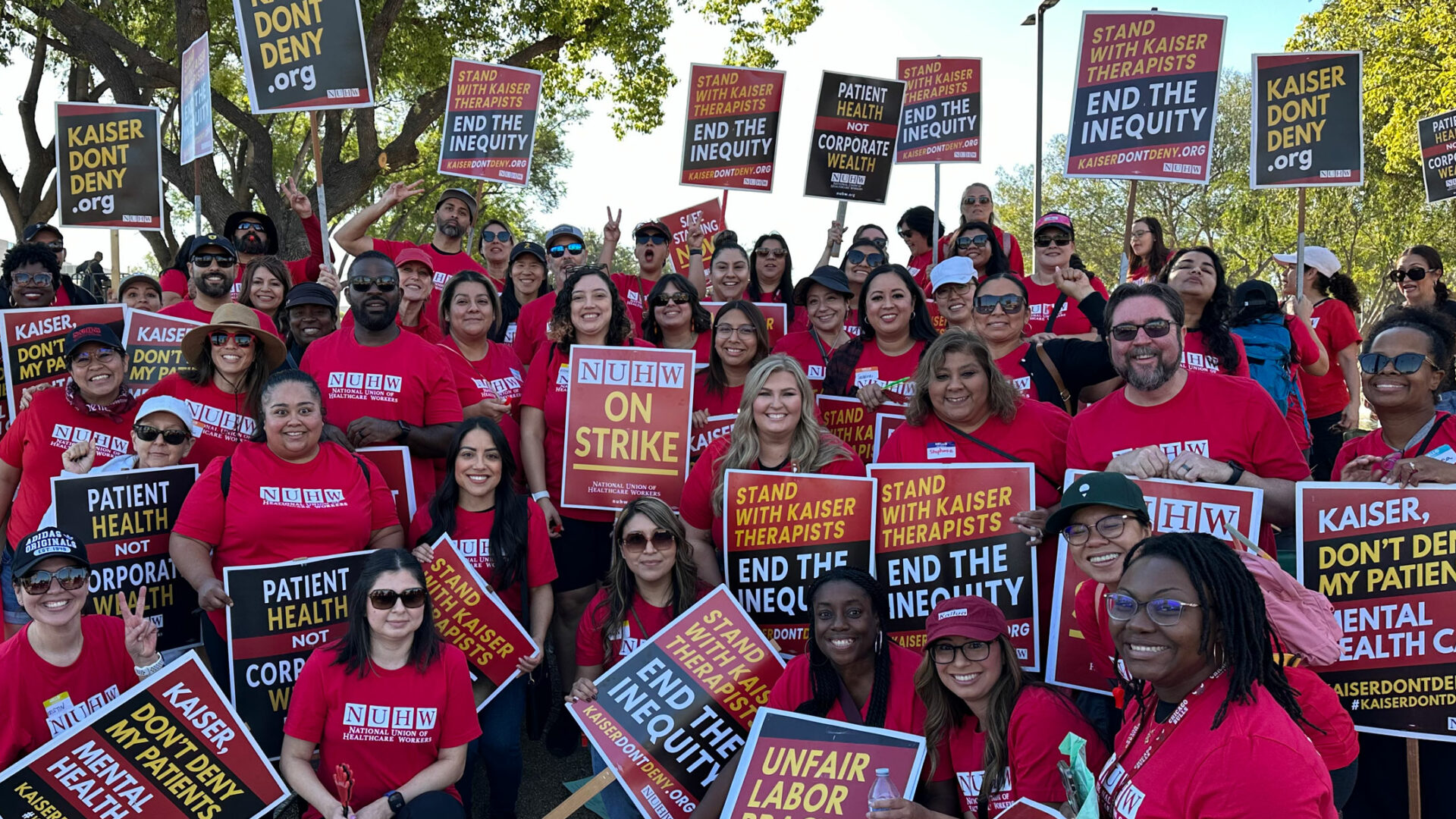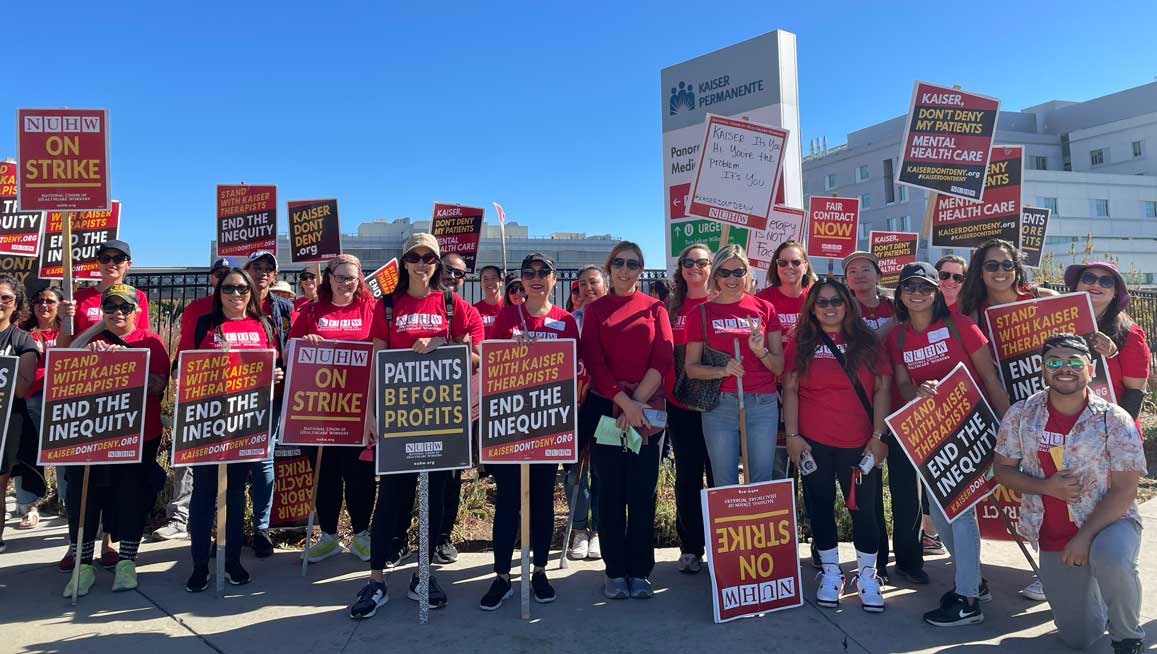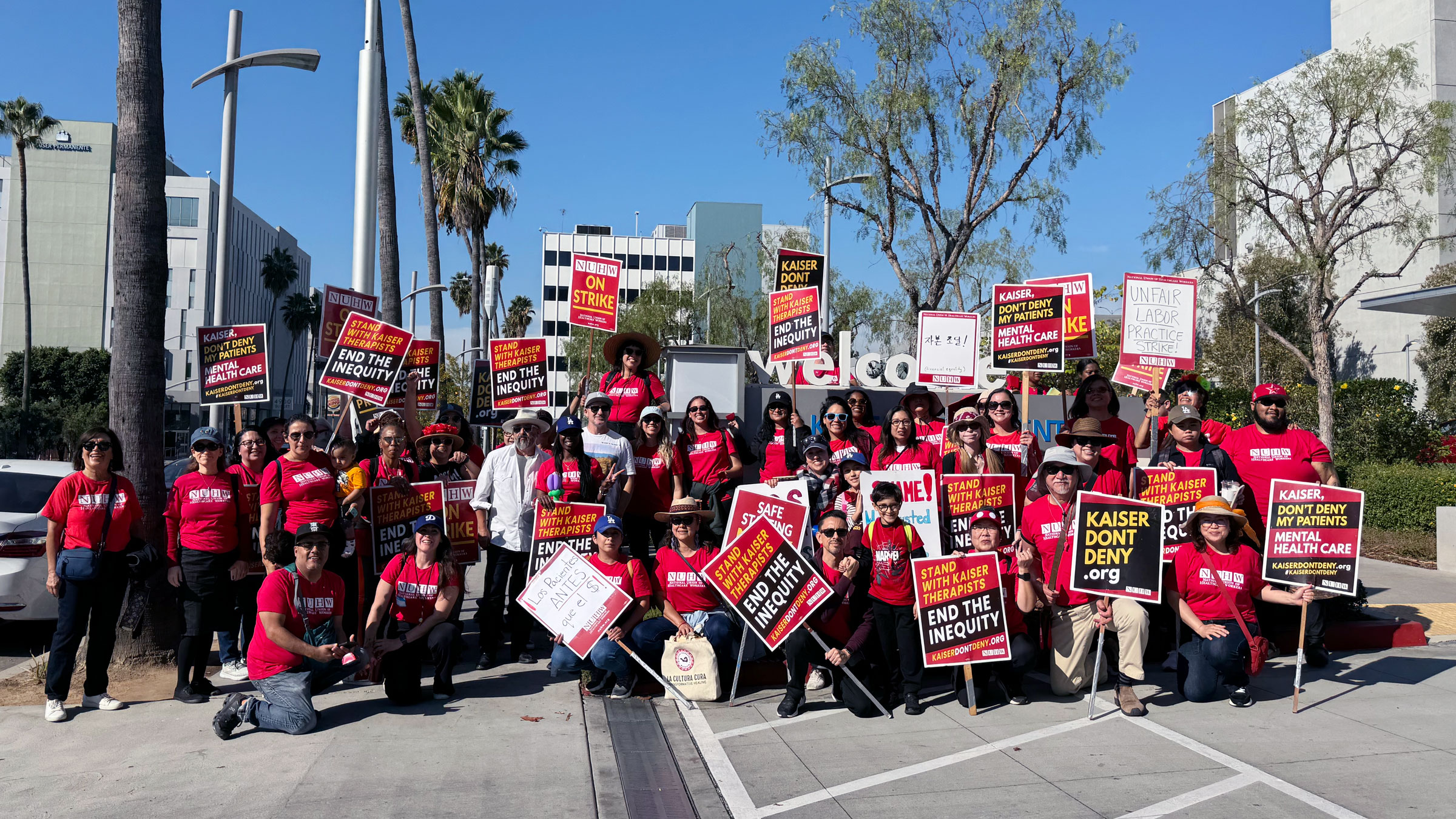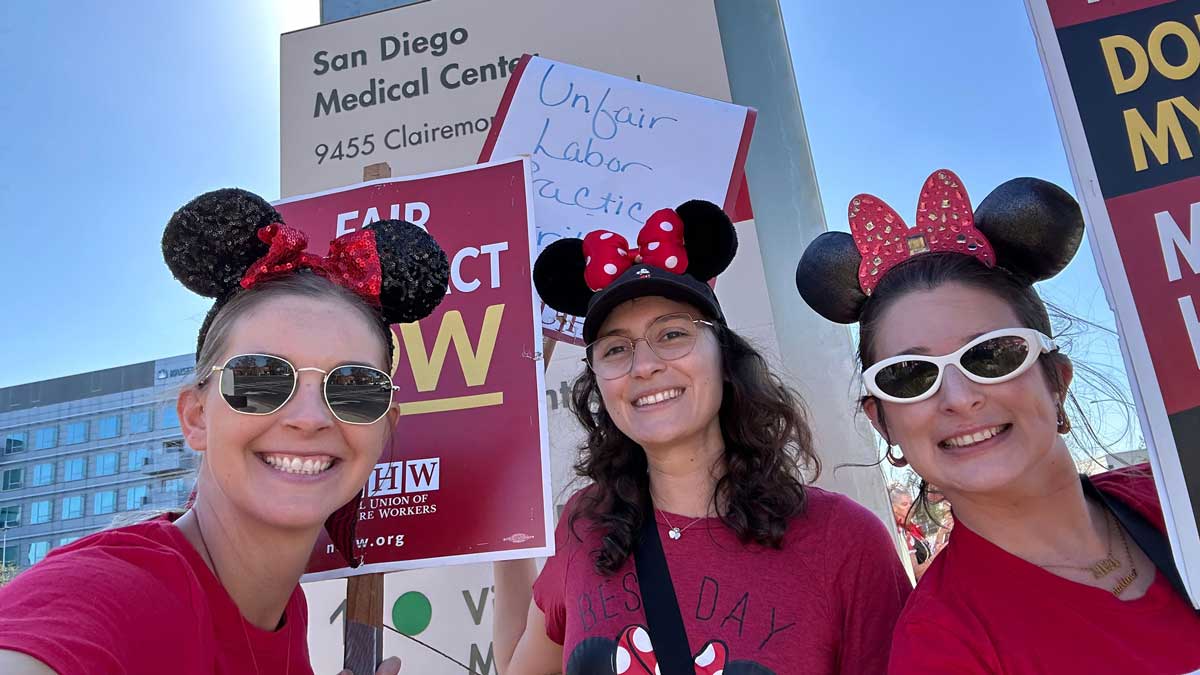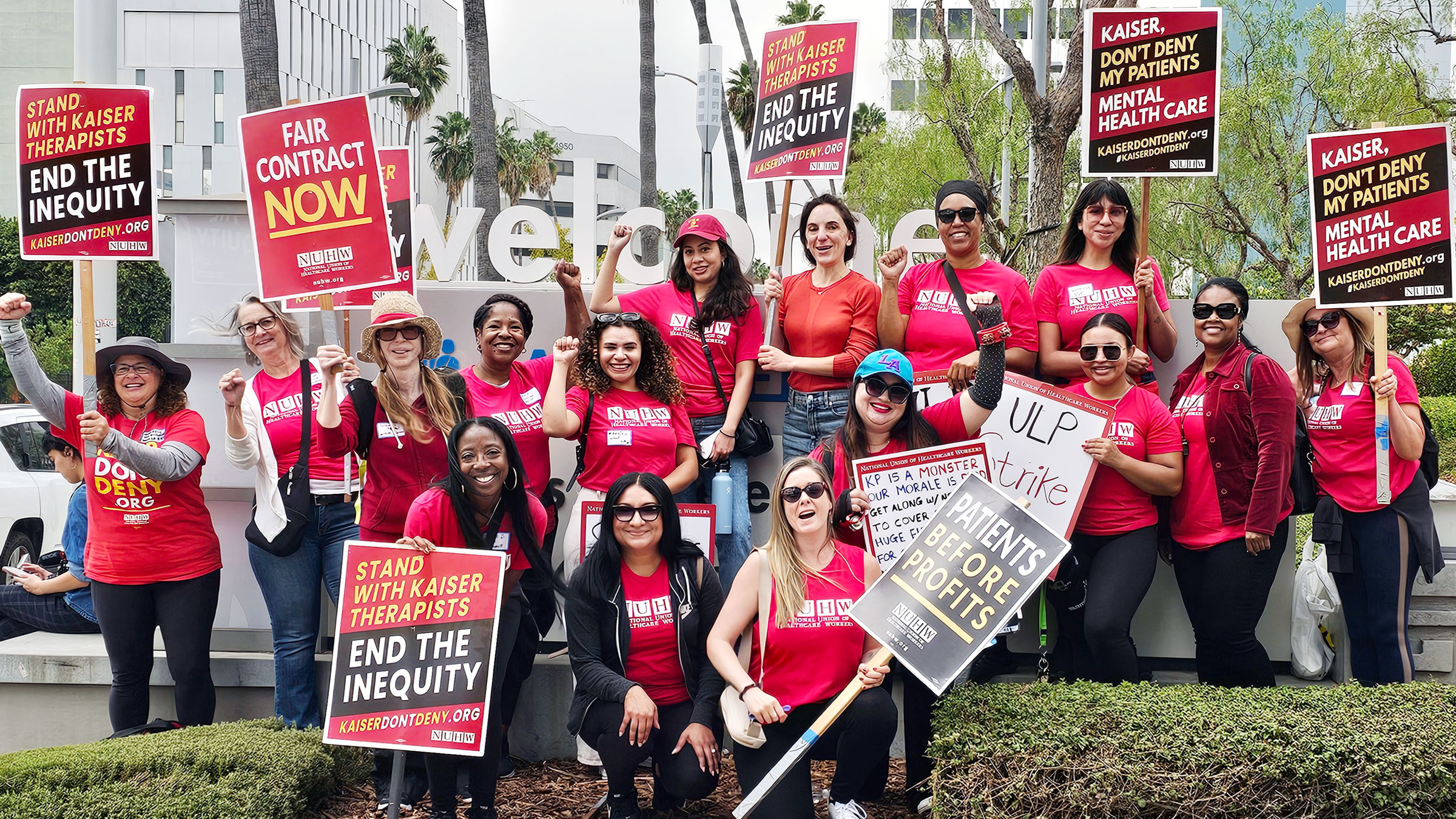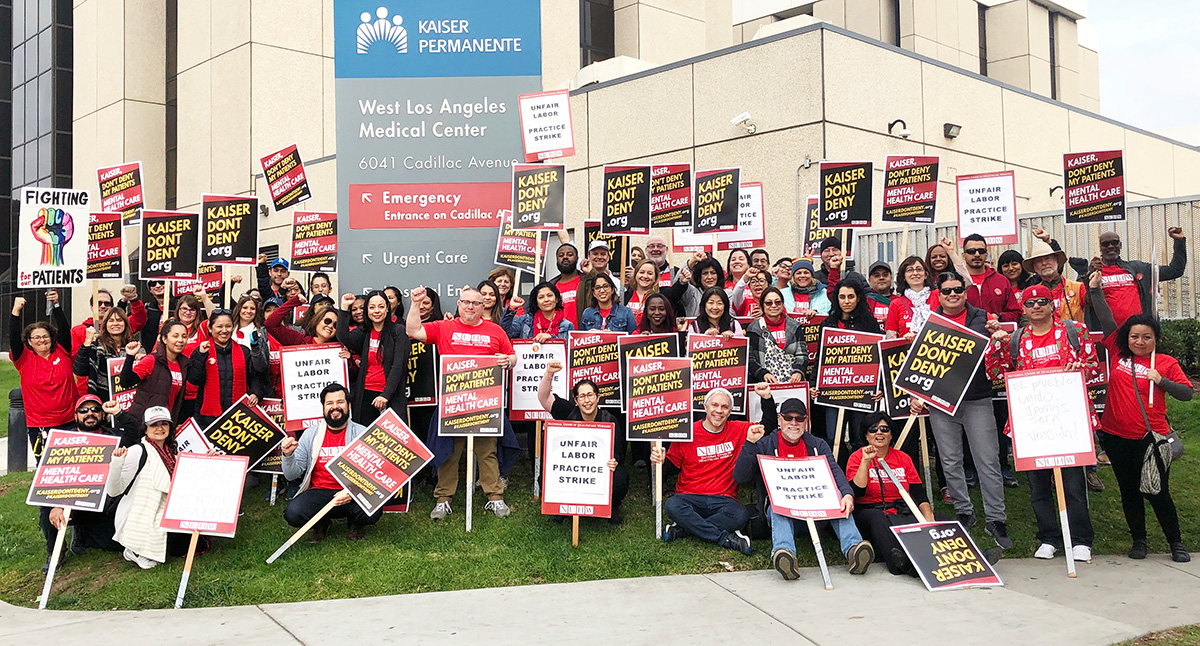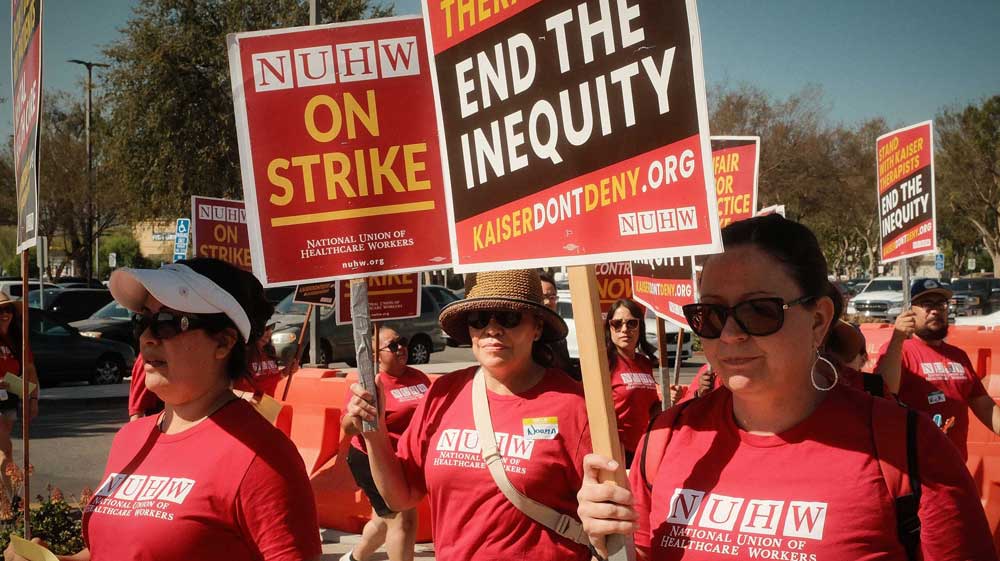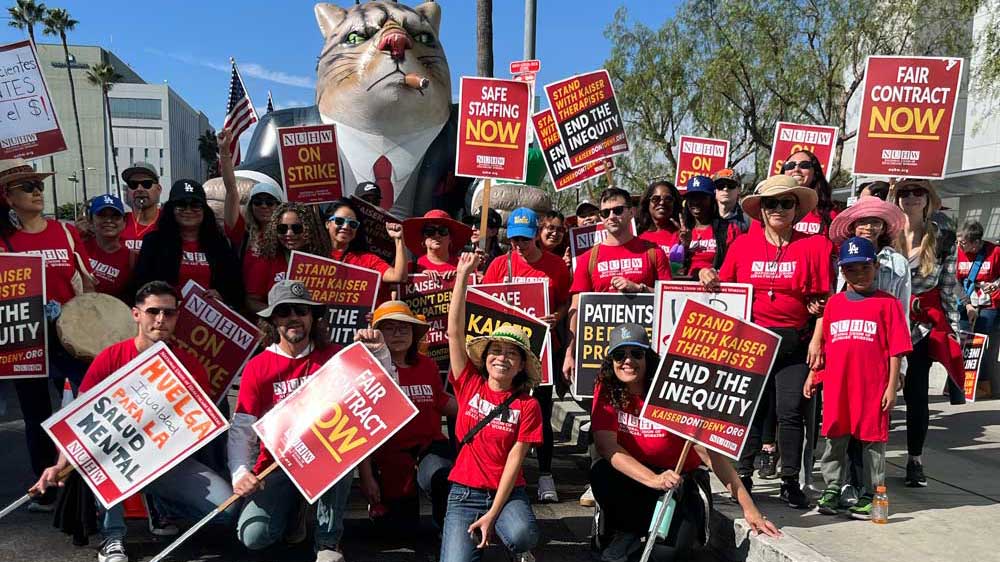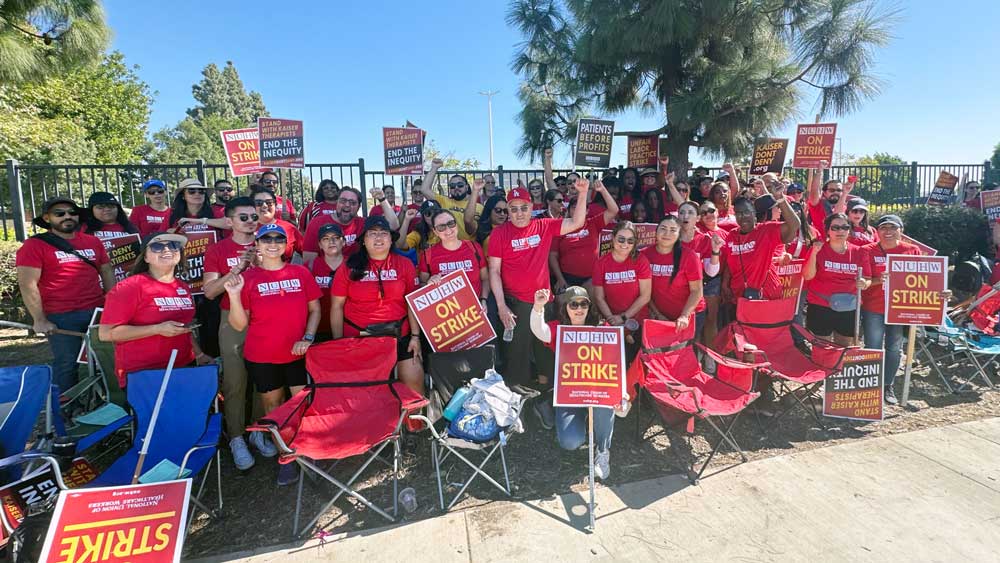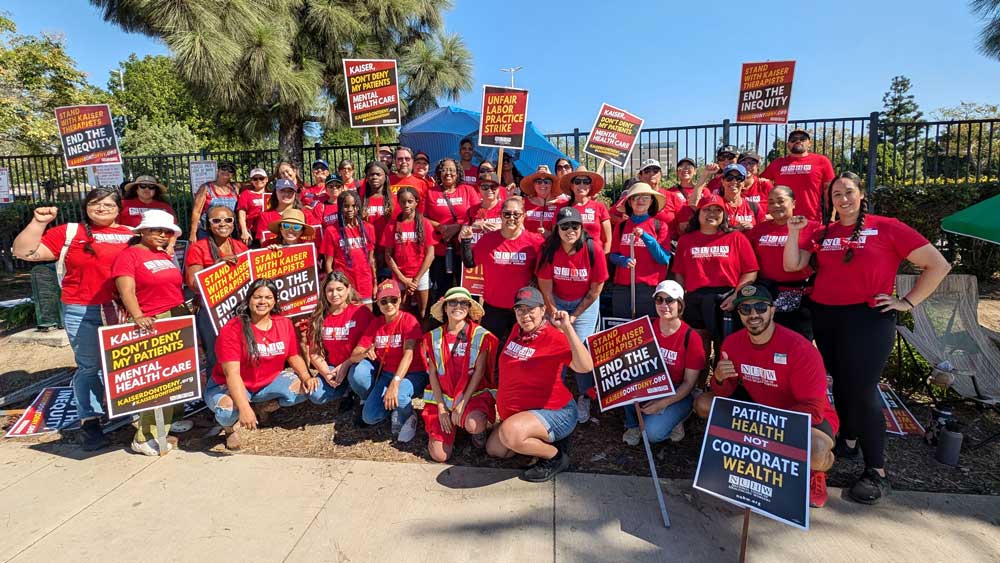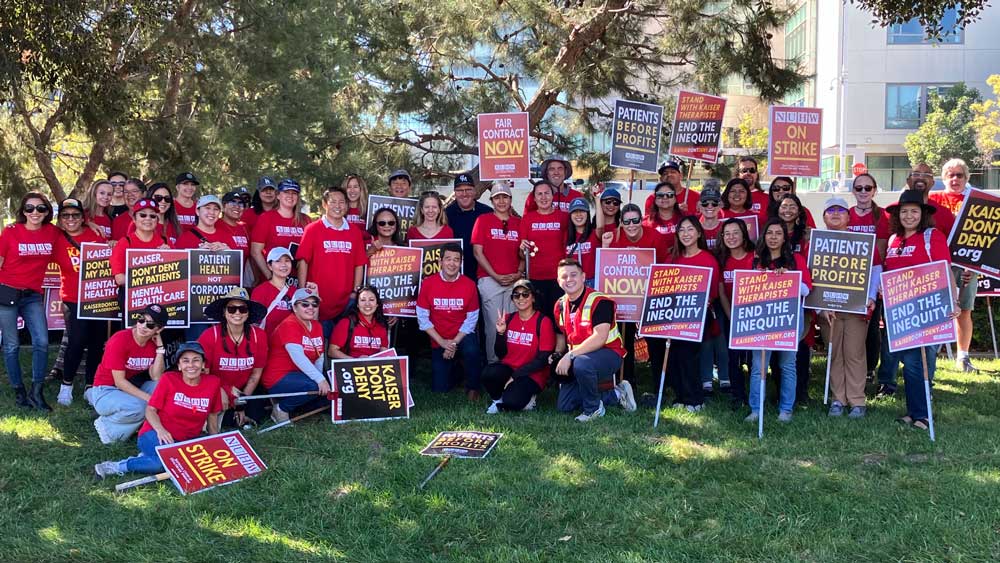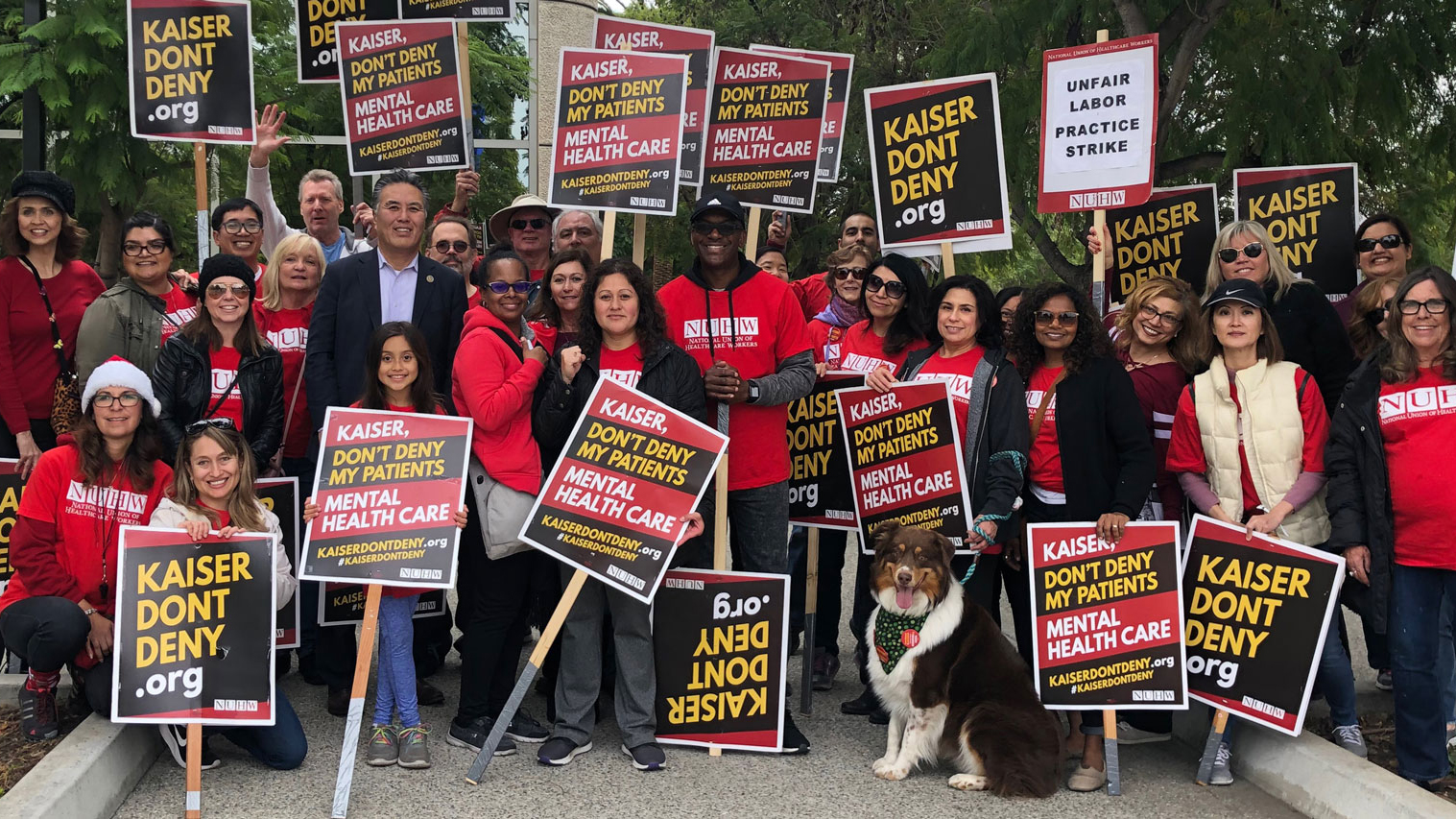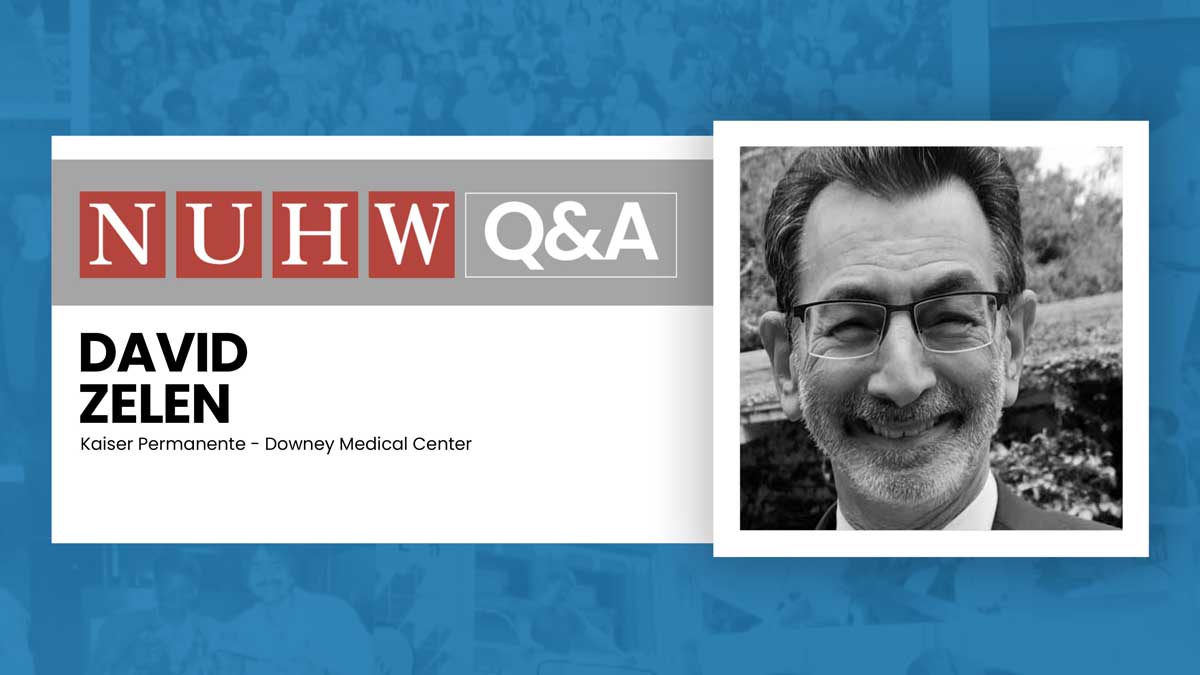
NUHW has 19,000 members, but David Zelen is one of the very few who has lived nearly every moment of the union’s existence, from its turbulent beginnings, when Zelen and his coworkers paid voluntary dues for five years as they fought Kaiser for a first contract, to its grand successes, including passing landmark mental health laws to force Kaiser to make improvements it wouldn’t agree to in bargaining.
With Zelen retiring after 37 years at Kaiser’s Downey Medical Center, he took the time to reflect on his career and work as a leader in NUHW. The answers have been edited for clarity and length.
Why retire now?
I was going to retire a little earlier, but we had a 6.5-month strike. I wouldn’t retire while we were striking. And I wanted to come back and be able to reconnect with my patients. I wanted them to have one last good clinical experience with me before I left.
Were you always active in the union?
Yes. When I started at Kaiser, we were members of SEIU 535. Our local was very democratic, just like NUHW. We had maybe over 1,000 members, and our leadership took direction from us.
What happened to Local 535?
In the early 2000s, SEIU decided to consolidate locals and they wanted to make us part of SEIU-United Healthcare Workers West. This was when NUHW leadership ran SEIU-UHW. We voted unanimously against it, but it didn’t matter because we were a tiny voting block. I remember our first meeting after the vote was with Ralph Cornejo, who’s still with NUHW. People were screaming at him. “Why are you taking us over?” We were so mad, but Ralph, who could have been a therapist himself, was great about calming us down. (We didn’t realize at the time that UHW leadership at that time was also opposed to locals being consolidated against their will.)
Was it OK after that?
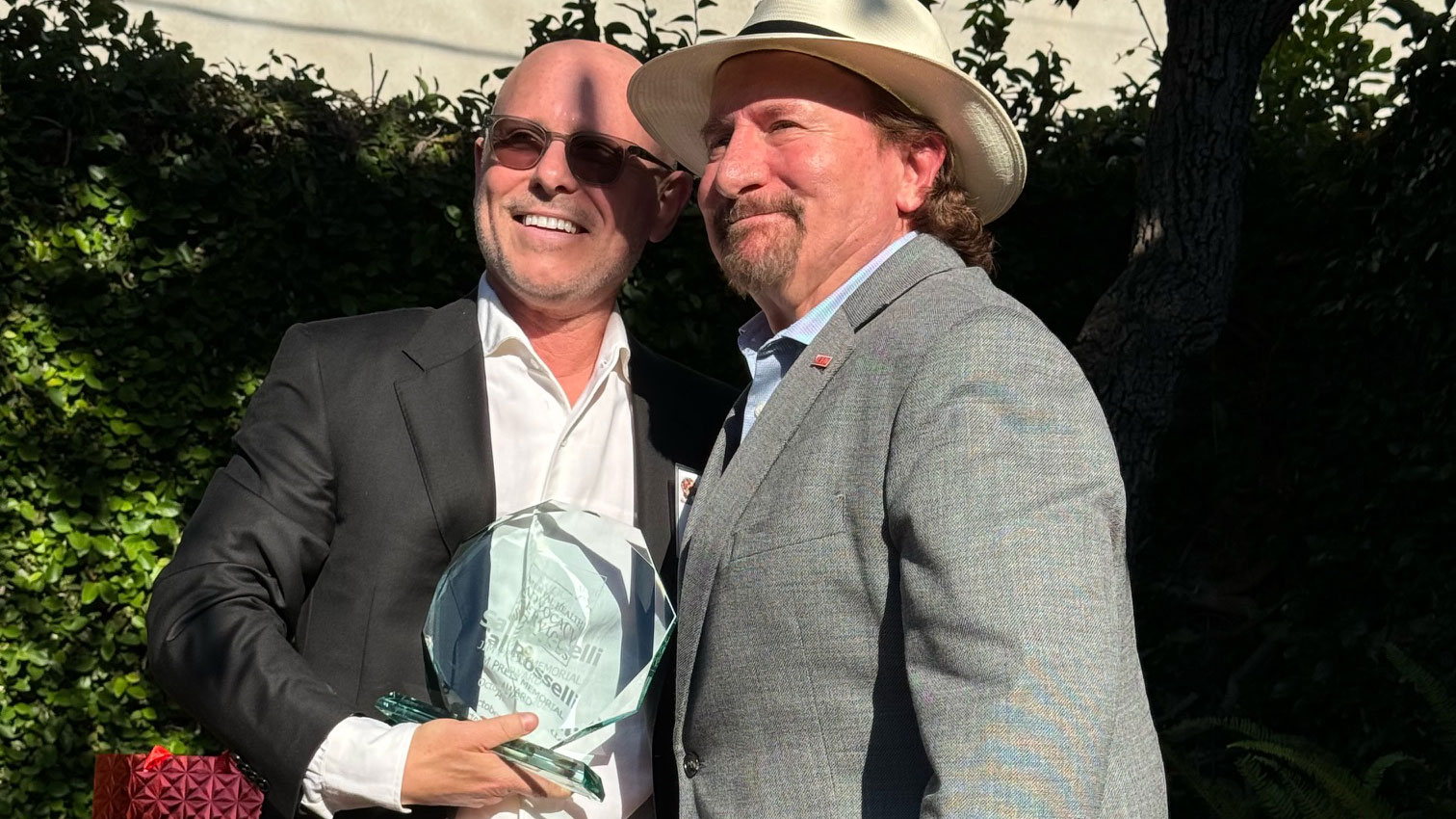
Much better. We got our own steward council and our own organizer. Sal Rosselli was the president then, and they had never really done that for anyone else, but they did it for us. When we pushed, they were responsive, they listened. It was very democratic.
Were the main issues at Kaiser then still about access?
Yes, but the access issues were different. When we first made access an issue in our 1997 contract, the waiting list for an initial appointment was 3-to-4 months. But once they got in the door, we could see patients weekly and 40 percent of our time was for non-patient facing care.
What changed?
Mental health parity laws were passed that made Kaiser more concerned about initial access. So patients could get an initial appointment quickly but might have to wait months for a follow-up appointment.
Has Kaiser’s posture changed in bargaining over the years.
No. When I was on the bargaining team nearly 30 years ago, a Kaiser representative claimed the reason that we have access problems was that therapists were seeing private practice patients during their patient management time. It took every fiber in my being not to leap over the table and strangle that man. I realized then that I didn’t have the temperament to be on the bargaining committee. I had to contribute in other ways.
In 2009 SEIU put United Healthcare Workers West into receivership, which sparked the founding of NUHW. How did that affect you and your coworkers?
We left SEIU almost right away. We didn’t like that top-down stuff that SEIU was doing. We had a member go to their conference in Puerto Rico. He flew out there on his own dime, and they wouldn’t let him speak. We’re professionals. We wanted to make sure our voices were heard. We didn’t want to be told what to do.
After becoming one of the first units to join NUHW, it took five years to win a first contract because Kaiser wanted to force you to return to SEIU. How did you and coworkers persevere?
We didn’t like being told what to do. We weren’t going to go back to a union that wasn’t listening to us. For us, we were the union. That’s a belief we had that got passed down over the years. The people like Sal Rosselli, they work for us. They need to listen to what we want to do, not the other way around.
What was it like collecting voluntary dues money from coworkers who were still fighting for a first contract and had gone years without raises?
We had monthly membership meetings to keep people updated going back to 1997. And it was made very clear that if you want to be part of this union, then you have to pay dues. At my clinic, we were such activists, it really wasn’t much of a problem. I’d say about 75-80 percent paid dues.
Has the situation at Kaiser gotten better or worse?
It’s worse, because of Kaiser. Everything at Kaiser is worse. Every doctor’s schedule is filled every moment of the day. It’s even harder for us because we basically do everything but put the appointment into the computer. When I started, we didn’t see people with autism or eating disorders. There’s so much more for us to do in addition to the therapy, and Kaiser for 20 years didn’t increase staffing even as the number of patients significantly increased. We don’t have people spending their careers here anymore because of the grind. I know a psychiatrist who told me, “I don’t want to work here anymore because I don’t know my patients’ names and I don’t like that.”
How about Kaiser’s attitude?
That has also gotten worse. In the old days, we could sit down and work together to solve problems. Now Kaiser doesn’t want to listen to workers. It’s all adversarial.
What can workers do about it?
It’s a shame, but we have no choice but to fight with Kaiser. Part of our jobs is to be advocates for our patients. How can we be advocates for our patients if we can’t advocate for ourselves: in terms of our workload; in terms of our time; in terms of our compensation. It’s not in our nature. Therapists like to work collaboratively. That’s how we work with our patients. But we don’t put up with management telling us what to do.
What are some of the ways you and others have fought back against Kaiser?
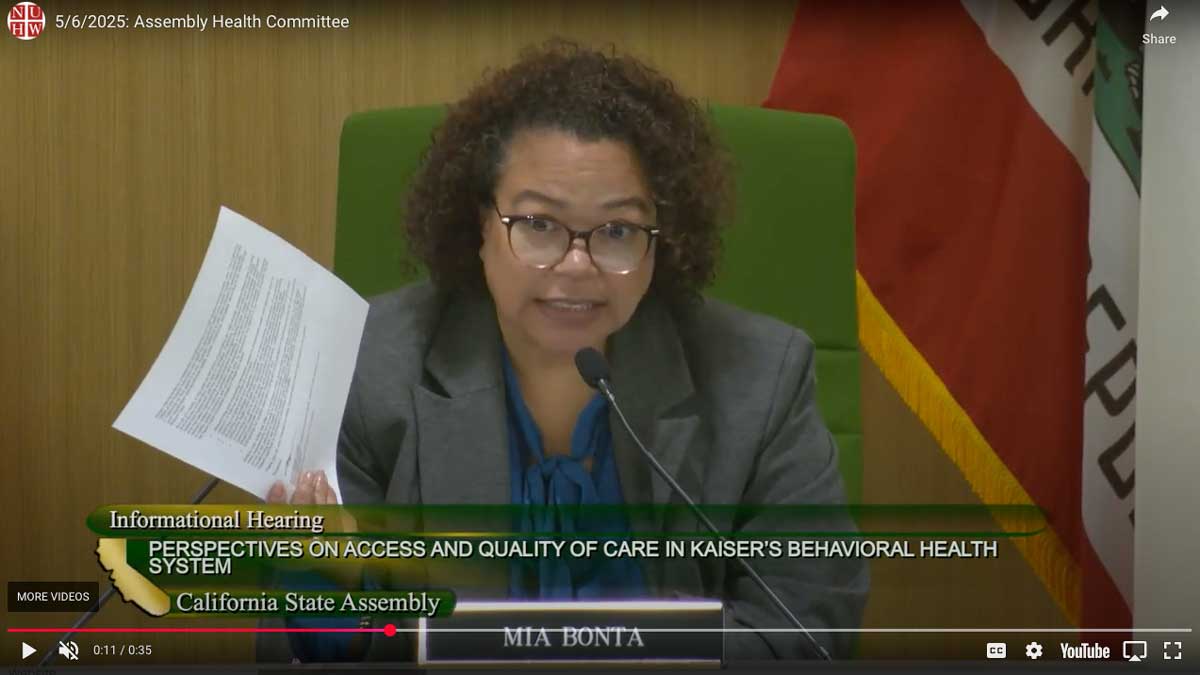
I worked with our NUHW Research Department and testified about access issues. I’ve also been a steward and encouraged others to step forward. As a democratic union, we do ourselves a disservice if we only have a few people doing most of the work.
What gives you optimism for the future?
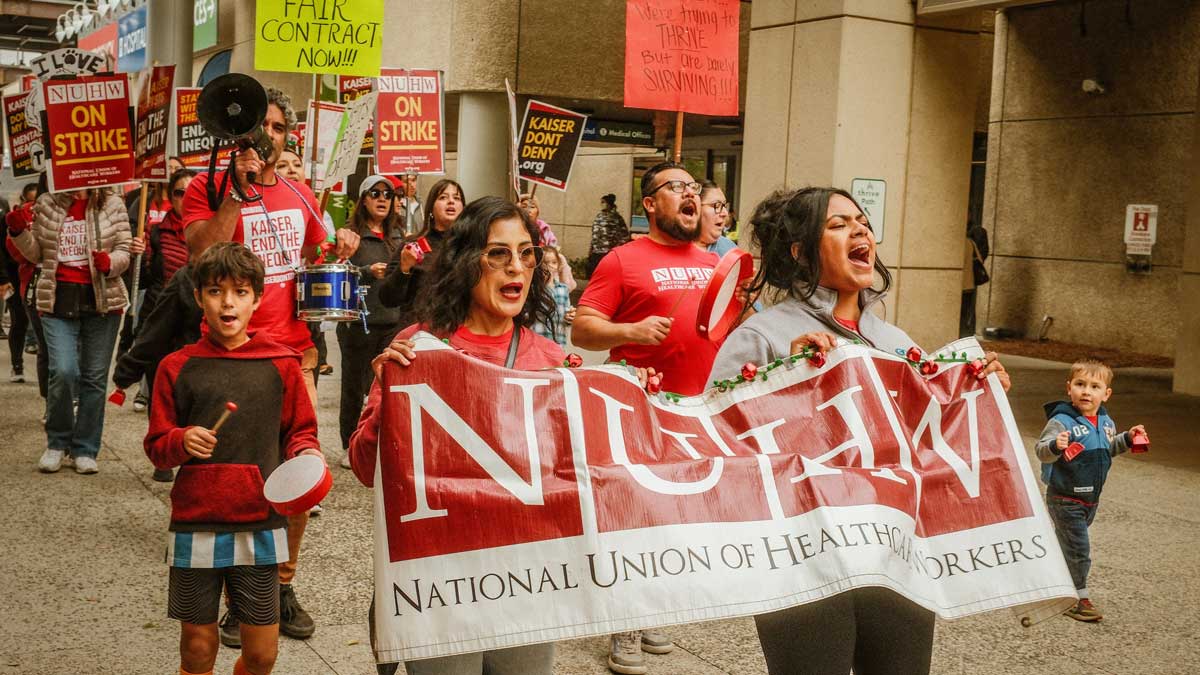
I think it’s great that we’re looking at joining the Alliance of Health Care Unions (a federation of 21 local unions representing more than 50,000 Kaiser employees). It will give us much more power. Kaiser doesn’t care when we go on strike, but it’s much harder on them when nurses and other workers also go on strike.
What would you say to anyone considering organizing with NUHW?
NUHW is a terrific union because it’s member driven. Being a steward empowered me a lot. I learned to stand up for myself and for my patients. I’ve always been someone who feels the need to stand up for the disenfranchised, and NUHW helped me accomplish that goal as a union member and union leader.