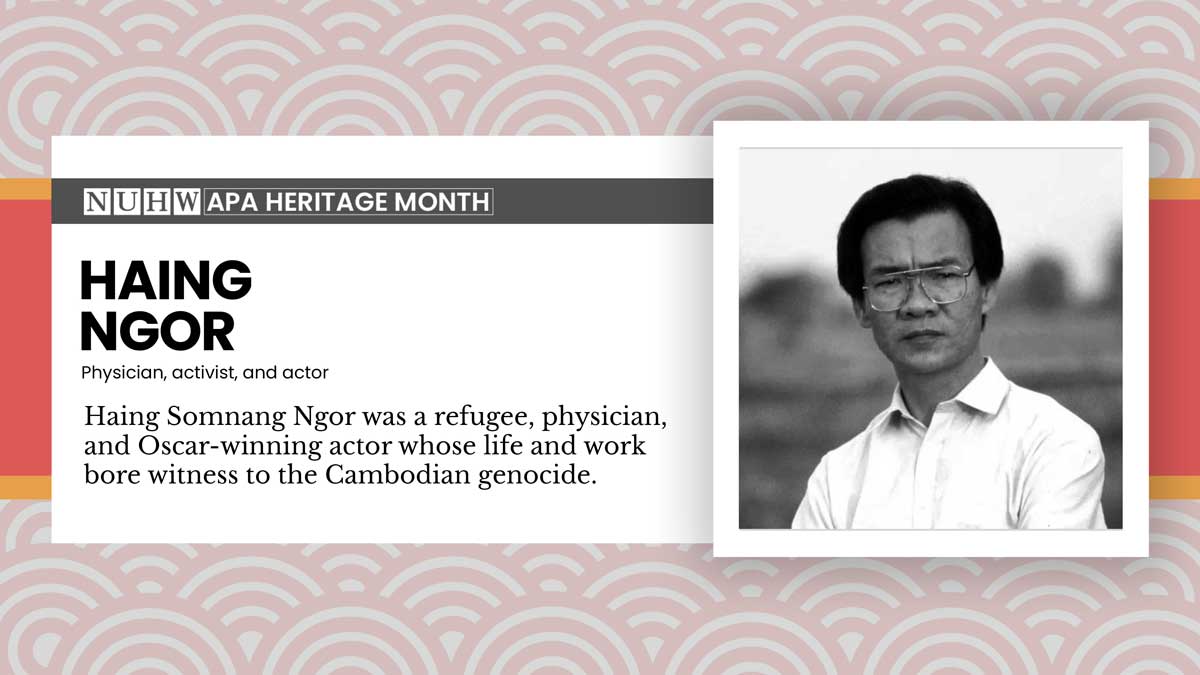
Haing Somnang Ngor was a Cambodian American physician, actor, and human rights advocate whose life story stands as a powerful testament to resilience, survival, and the responsibility of bearing witness. Born in 1940 in Cambodia, Ngor worked as an obstetrician-gynecologist before the rise of the Khmer Rouge regime. During the Cambodian genocide, he was imprisoned in labor camps, where he endured unimaginable hardship and loss — including the death of his wife, whom he was unable to save because revealing his medical training would have meant execution. After escaping to a refugee camp and eventually resettling in the United States, Ngor rebuilt his life while carrying the weight of trauma and memory.
Ngor entered the world of film almost by chance, but his first role became historic. He was cast as journalist Dith Pran in the 1984 film The Killing Fields, a portrayal deeply rooted in his own lived experience under the Khmer Rouge. His performance earned him the Academy Award for Best Supporting Actor, making him only the second Asian man — and one of the few non-professional actors — to receive an Oscar. Rather than pursuing Hollywood stardom, Ngor used his platform to speak out about genocide, refugee rights, and the ongoing struggles of the Cambodian diaspora.
Through public speaking, community organizing, and humanitarian work, Ngor dedicated the remainder of his life to honoring victims of the Khmer Rouge and supporting survivors. His memoir, Haing Ngor: A Cambodian Odyssey, further amplified those stories for audiences around the world. His legacy is a reminder that storytelling can be a powerful force for remembrance, justice, and collective healing.