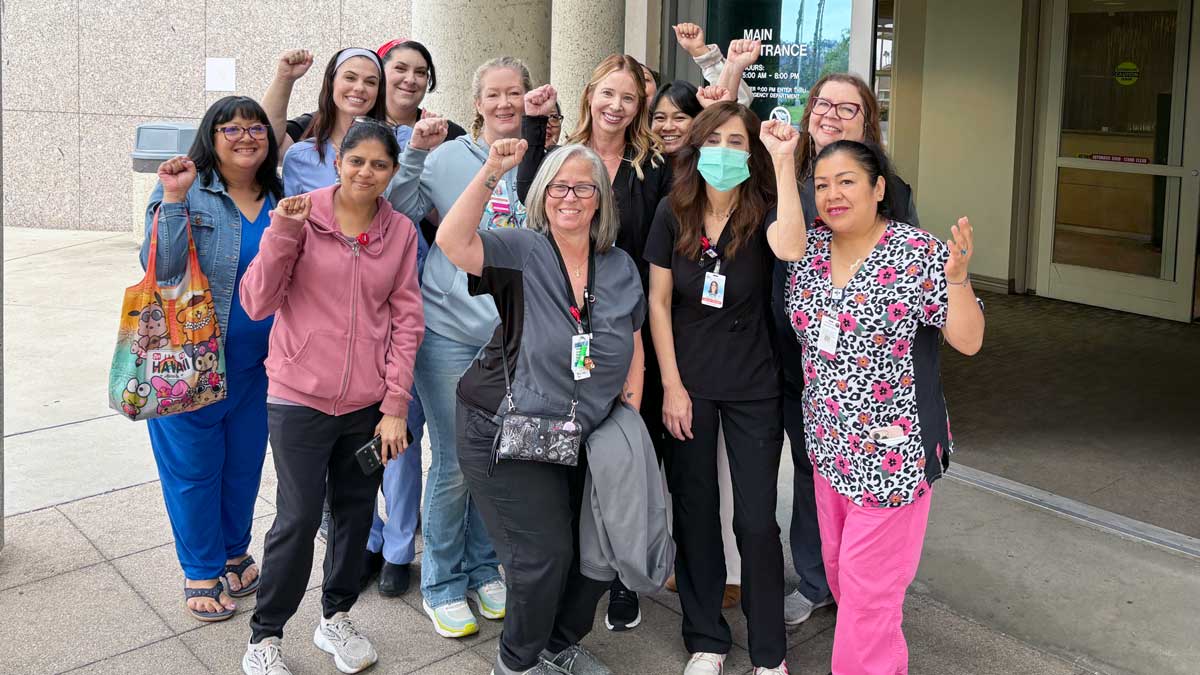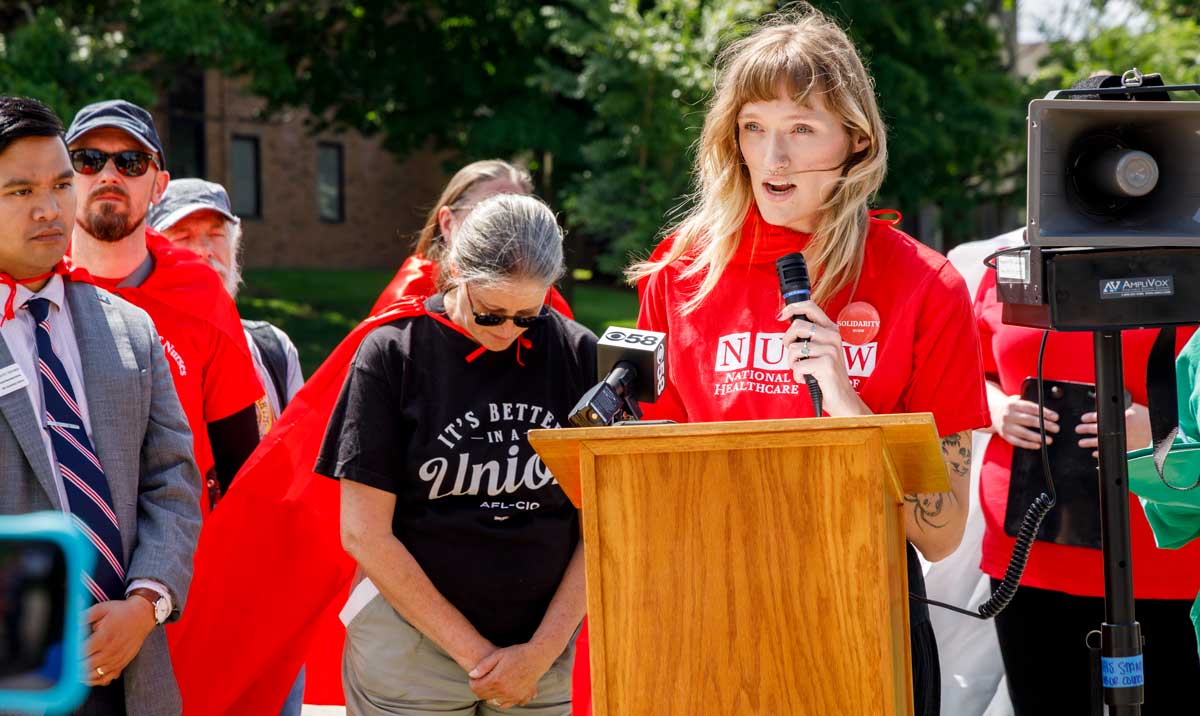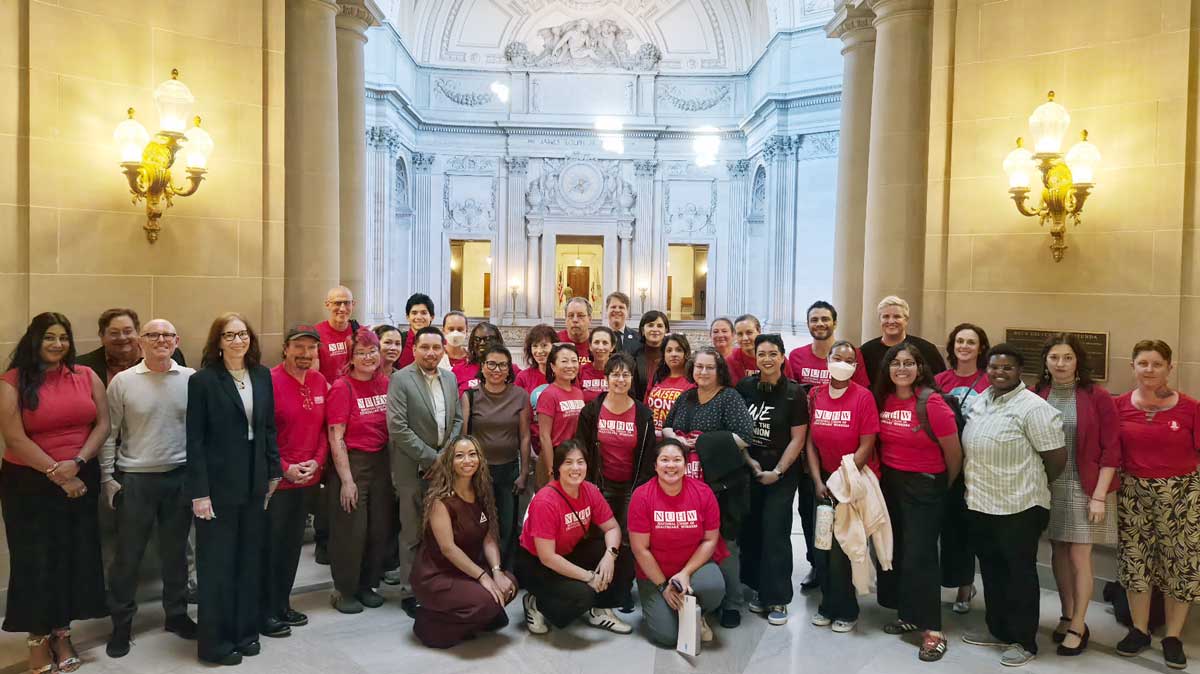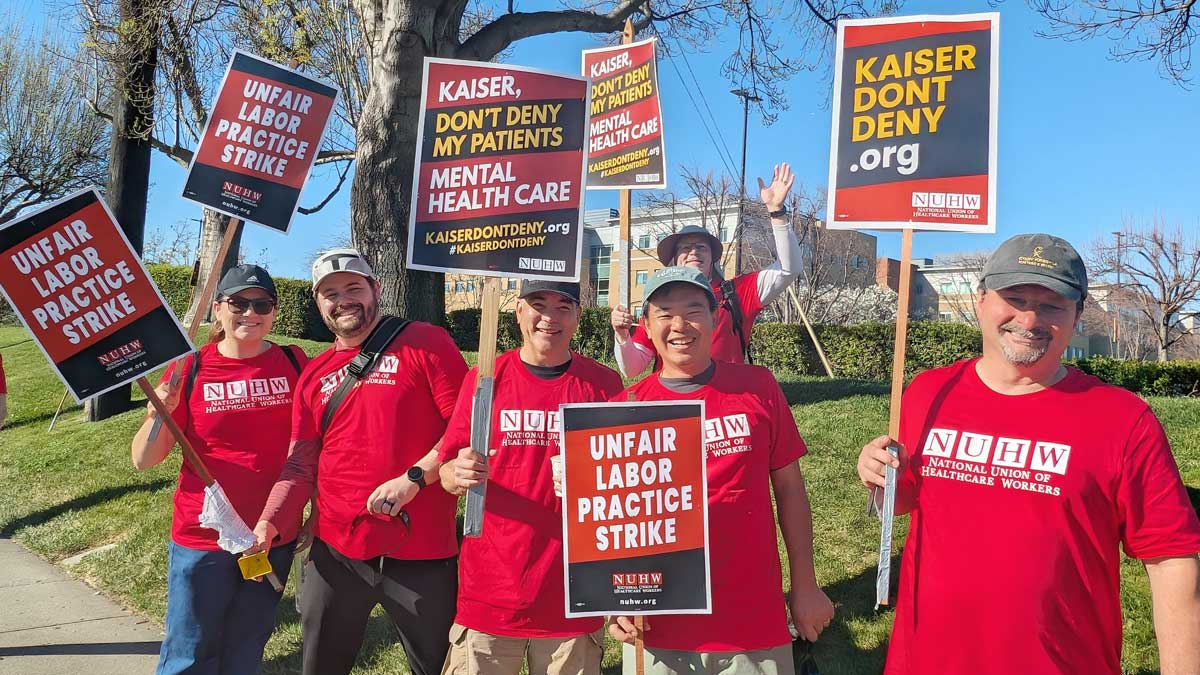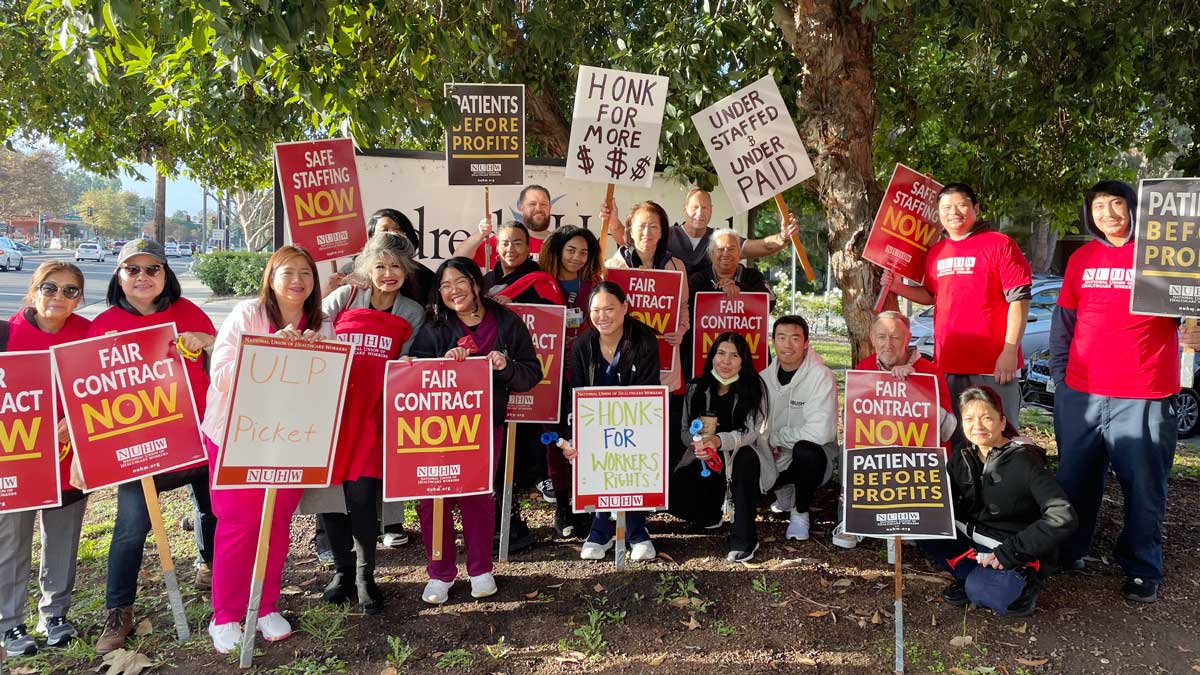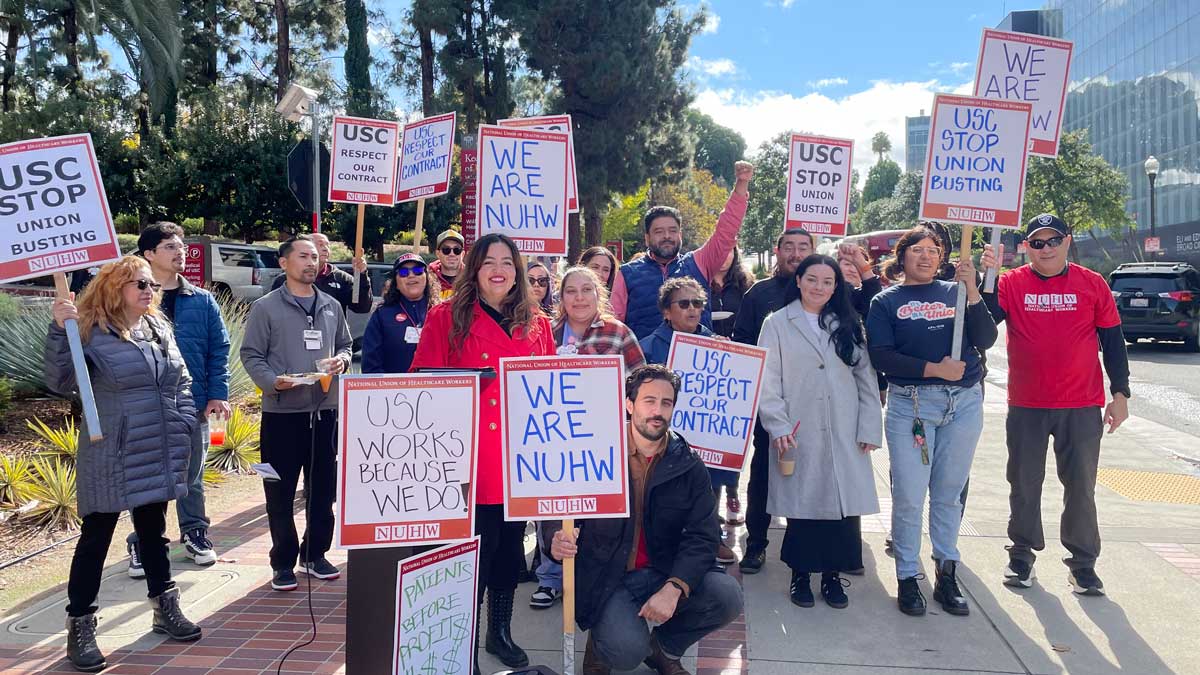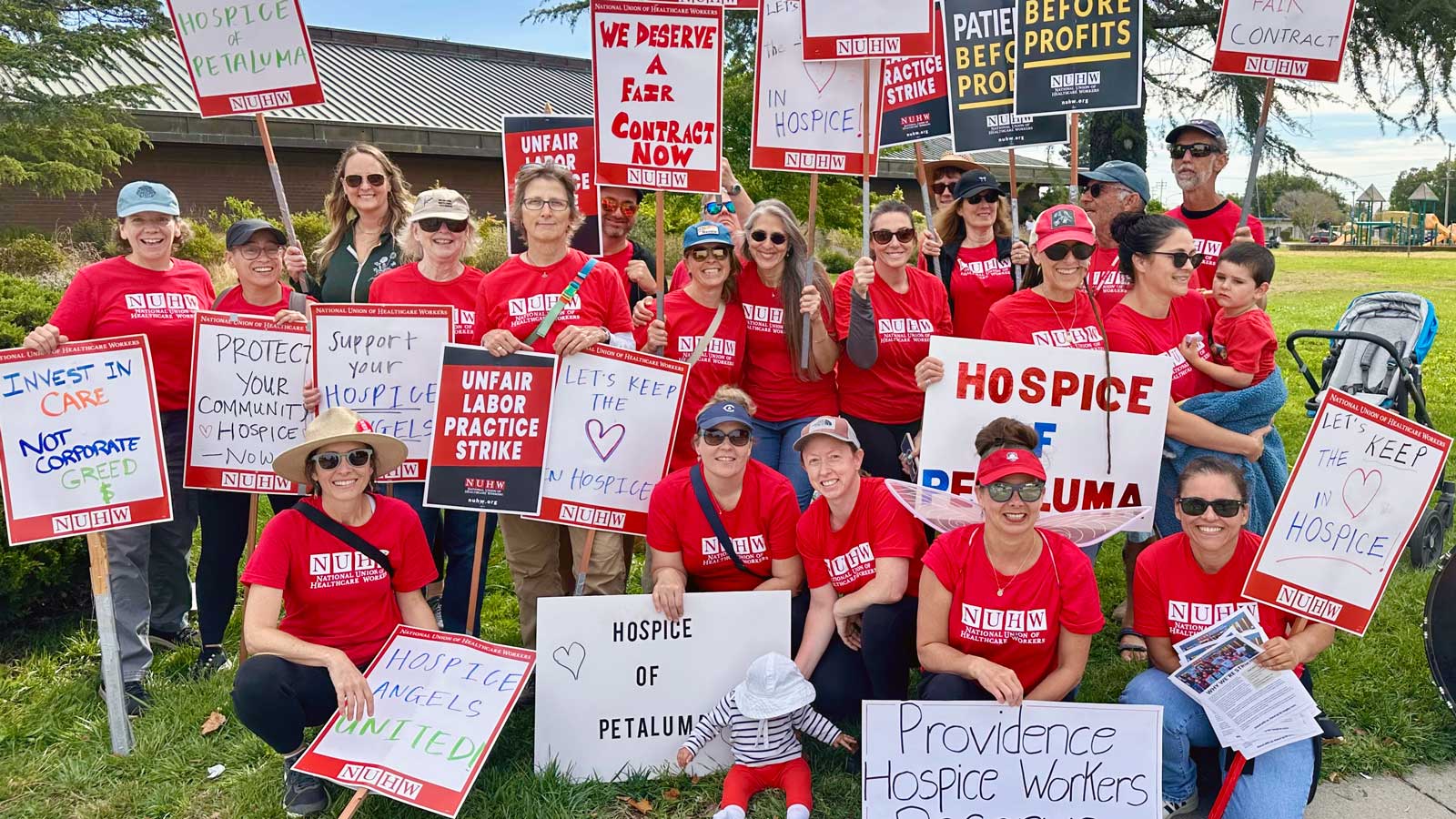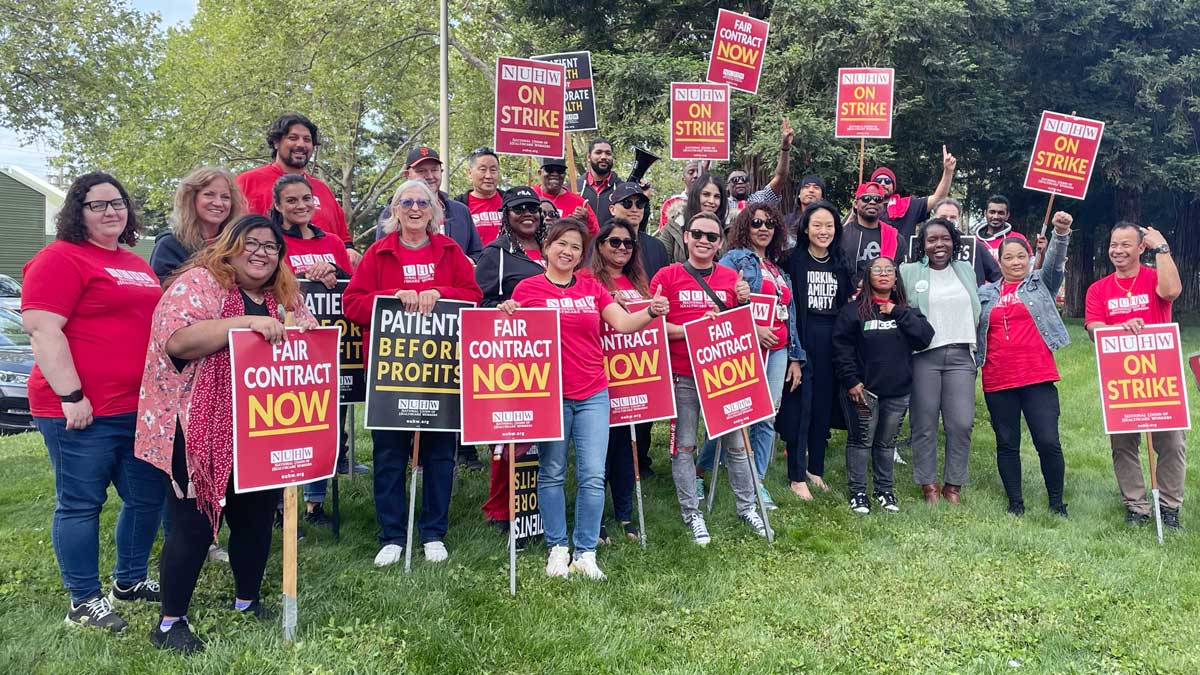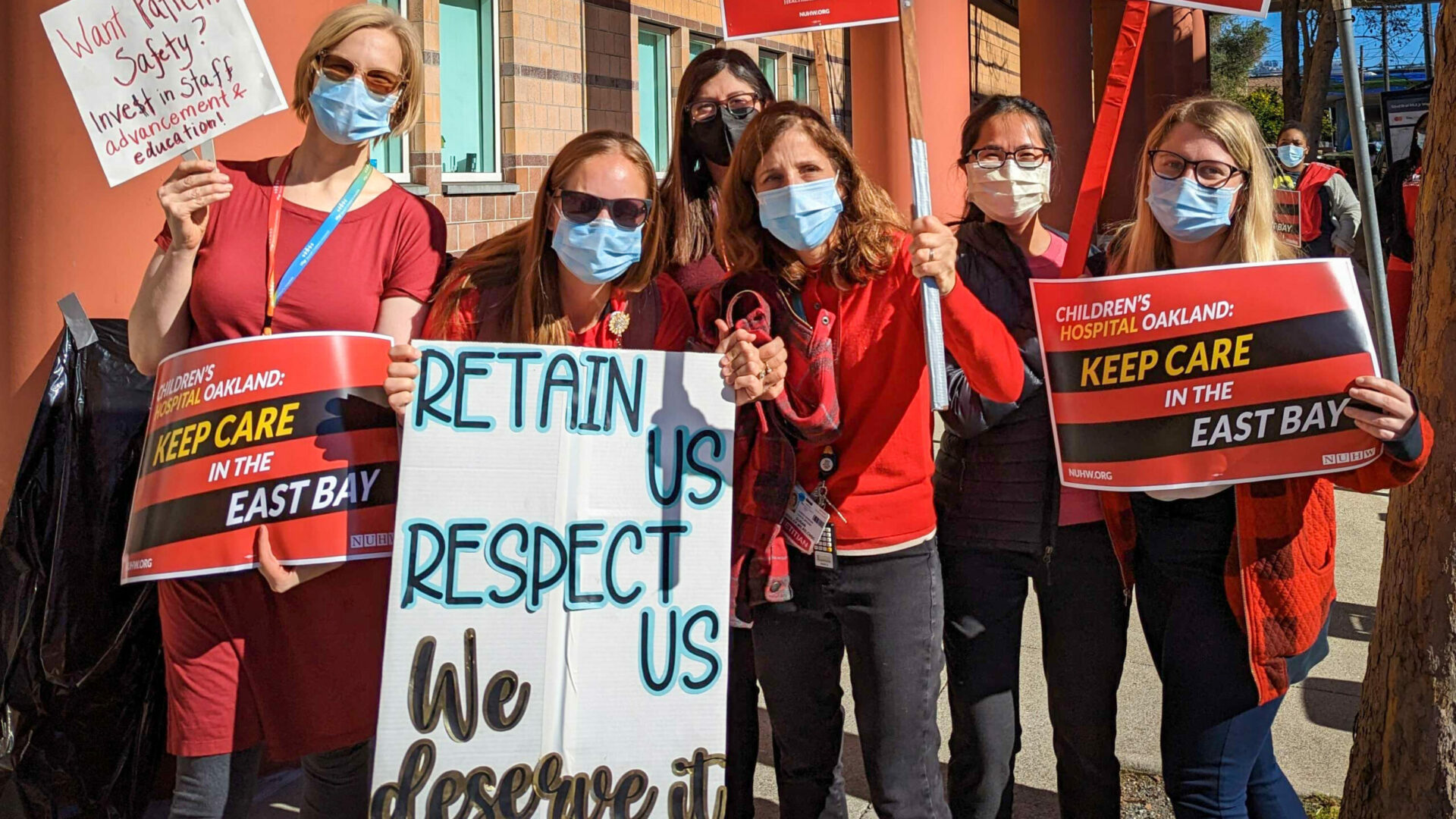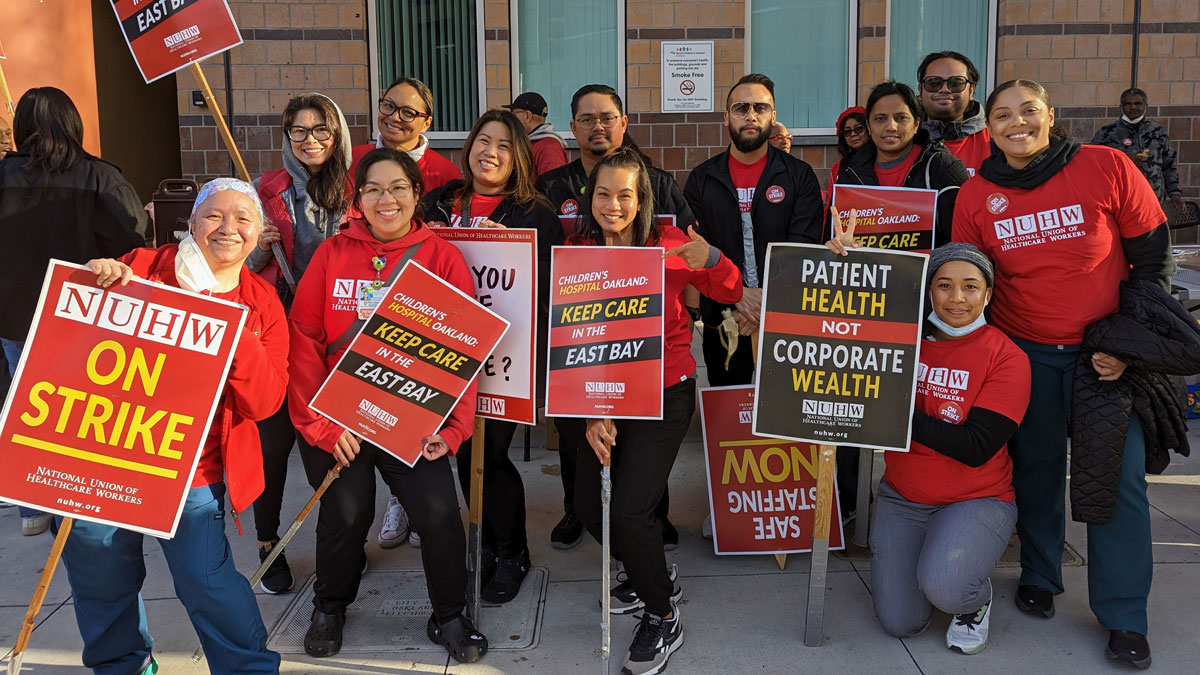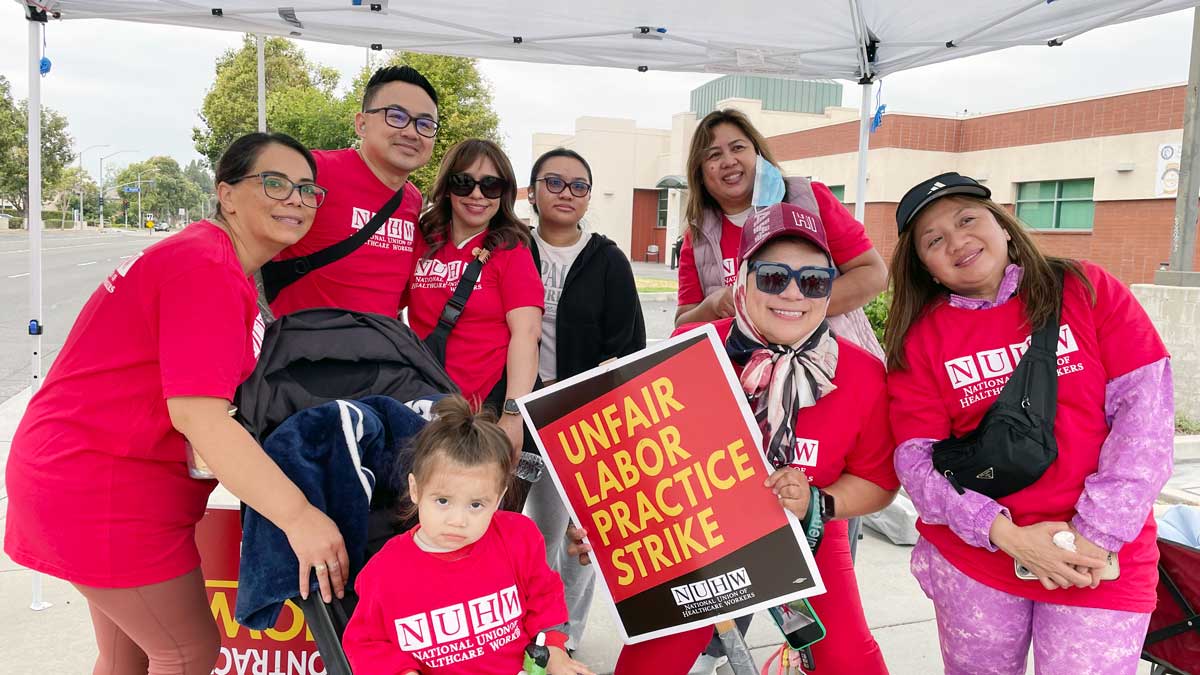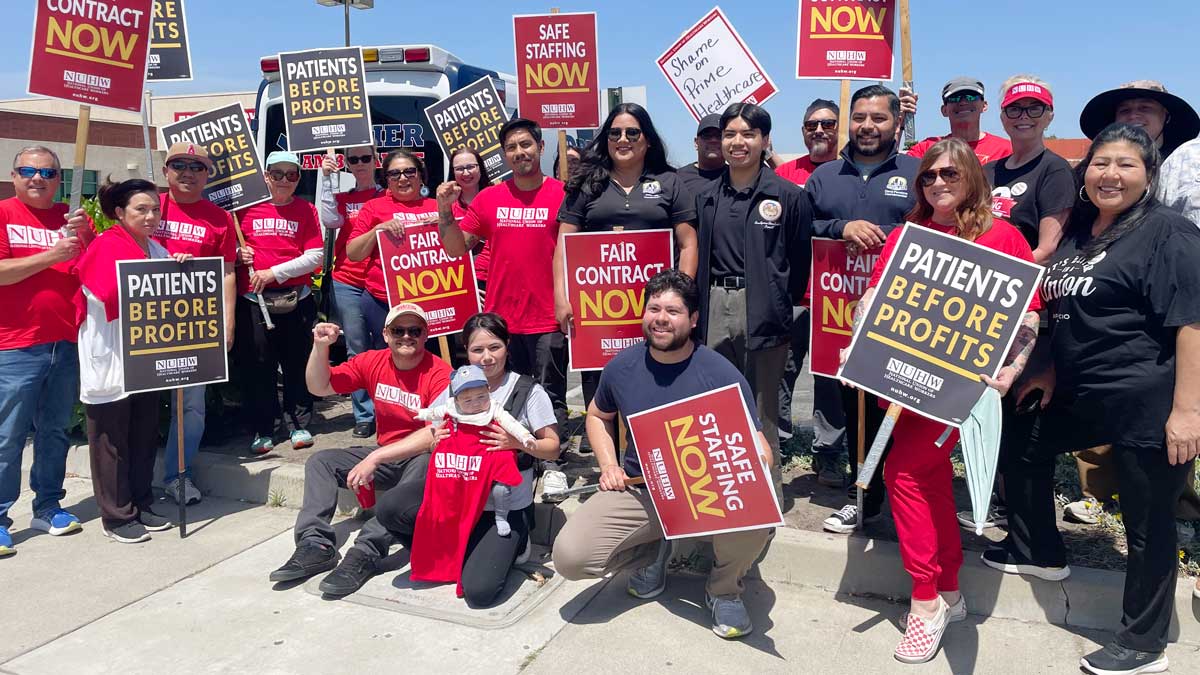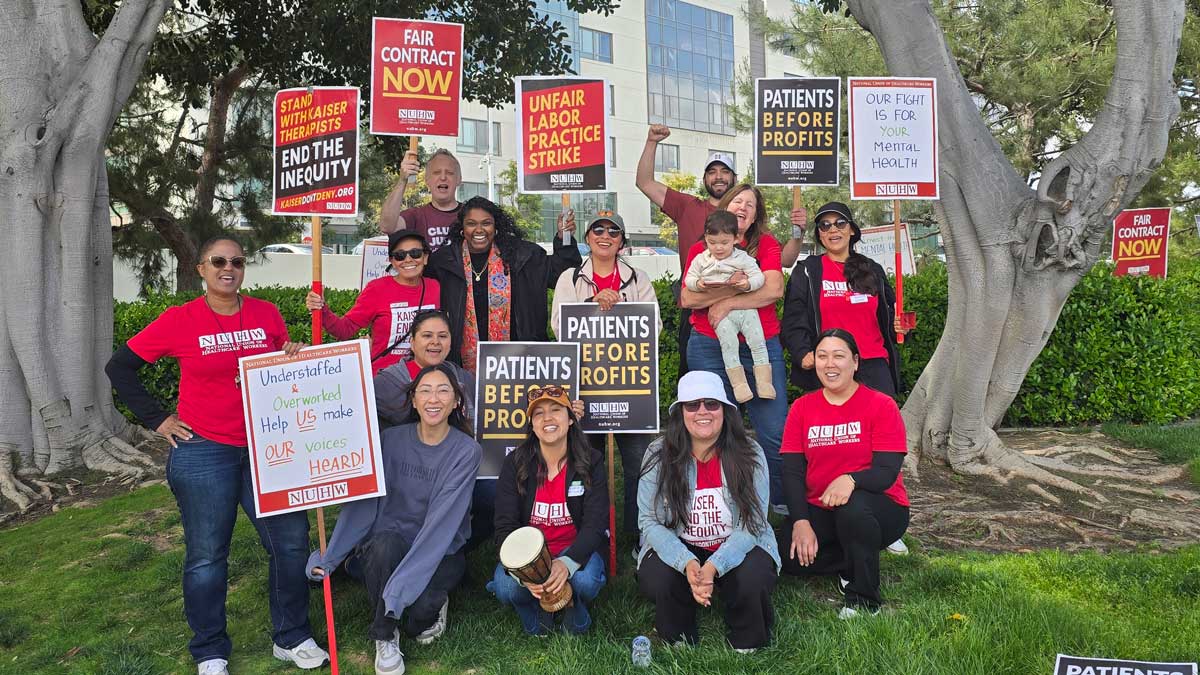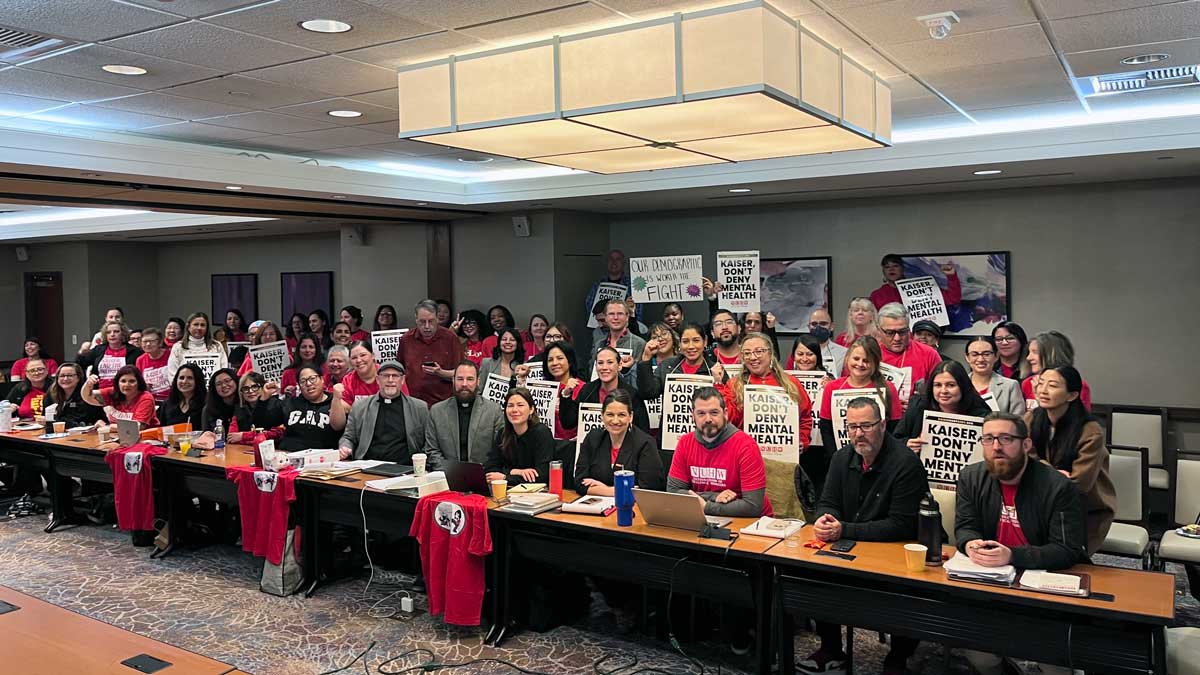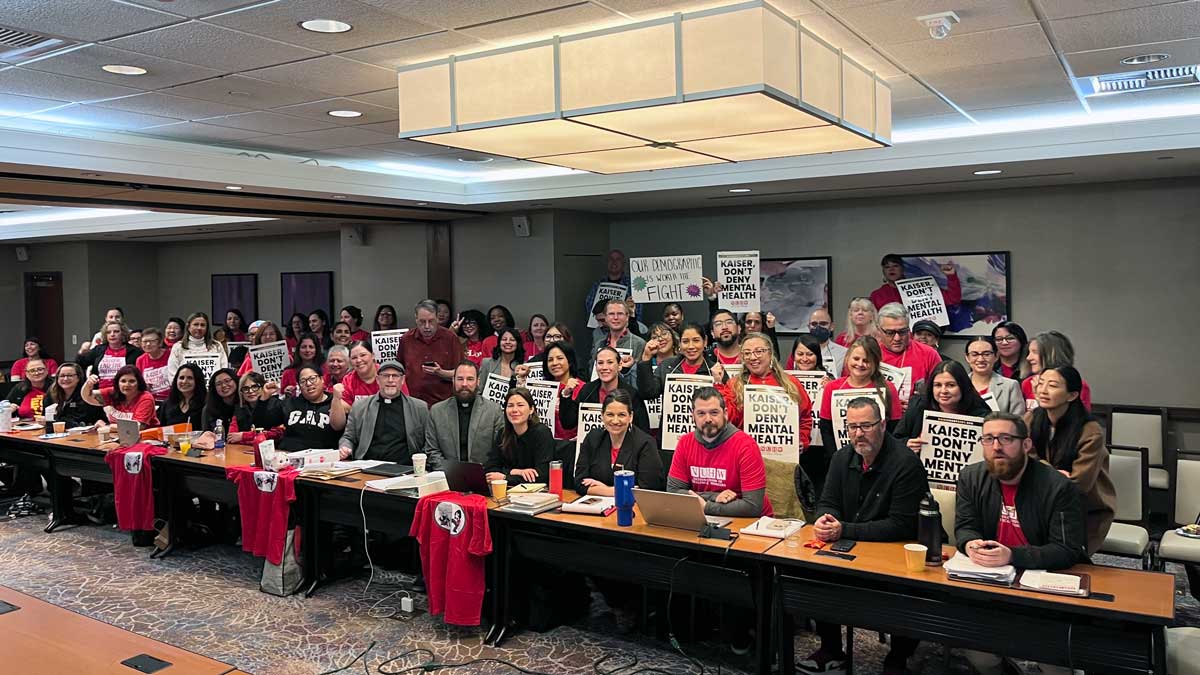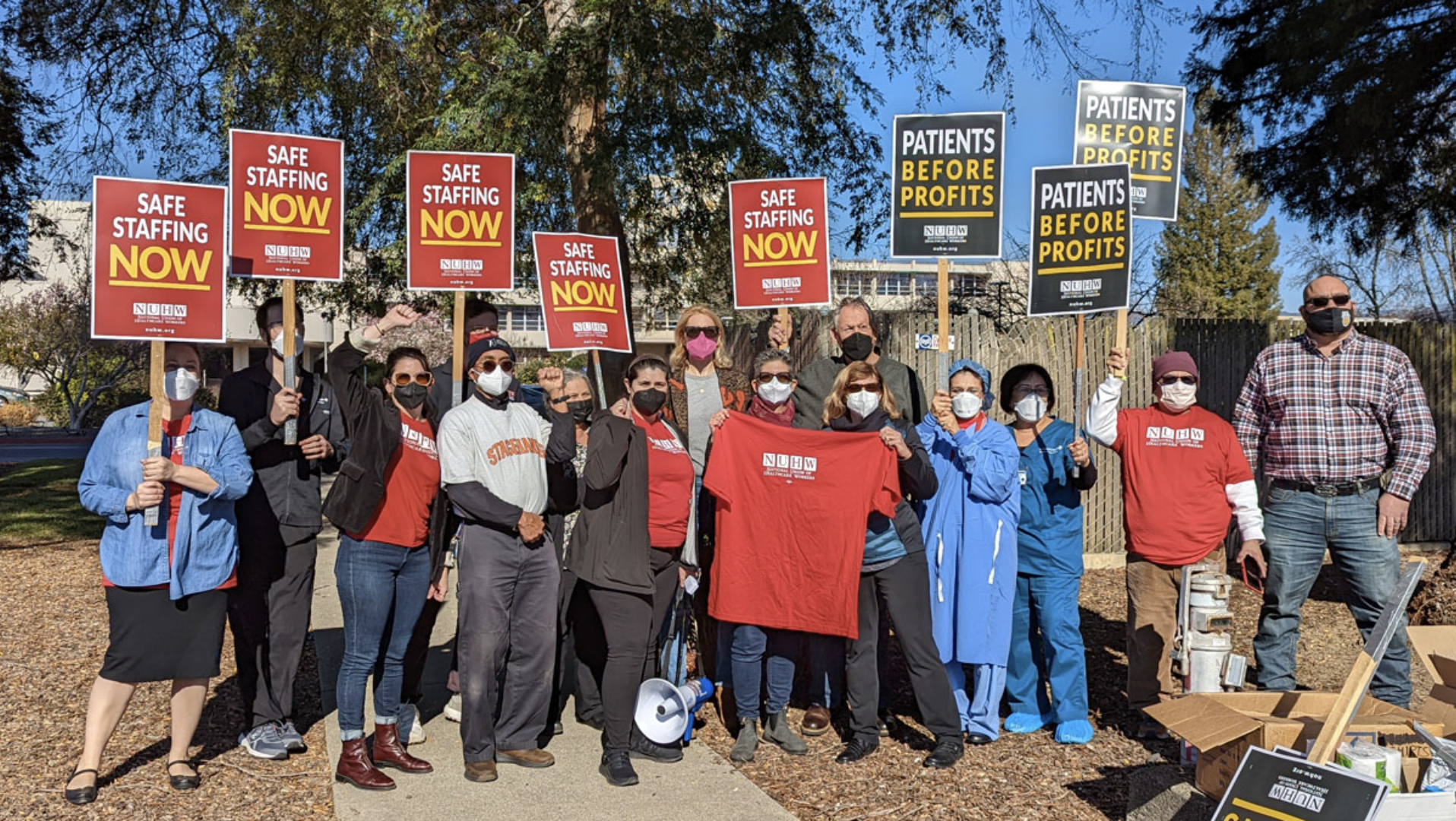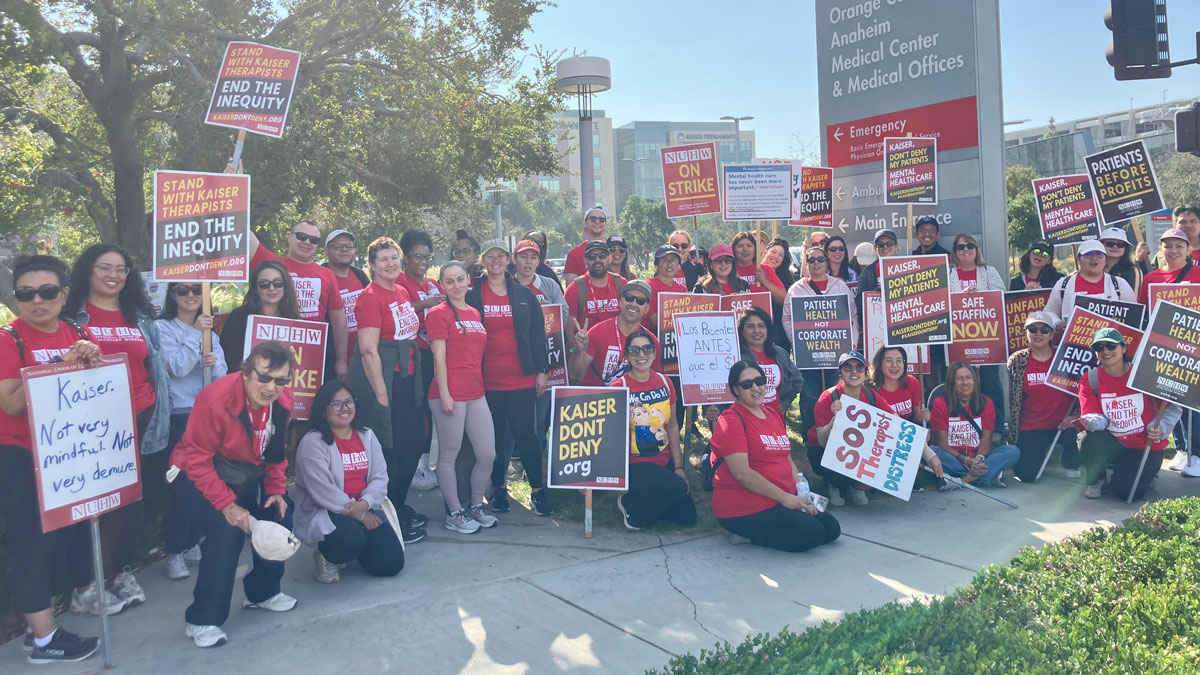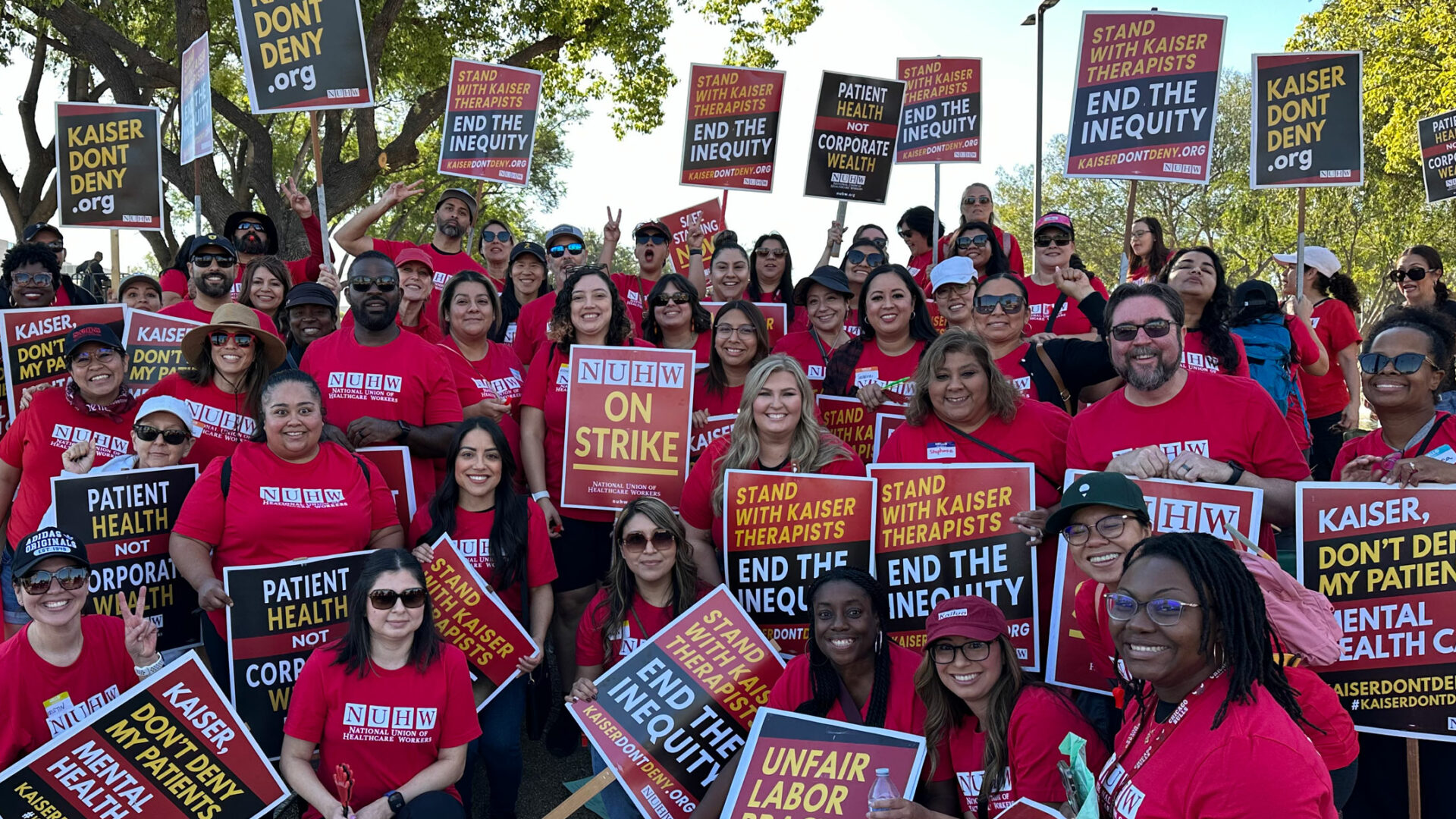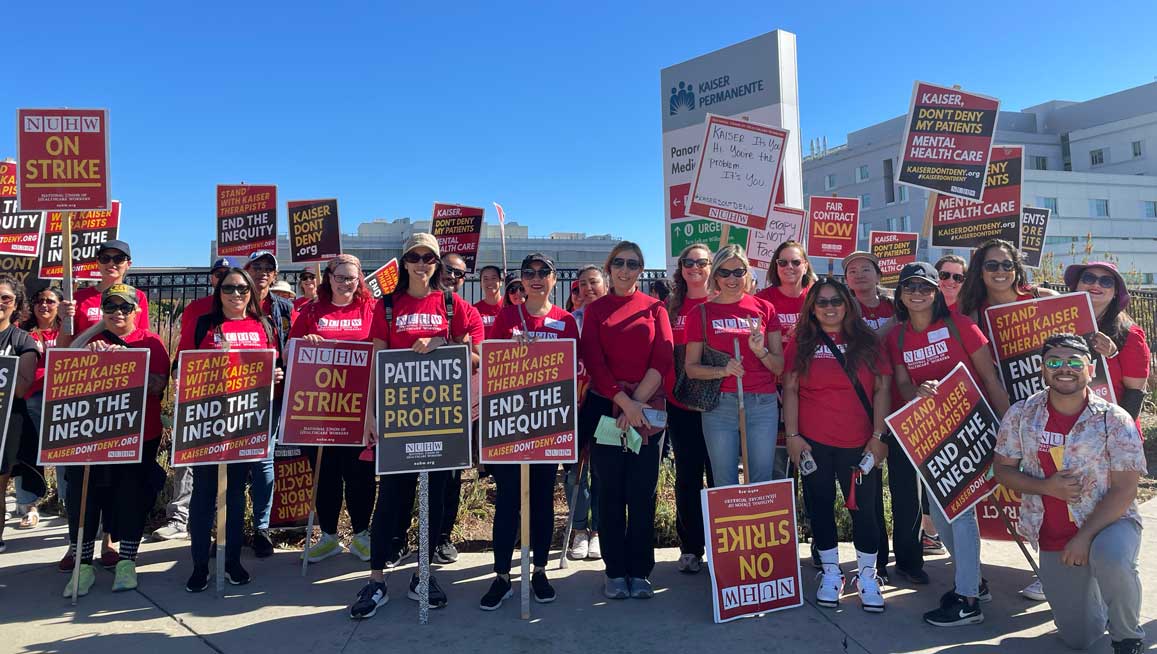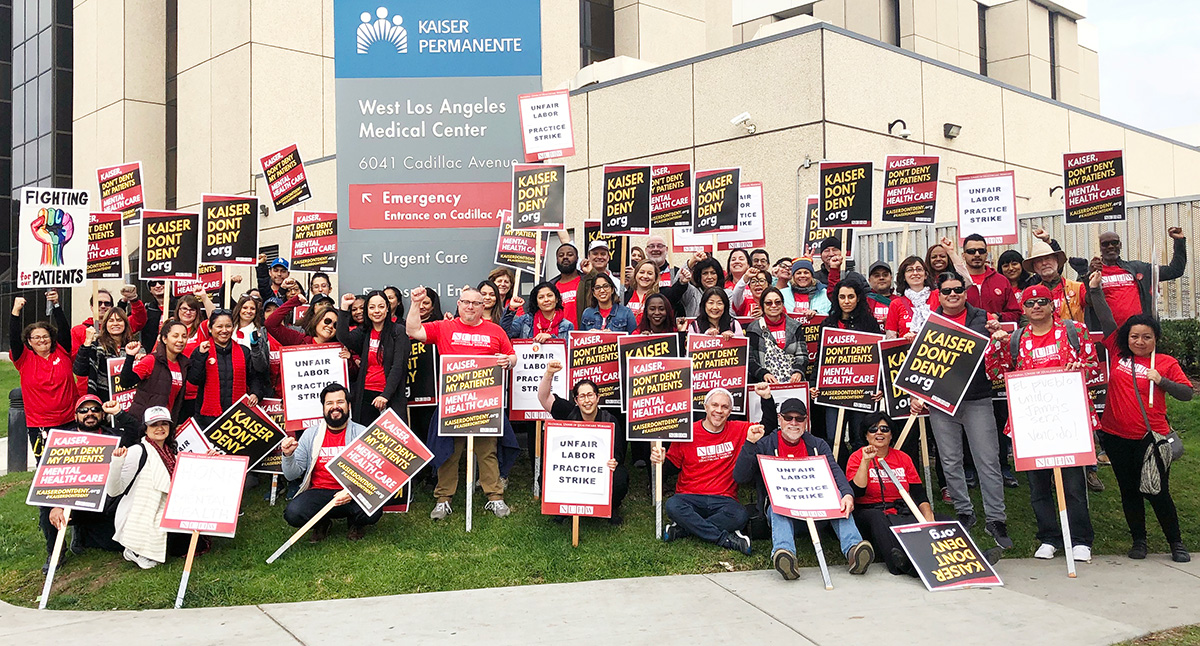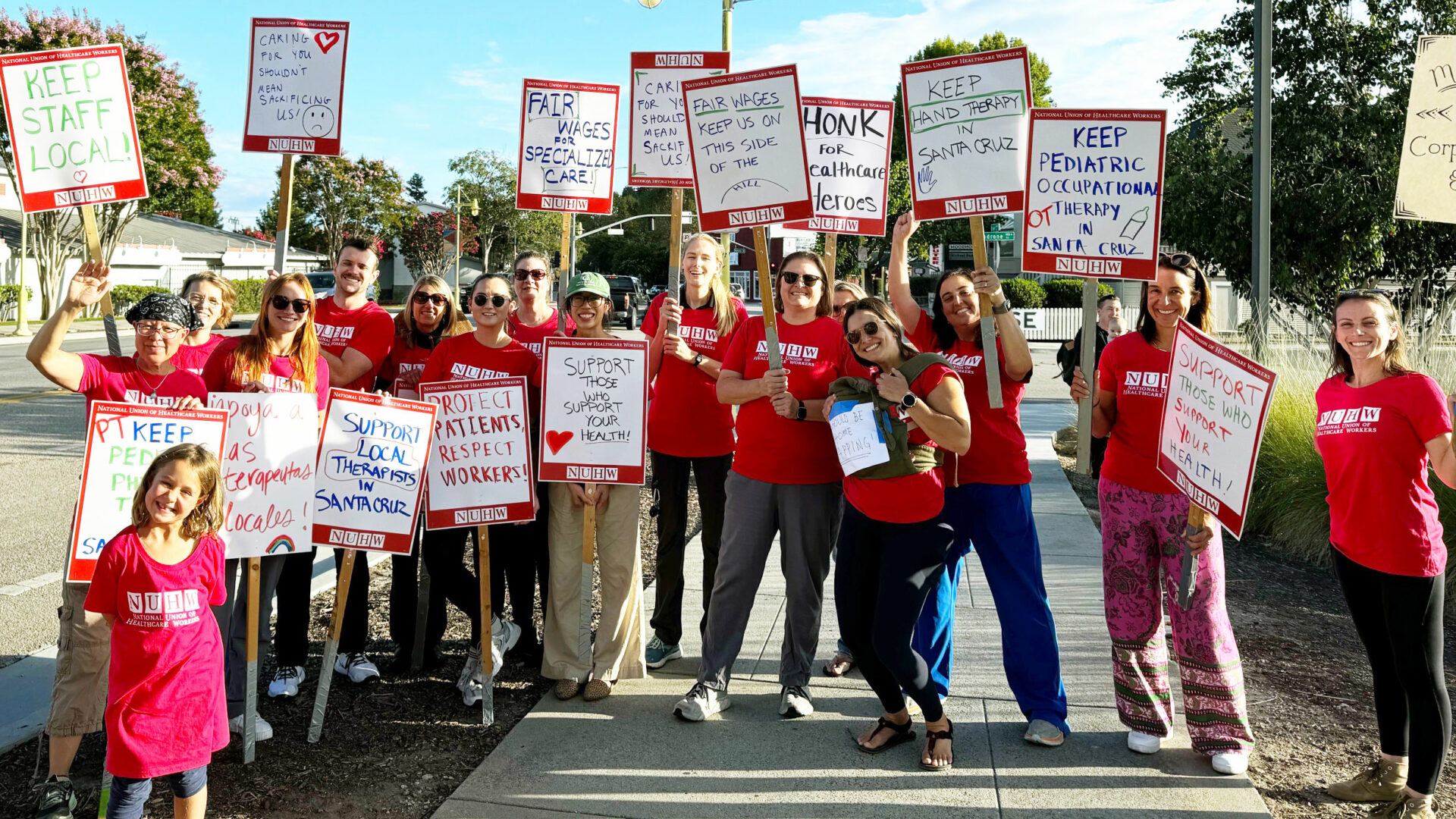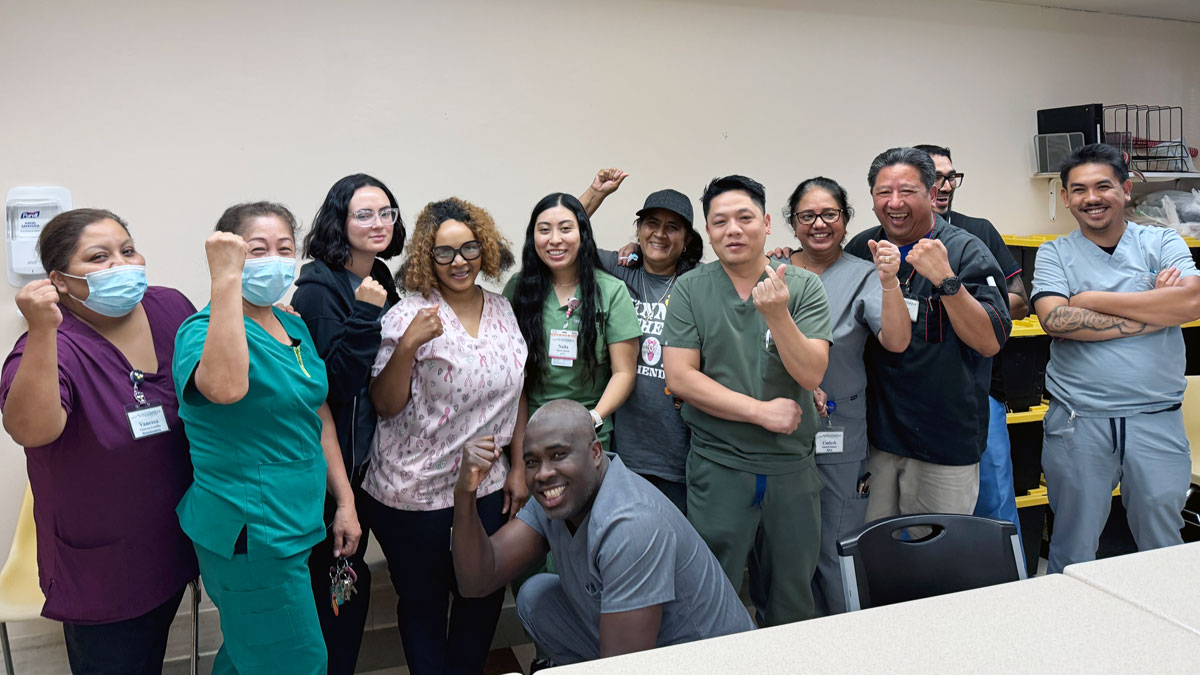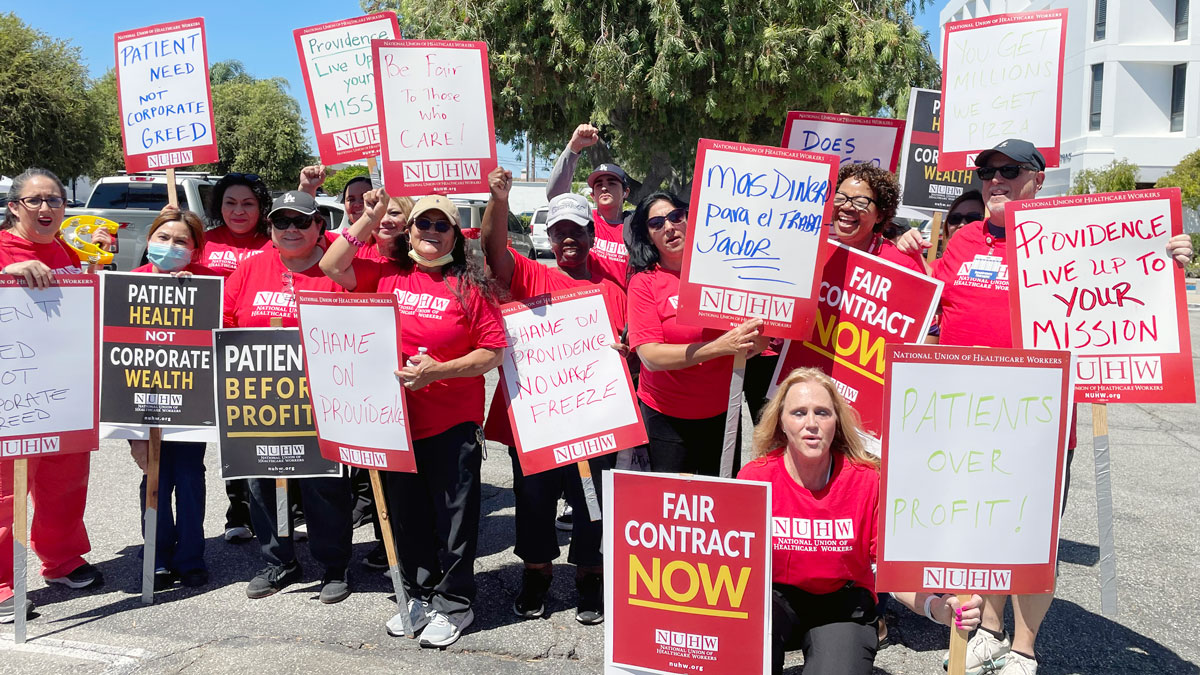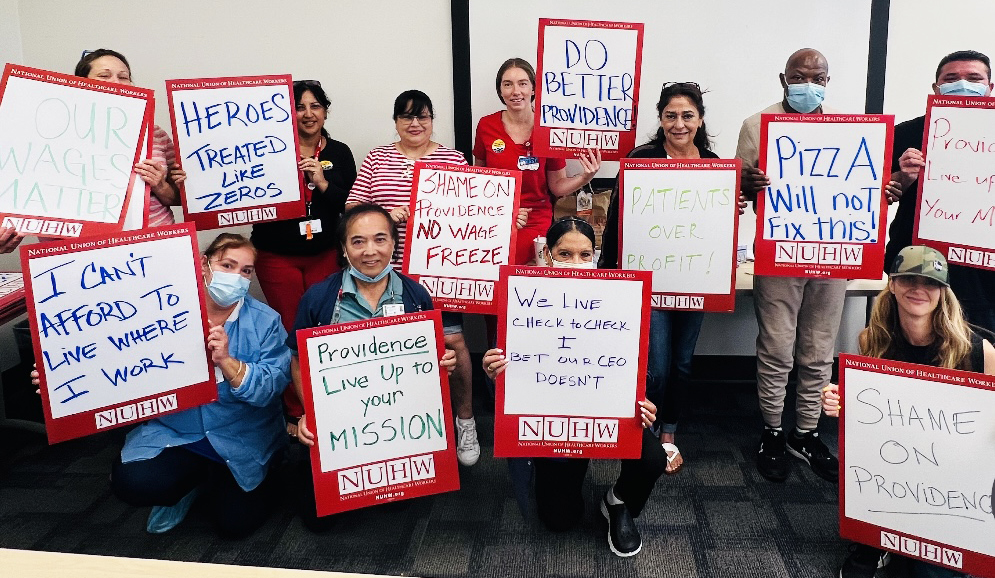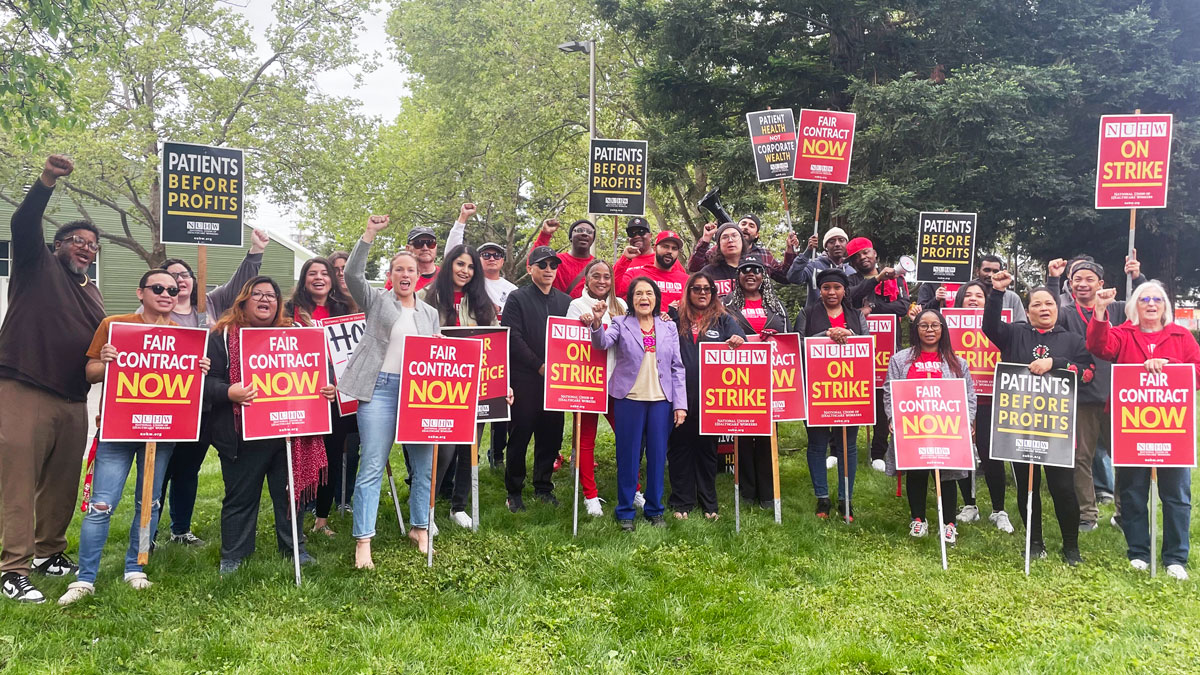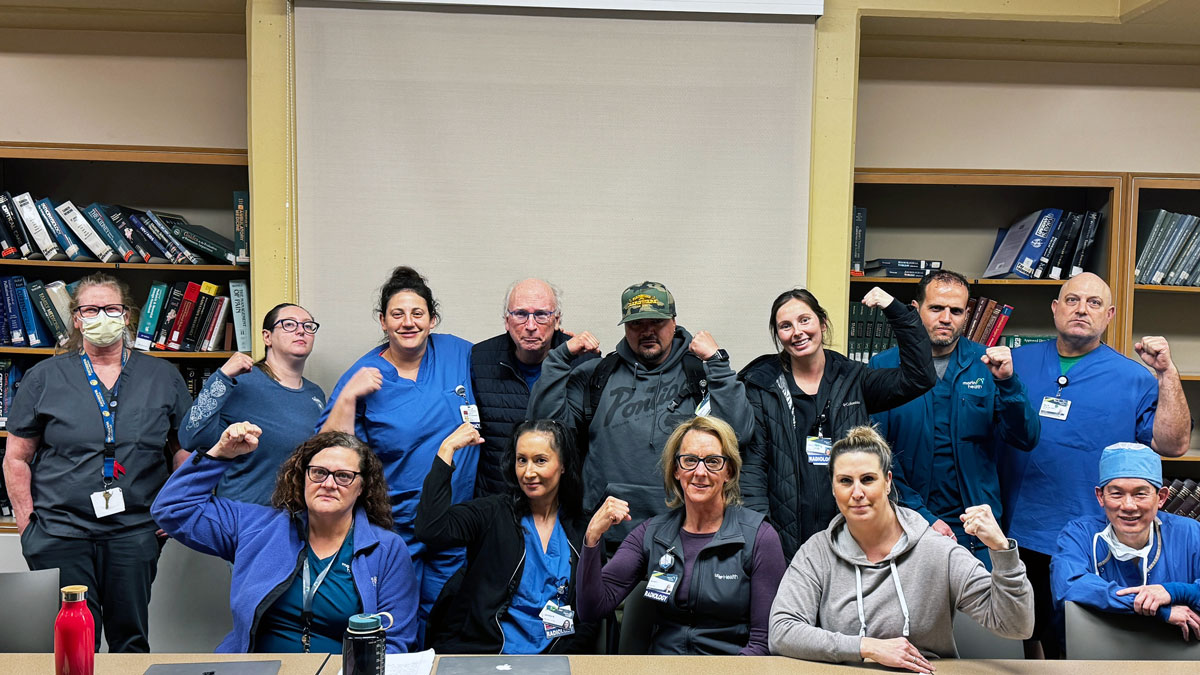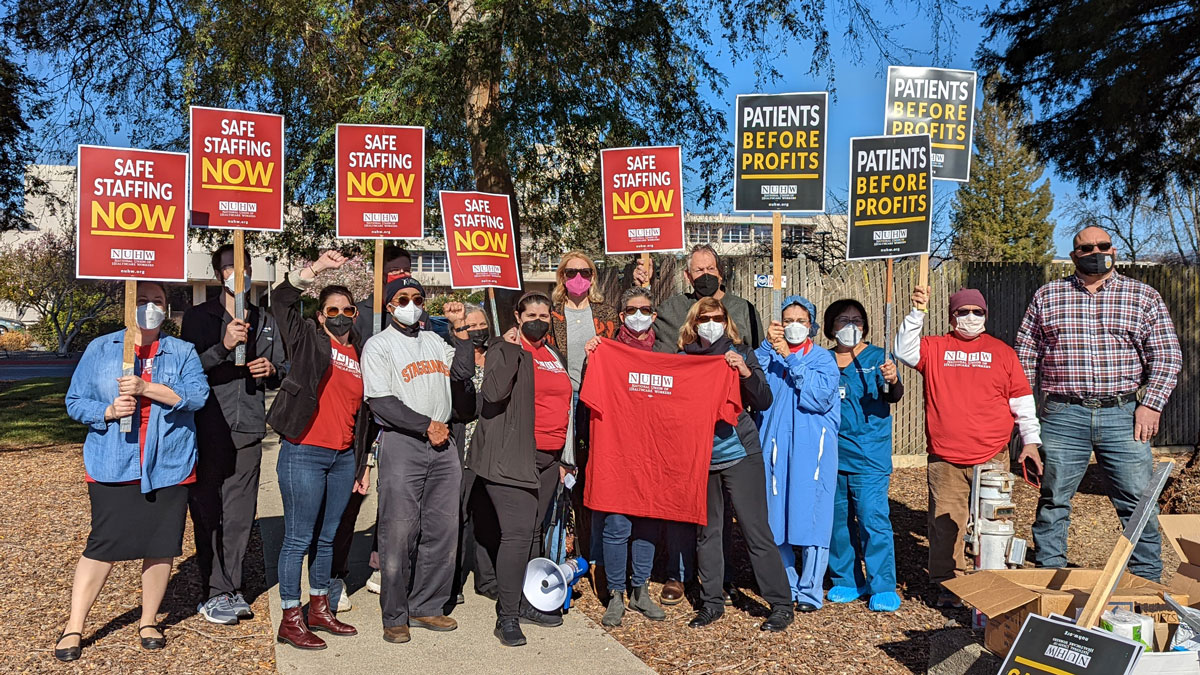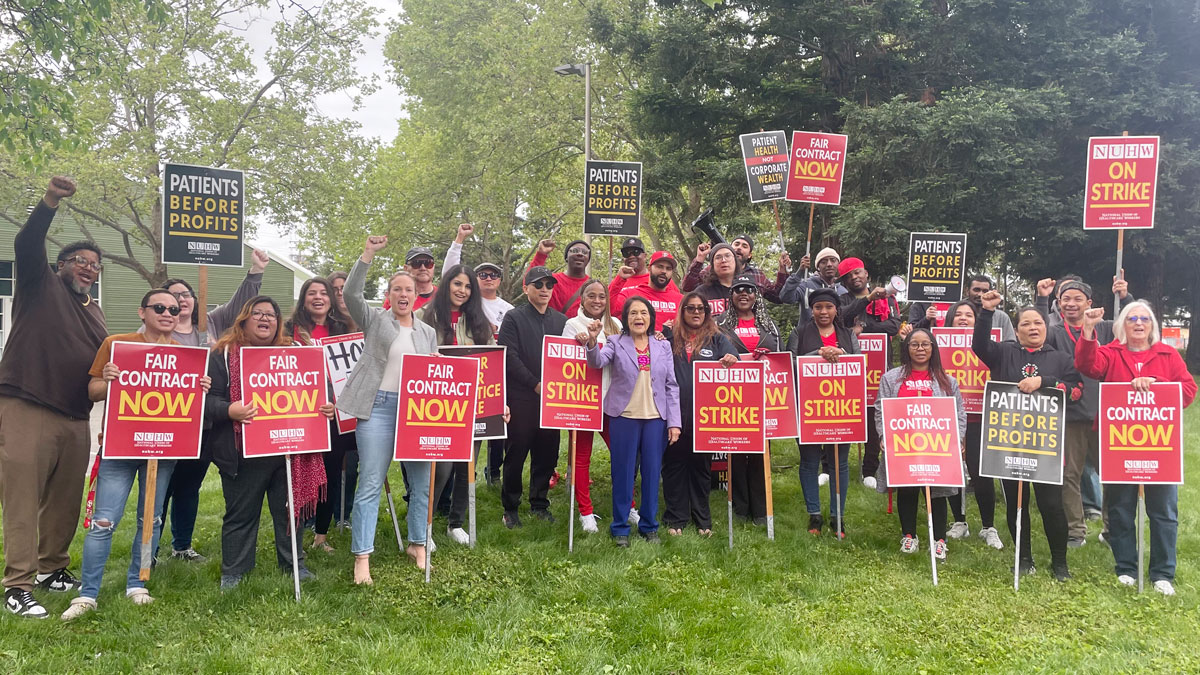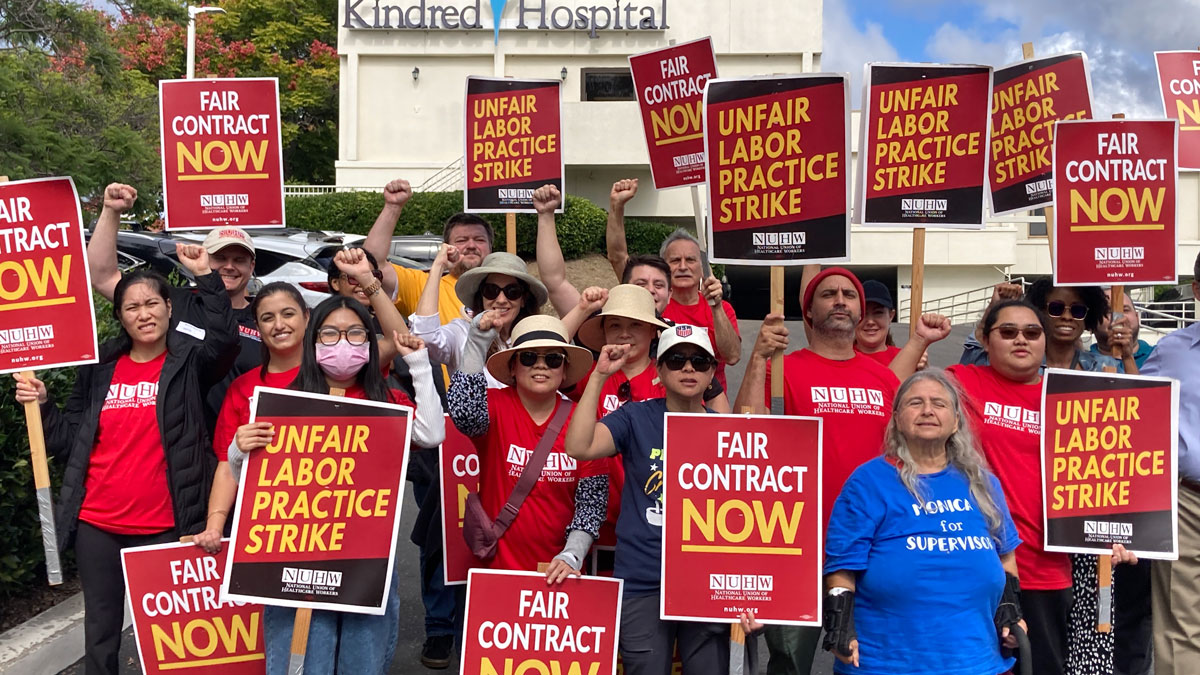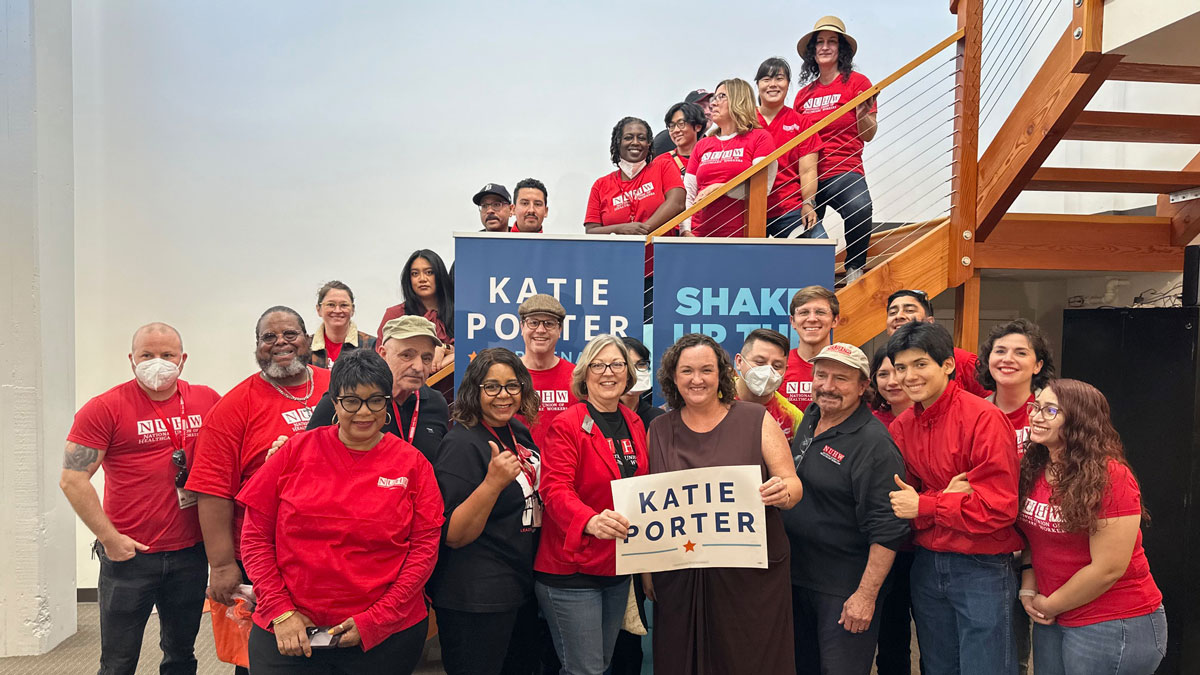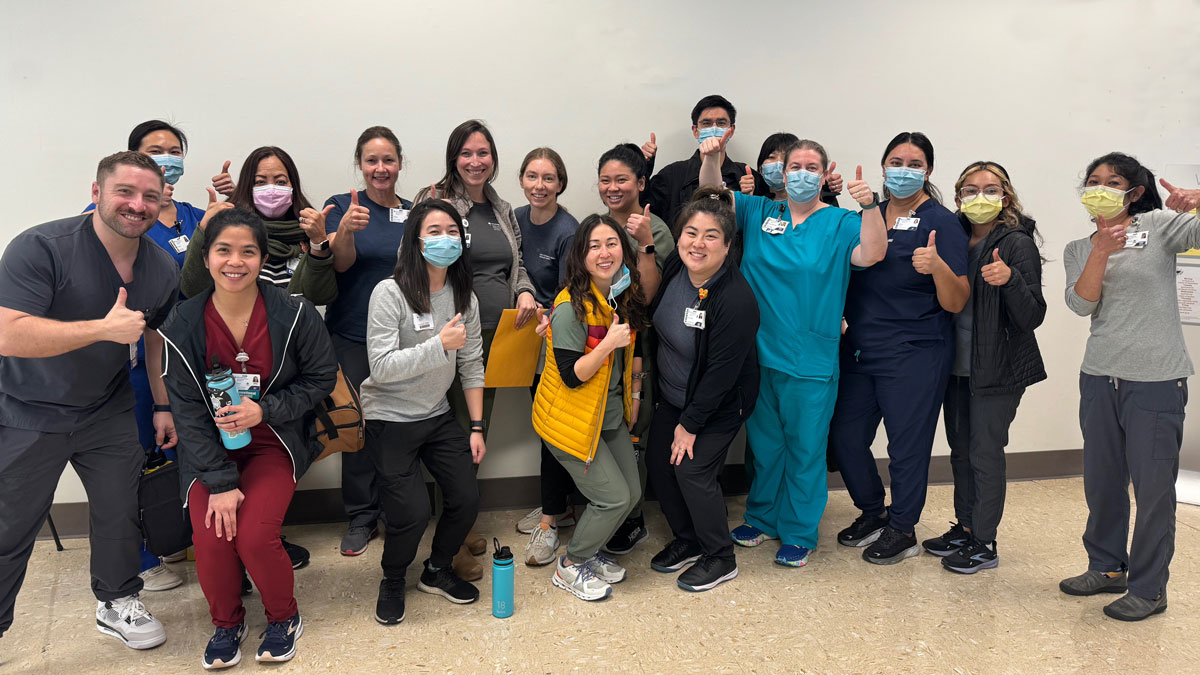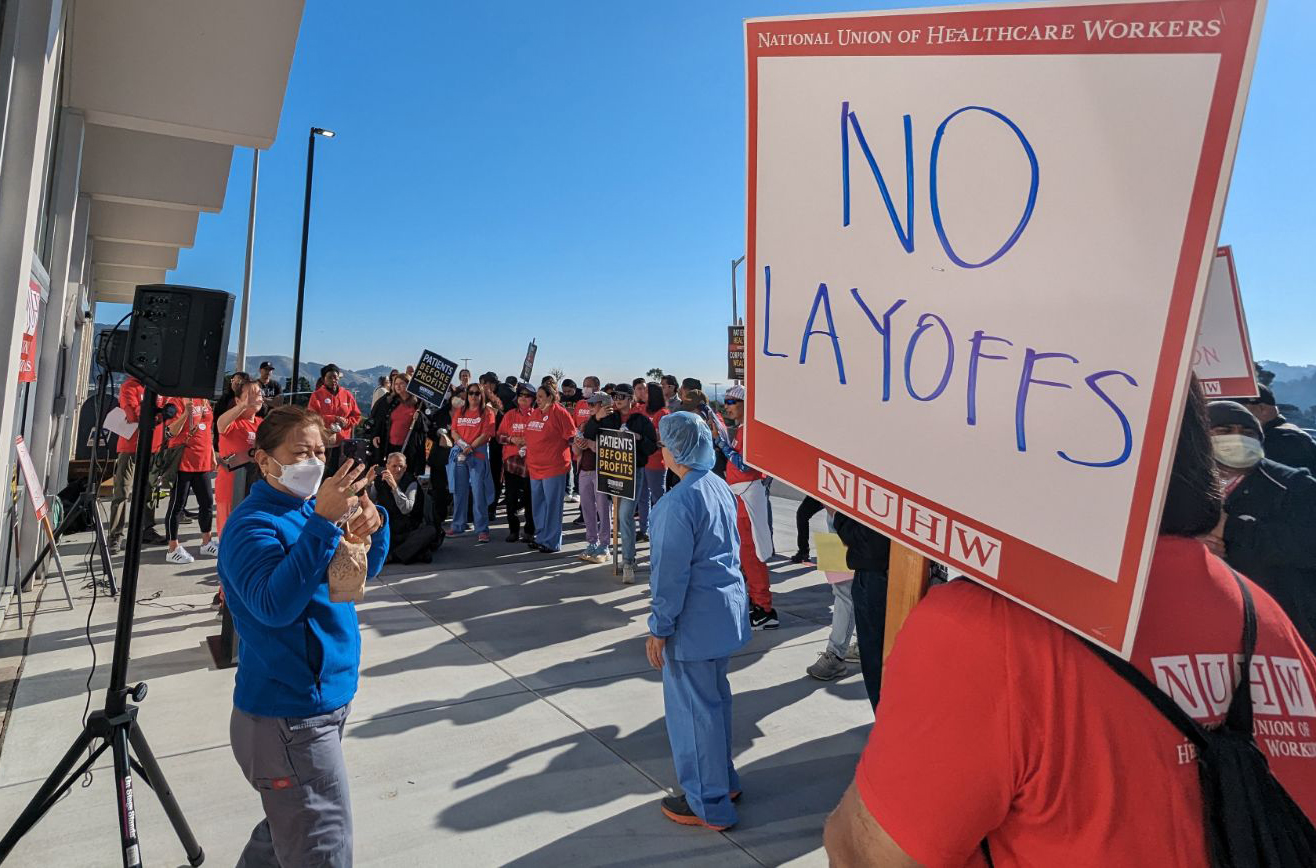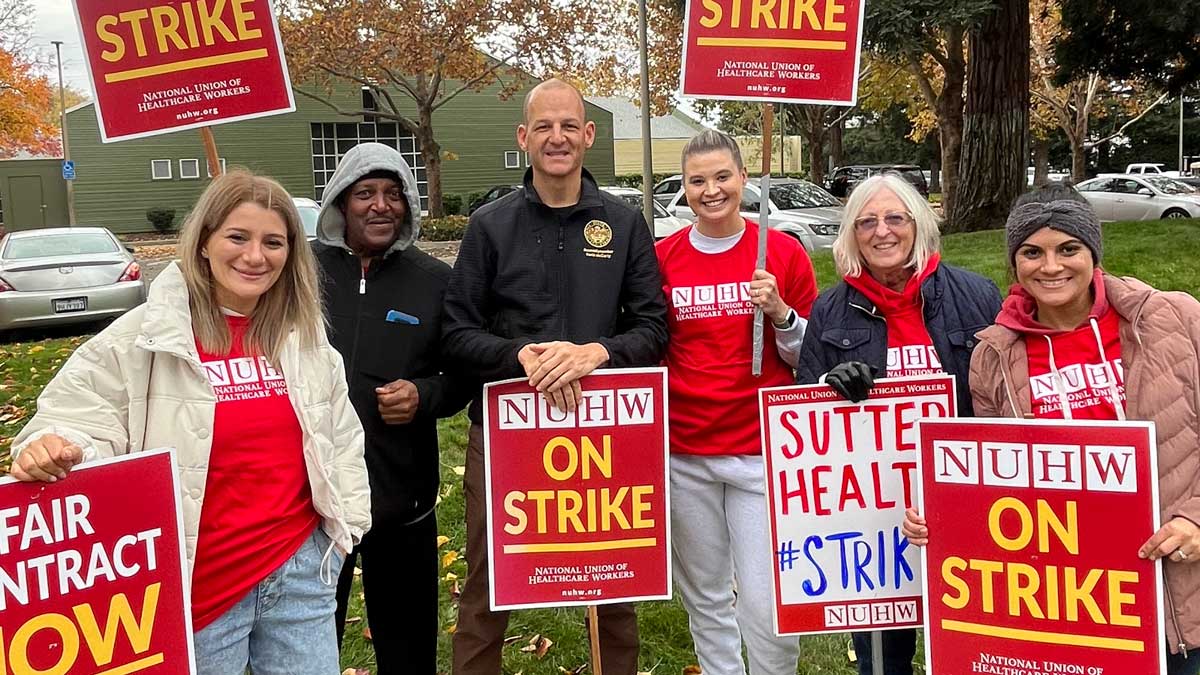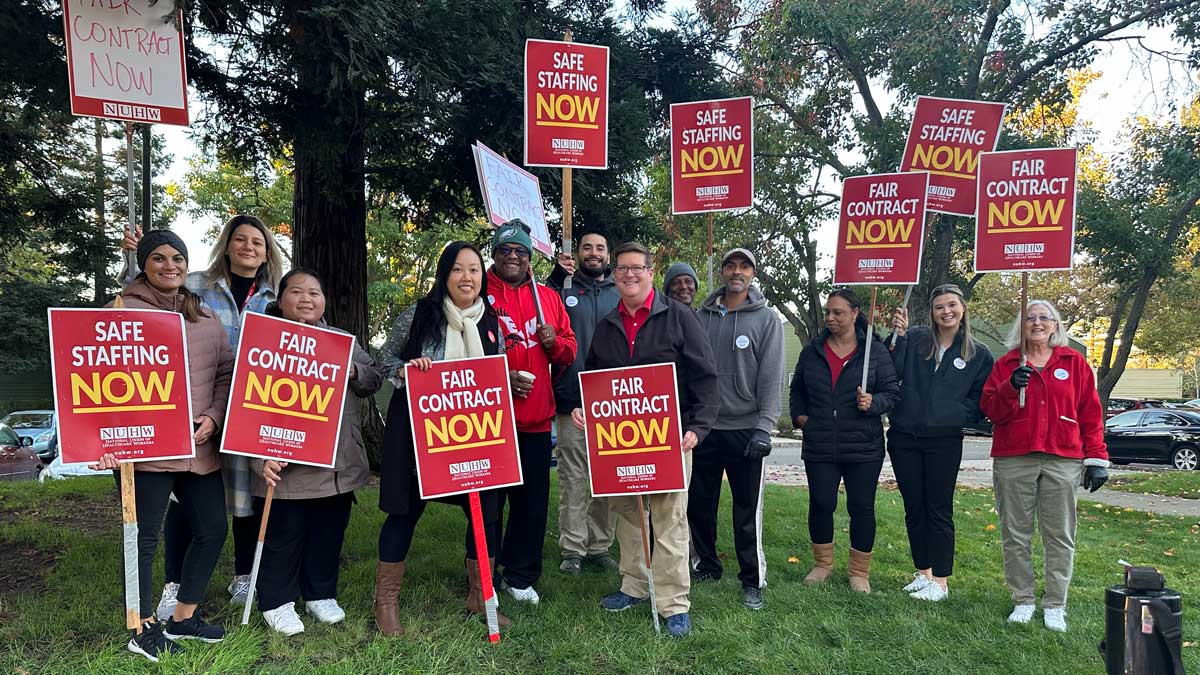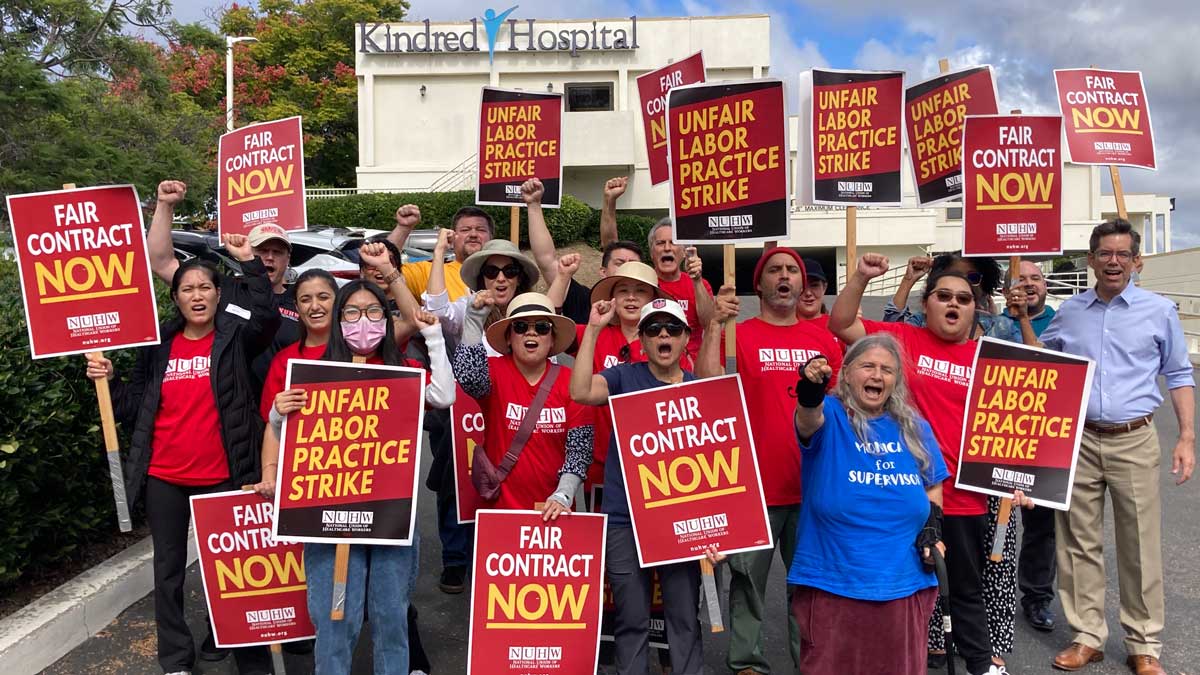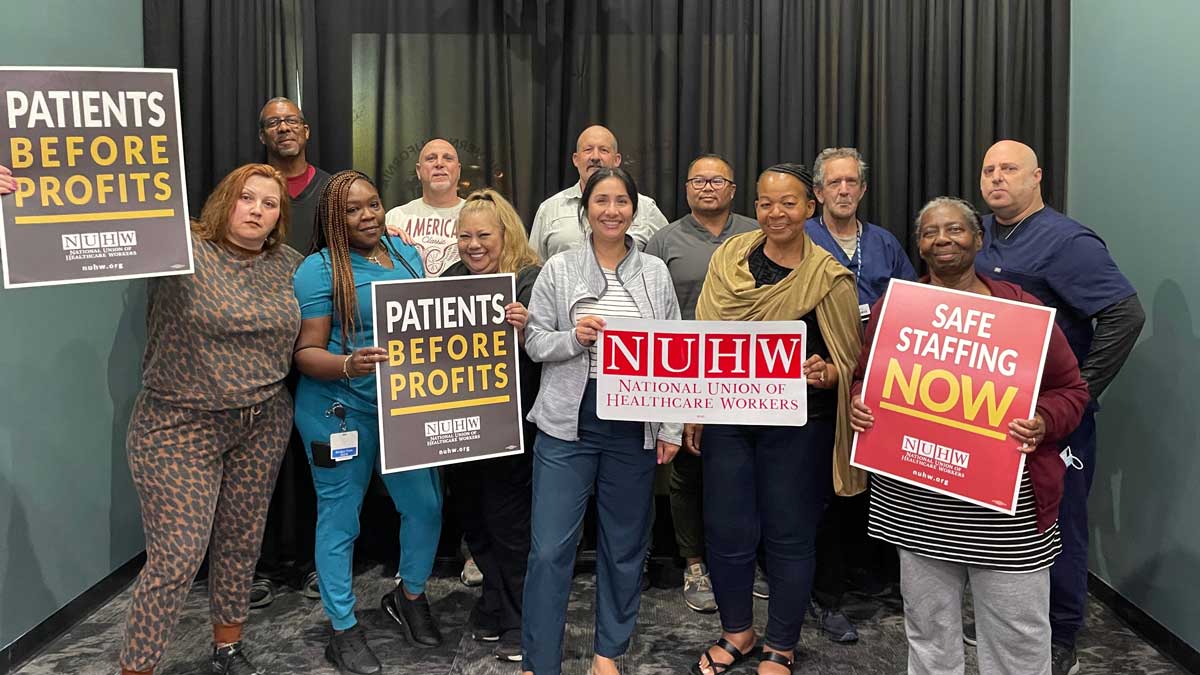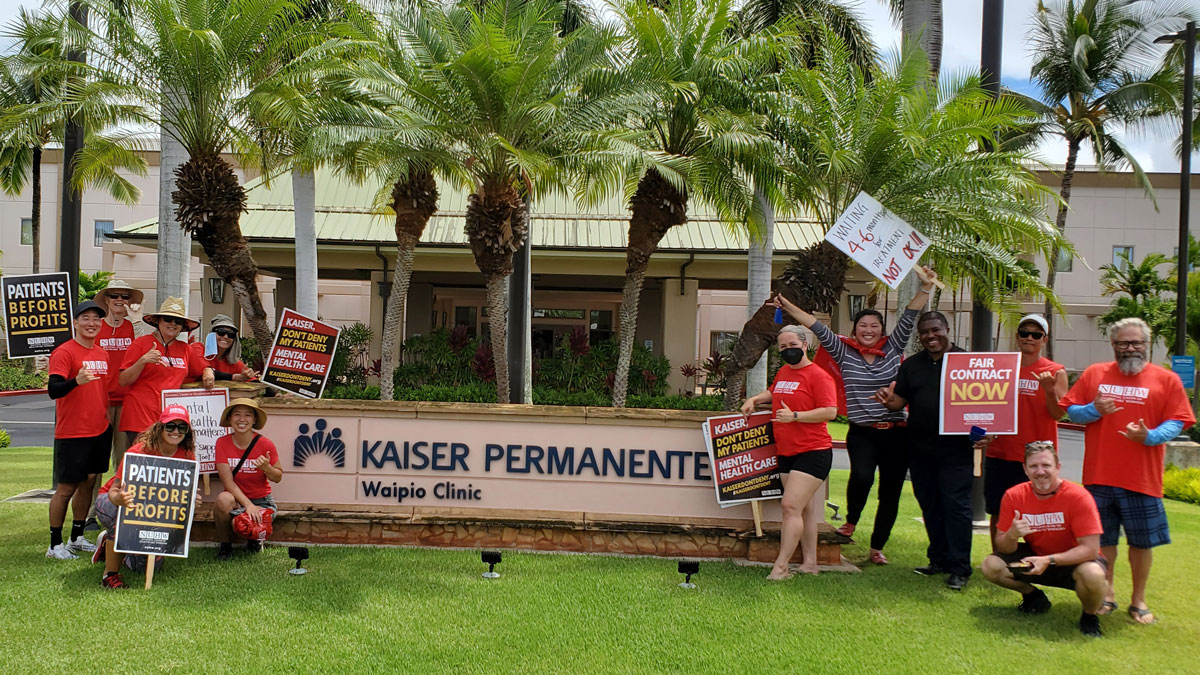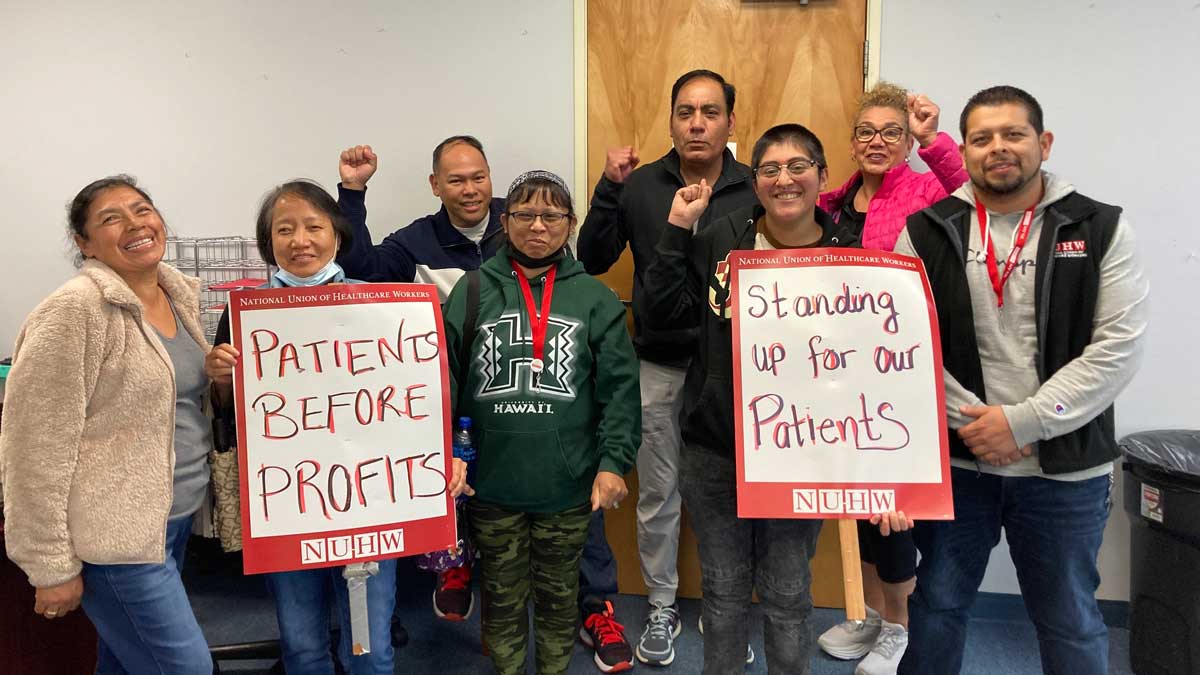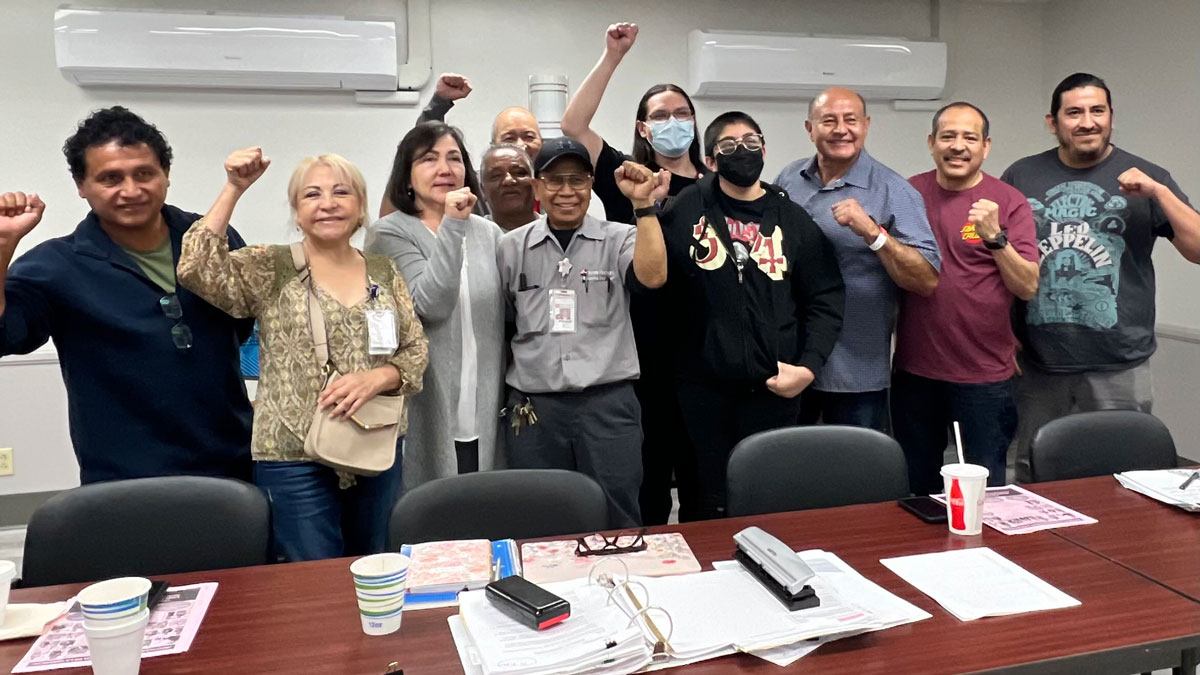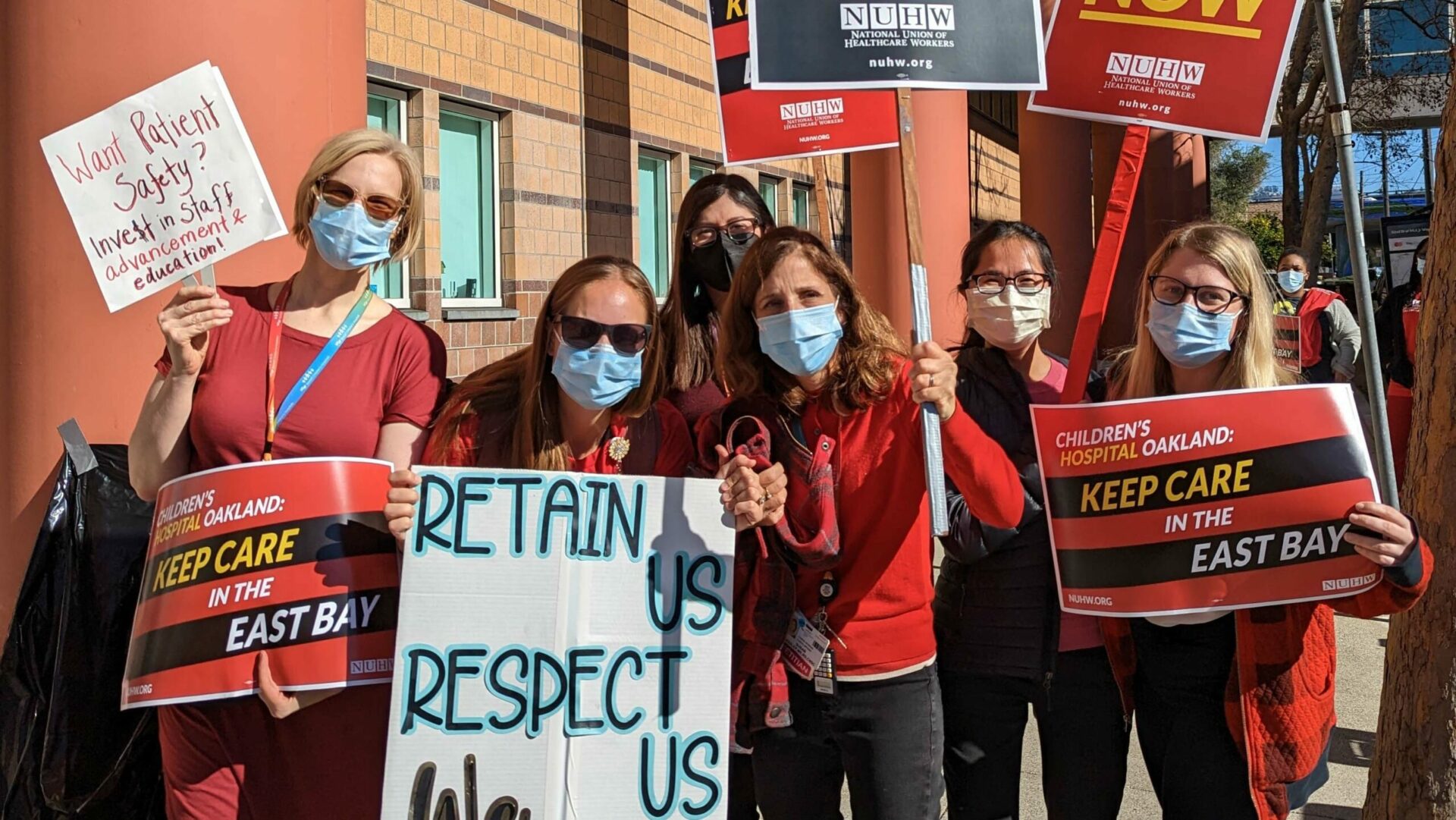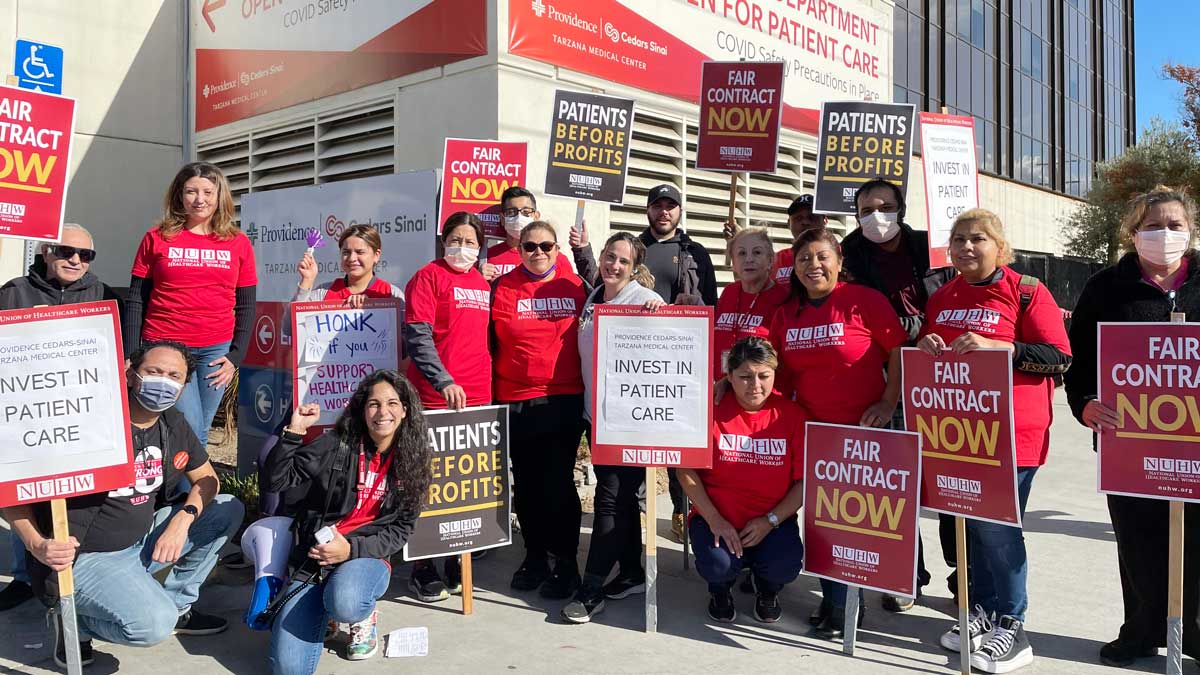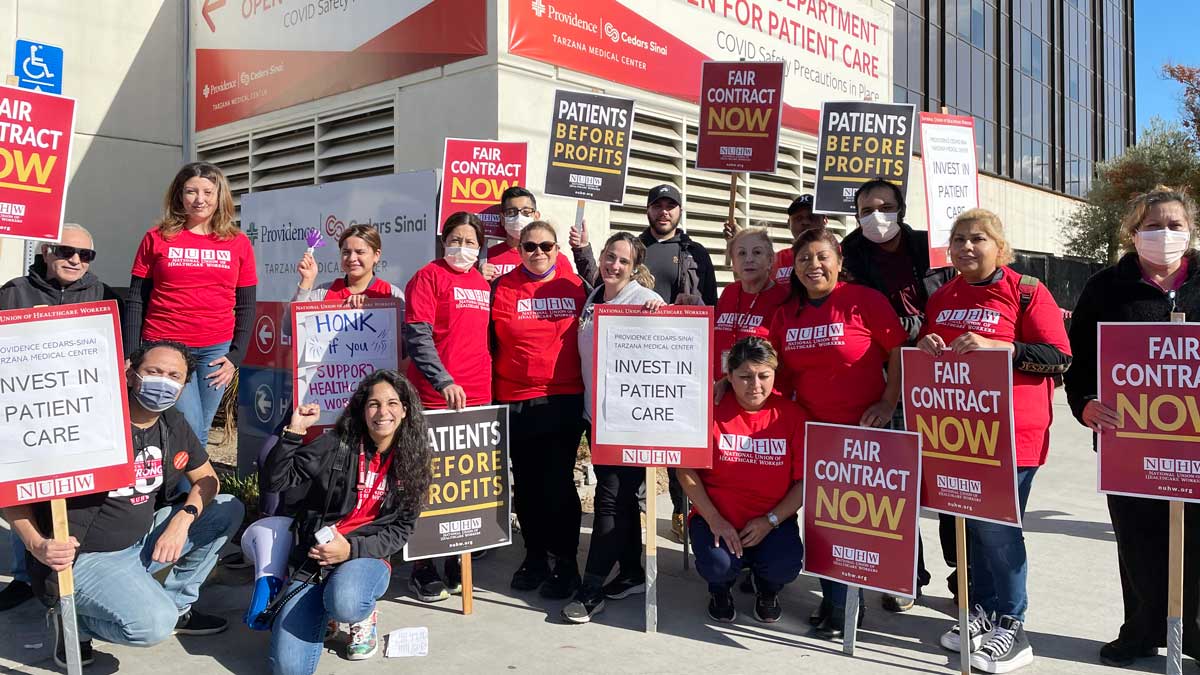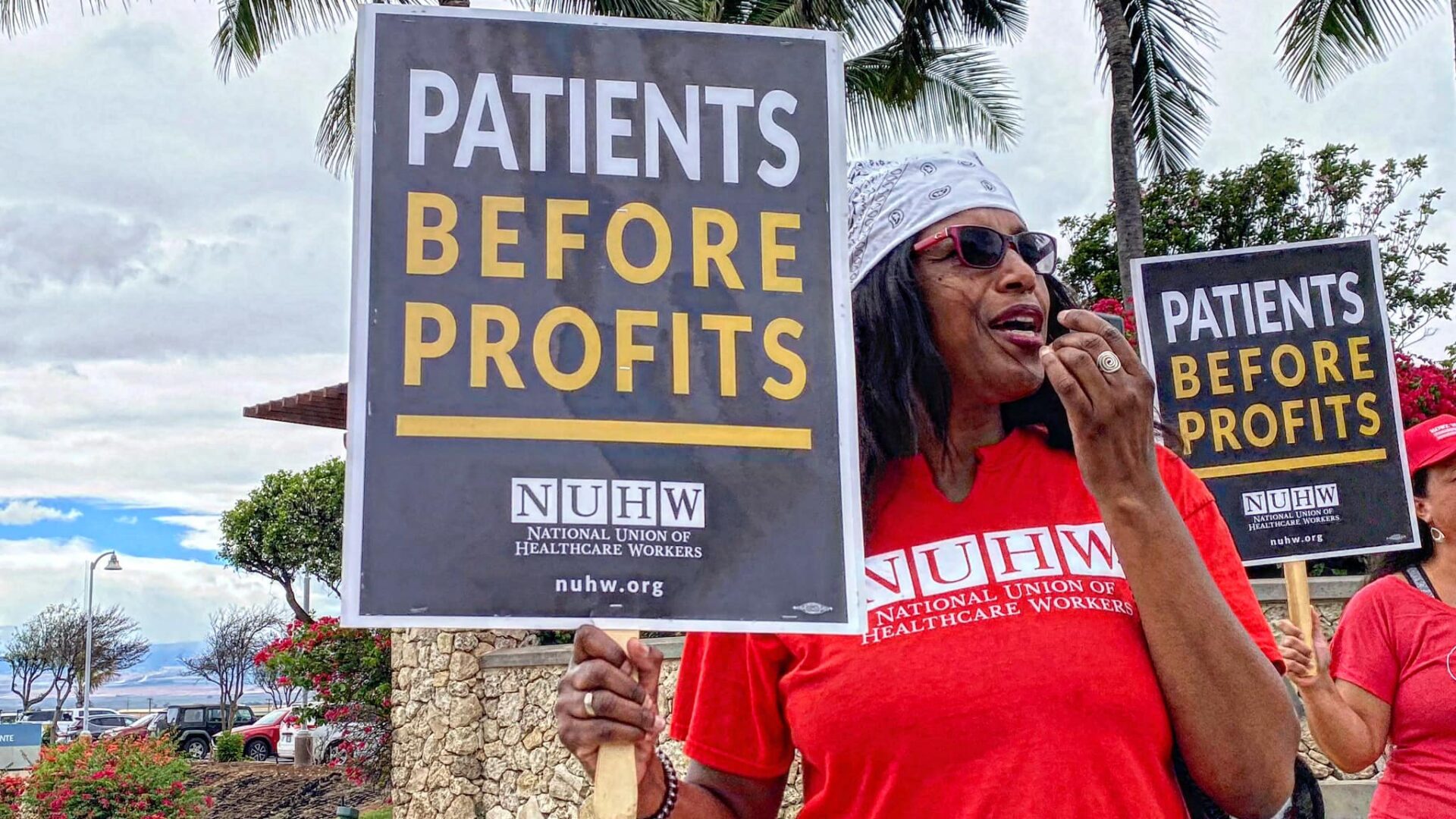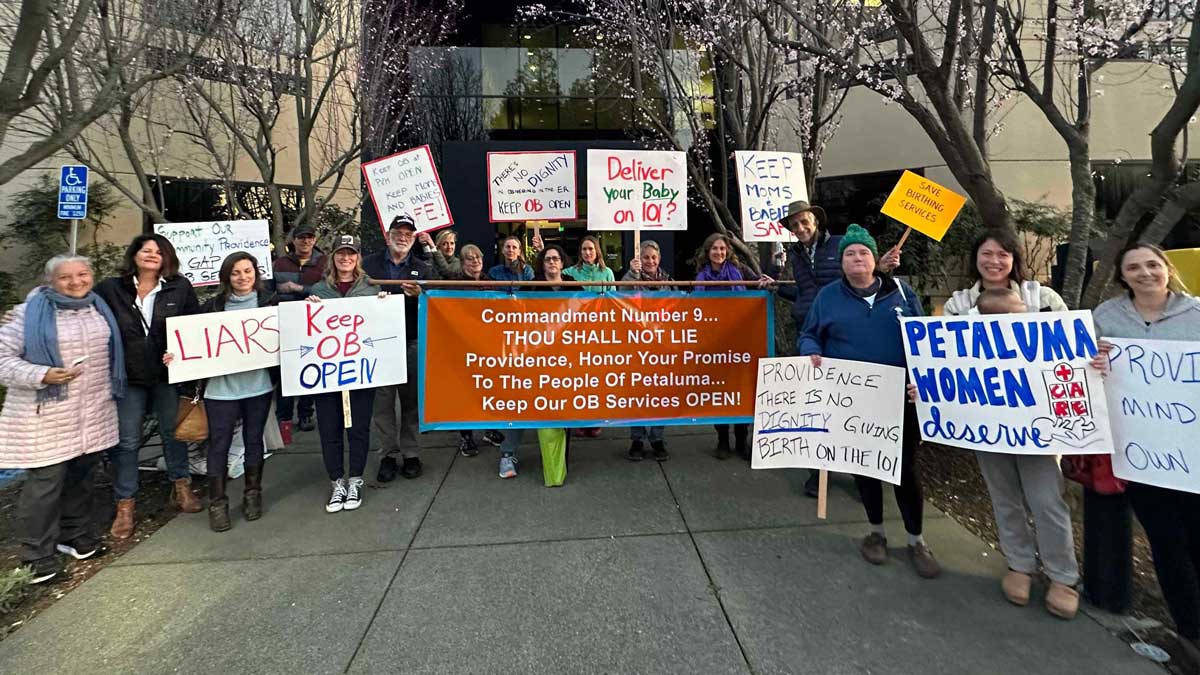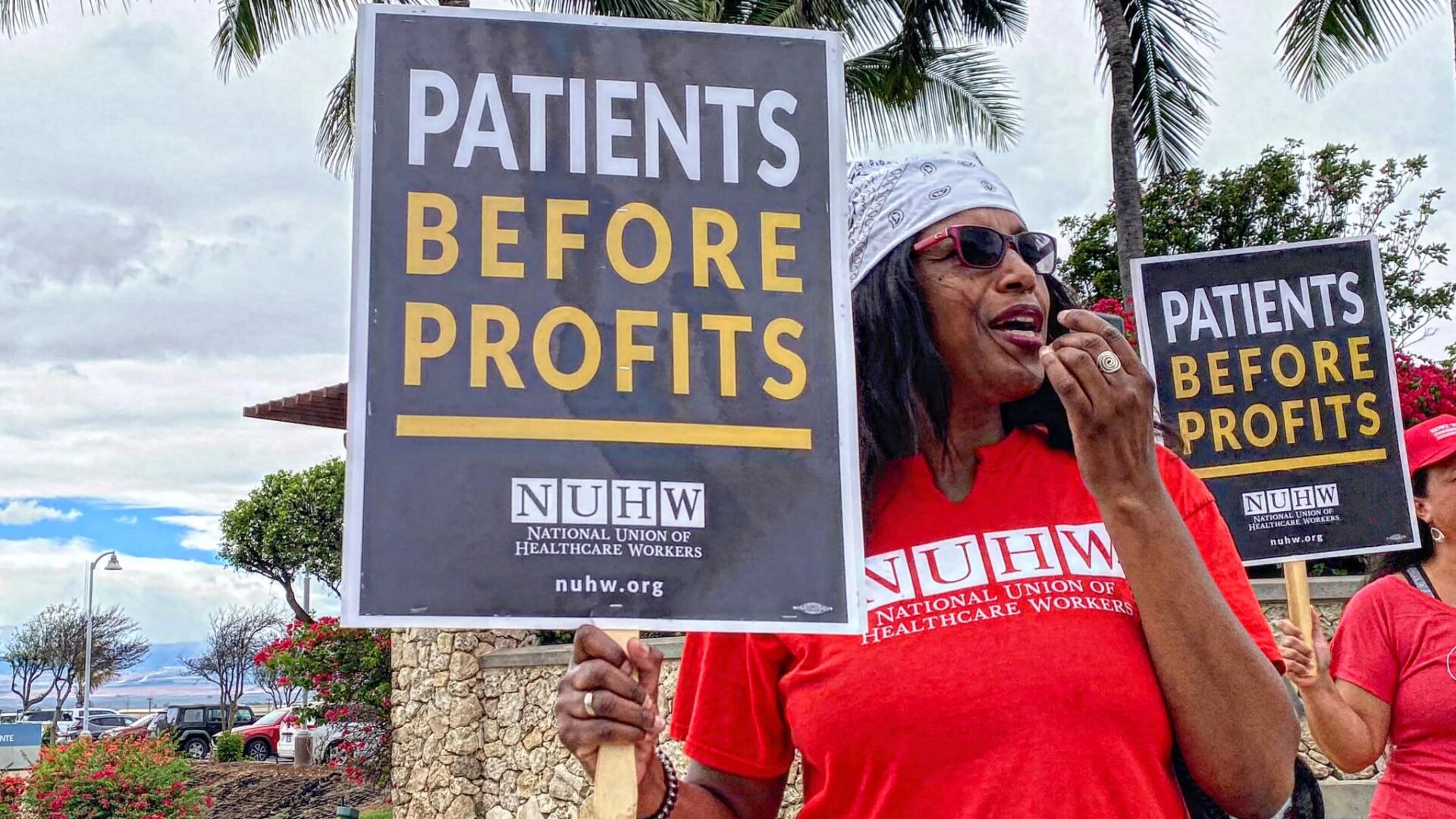
It was a rainy and windy Saturday, but that didn’t stop hundreds of Sutter Health workers from joining together for their first joint picket line in San Francisco and Sacramento.
“We don’t have enough people on the floor,” Aryanna Gorospe, a patient care support specialist at the Sutter Center for Psychiatry, told KCRA in Sacramento. “We’re basically the people that patients see the most, and we want to be able to help the patients.”
In addition to KCRA in Sacramento, KPIX-5 and KTVU-2 in San Francisco covered the actions to raise awareness of severe understaffing in Sutter services as NUHW members seek improvements through ongoing contract negotiations.
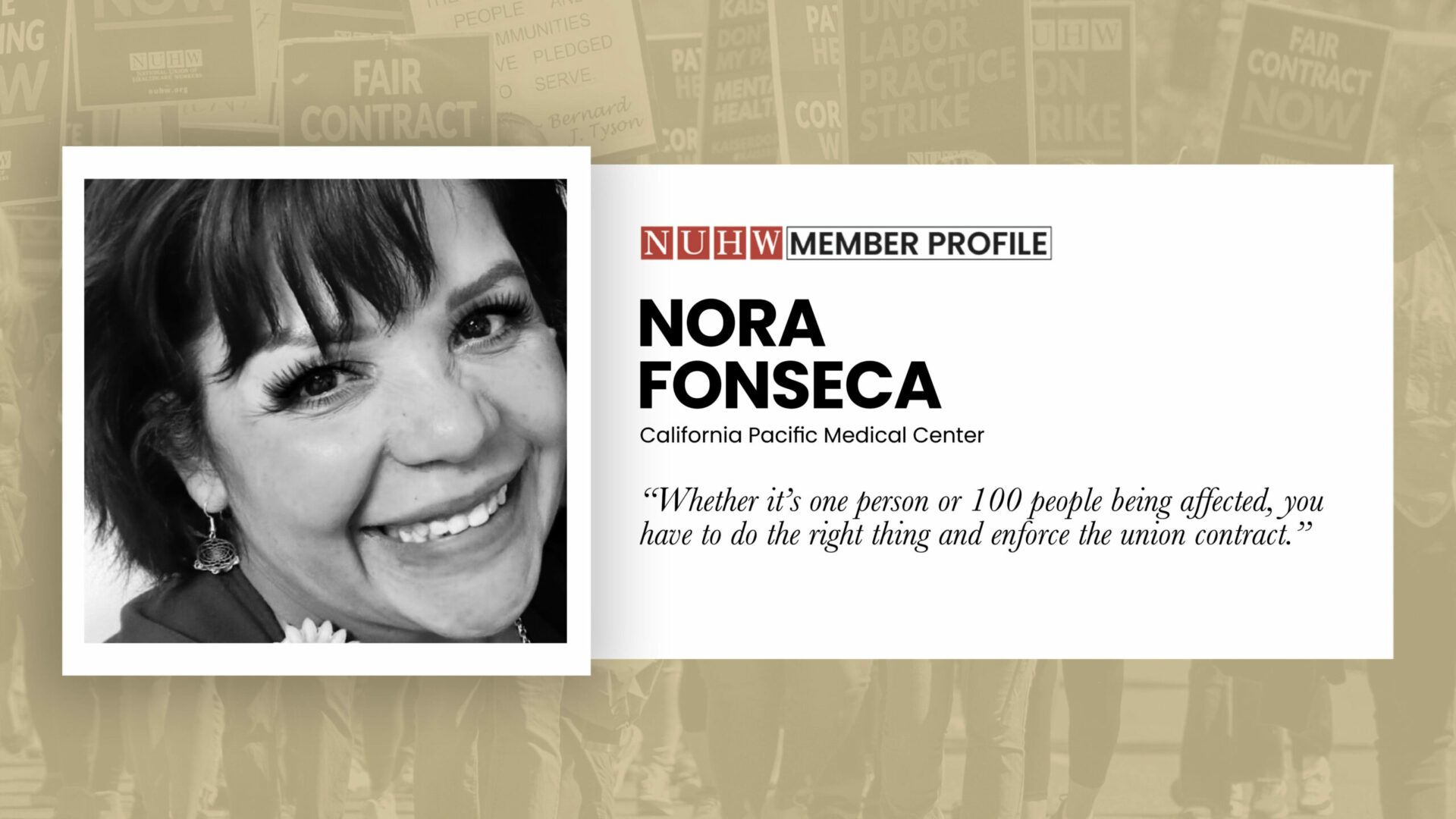
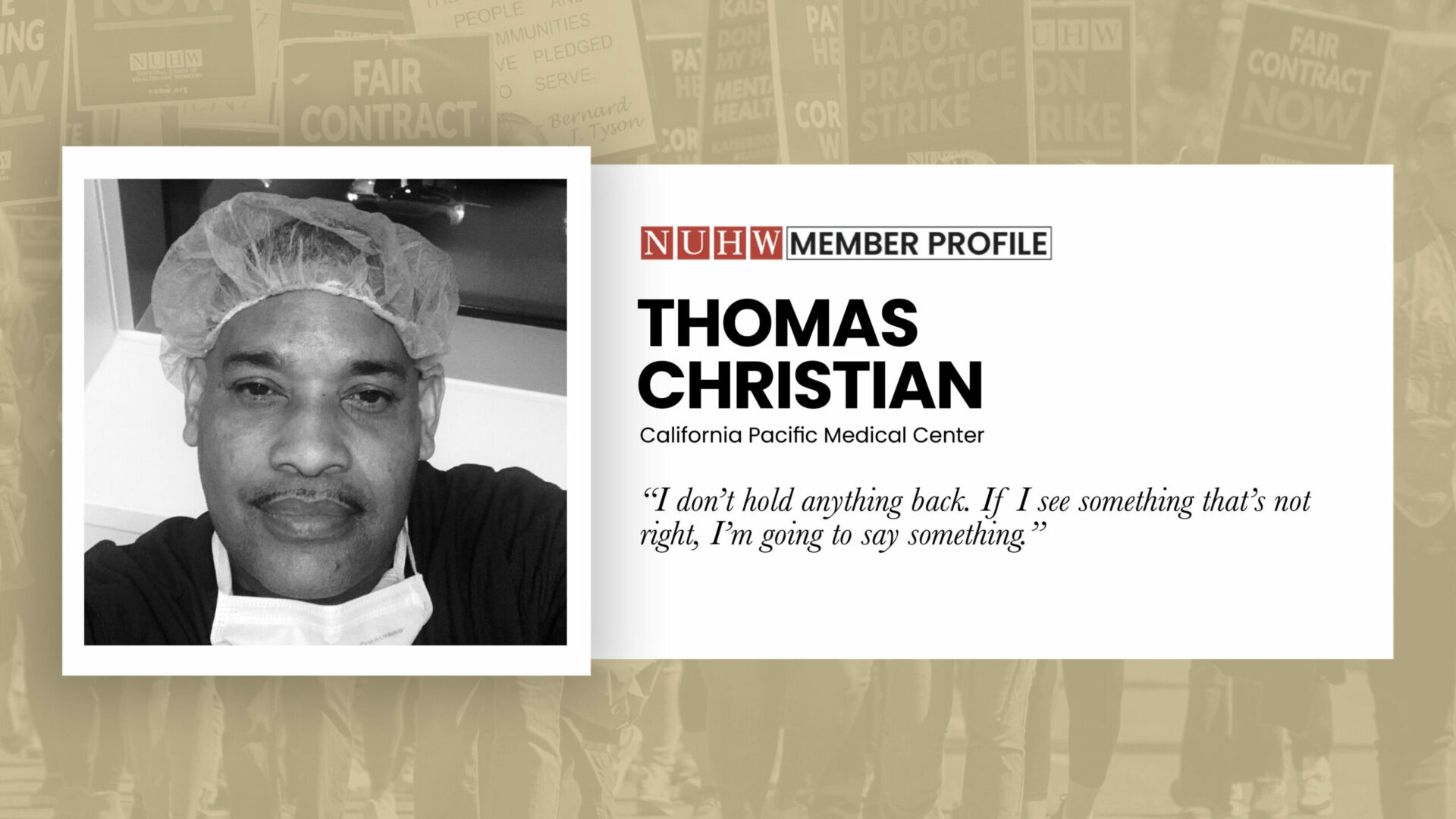
“We’re seeing patients suffer because we’re understaffed and stretched too thin to provide the level of care they need,” Maricar Trinidad, a nursing assistant at California Pacific Medical Center, said before the picket.
Trinidad added: “It’s infuriating to see Sutter tout its profits and expand into other states when our patients here in Northern California are waiting longer for services because our caseloads are too high and our staffing levels are too low. For months, we’ve been making proposals in negotiations to address these issues, but Sutter management refuses to acknowledge that any problems exist.”
Sutter Health reported a $1.9 billion profit last year and is investing billions more into its new partnership with Allina Health in Minnesota and Wisconsin. Yet, in Northern California, caregivers represented by the National Union of Healthcare Workers confront severe understaffing, increased caseloads, and an employer that has shown no interest in addressing the problems.
So far, at the bargaining tables for Sutter California Pacific Medical Center in San Francisco, Sutter Center for Psychiatry in Sacramento, and Sutter Care at Home hospice and rehabilitation services across Northern California, Sutter has rejected proposals aimed at:
- Requiring safe-staffing levels at its hospitals and appropriate staffing levels in its home and hospice services.
- Ensuring that caregivers aren’t so overloaded with patients that they can’t provide the level of care that patients need.
- Providing appropriate wage increases so Sutter can retain its caregivers and hire more of them.
Sutter paid its CEO, Warner Thomas, $11.9 million in 2024. Still, it’s demanding that nearly half its workers accept annual raises below 3 percent — demands that would force more workers to leave Sutter and more patients to wait even longer for care.
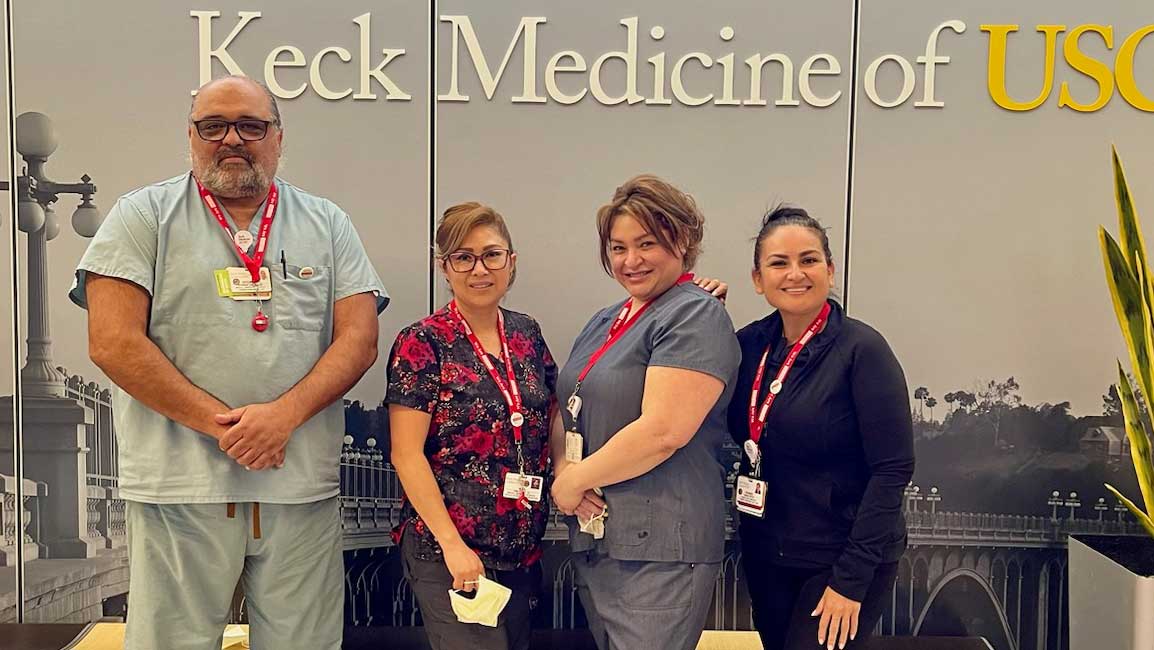
“The issues we see are system-wide, and they affect patients relying on every type of service that Sutter provides,” said Stephanie Smith, a case manager registered nurse with Sutter Care at Home Sacramento Hospice. “We’re determined to advocate for our patients and to make Sutter use its resources to provide the best possible care.”