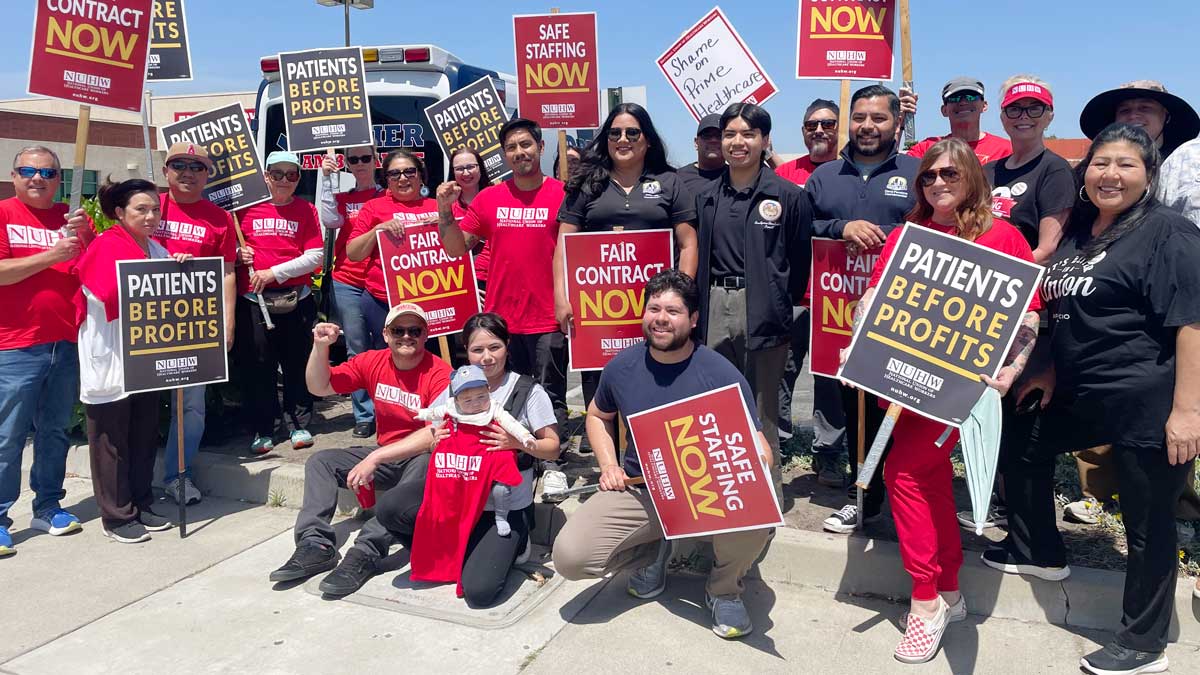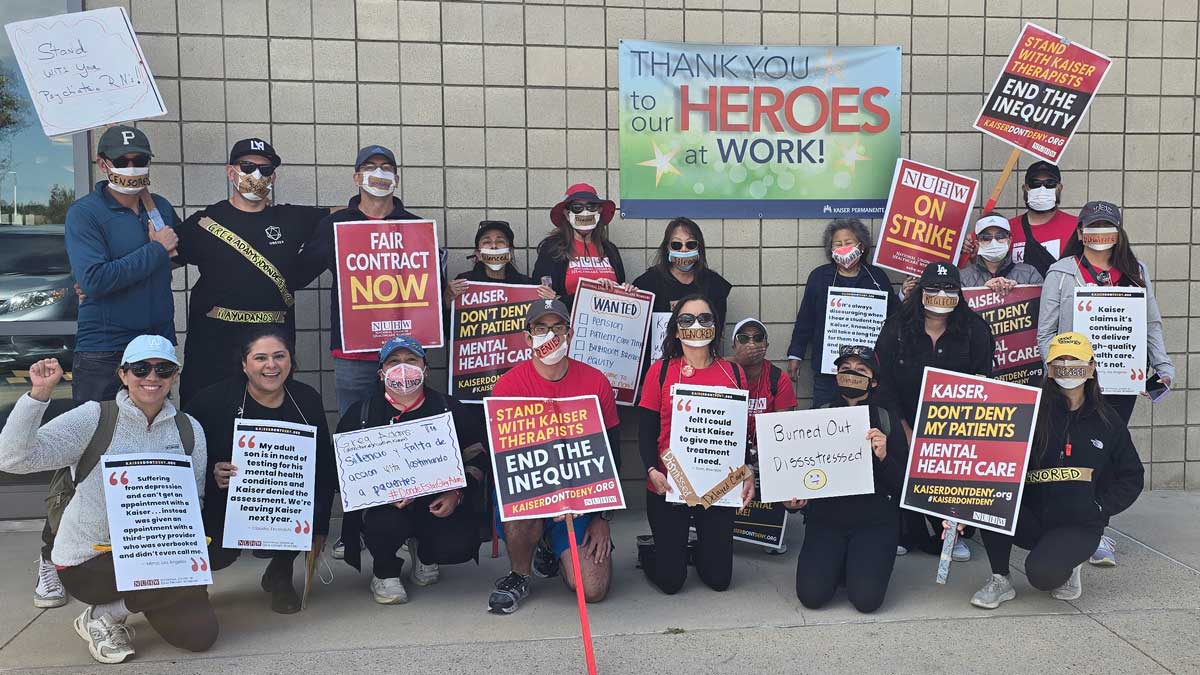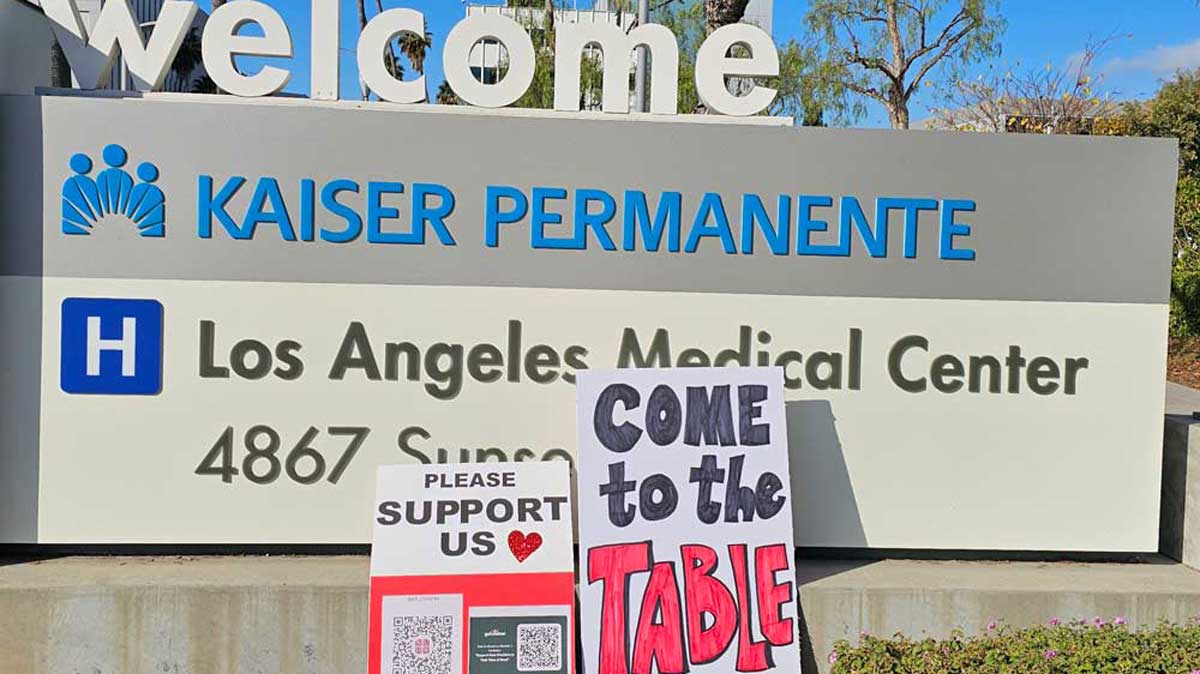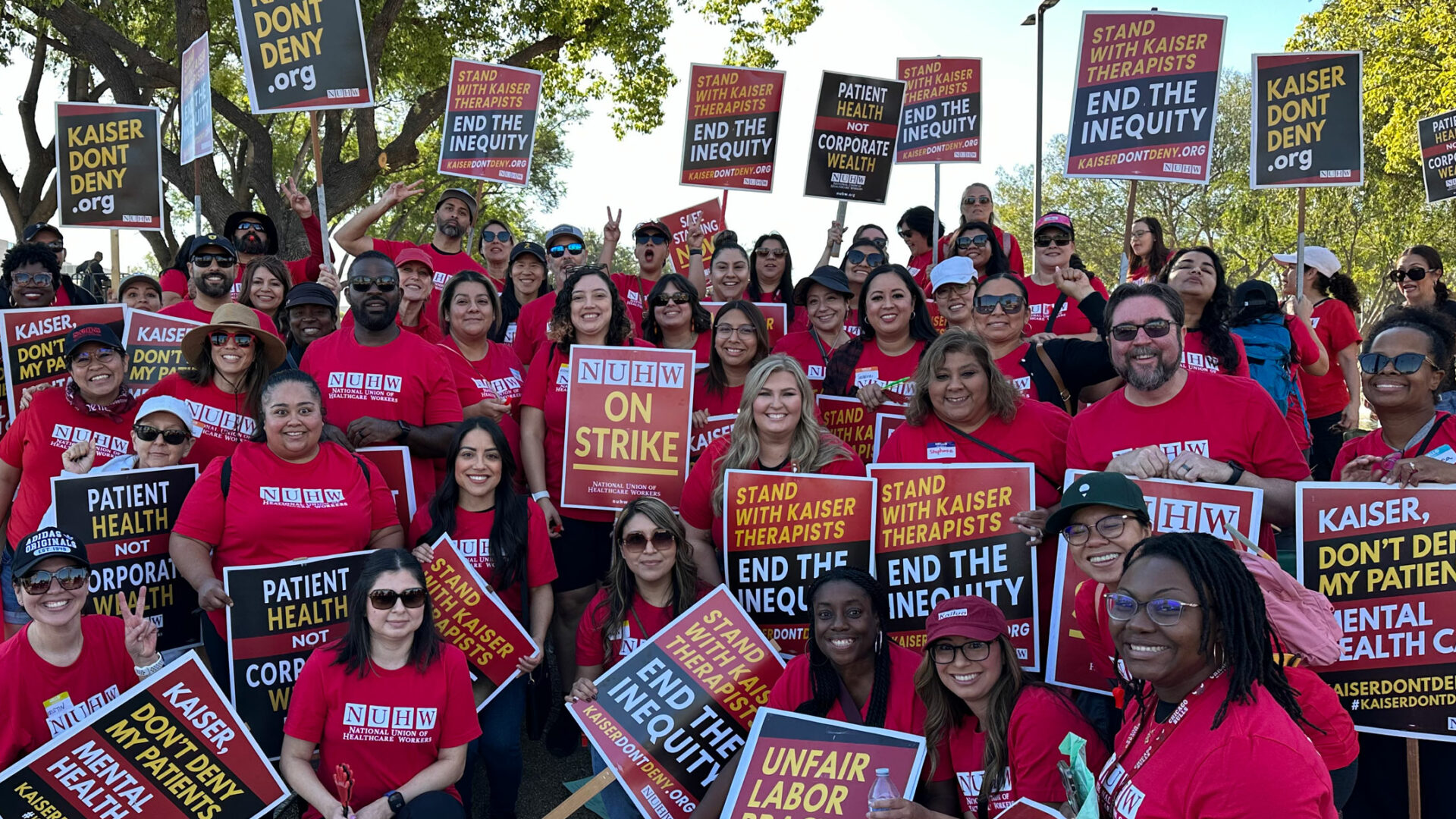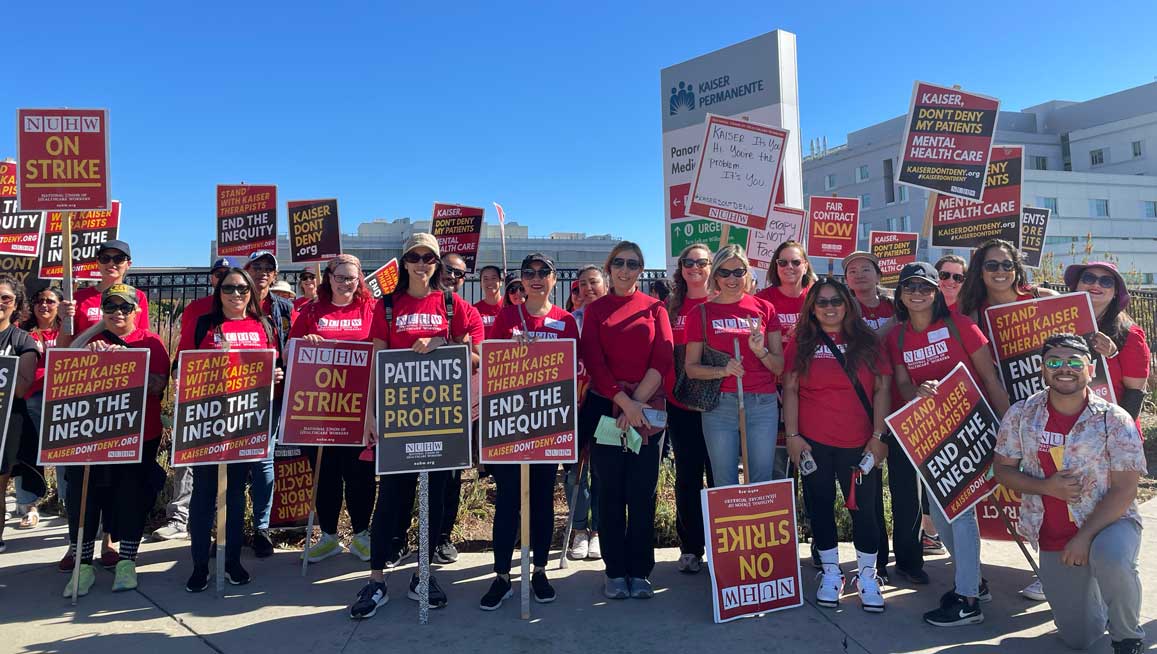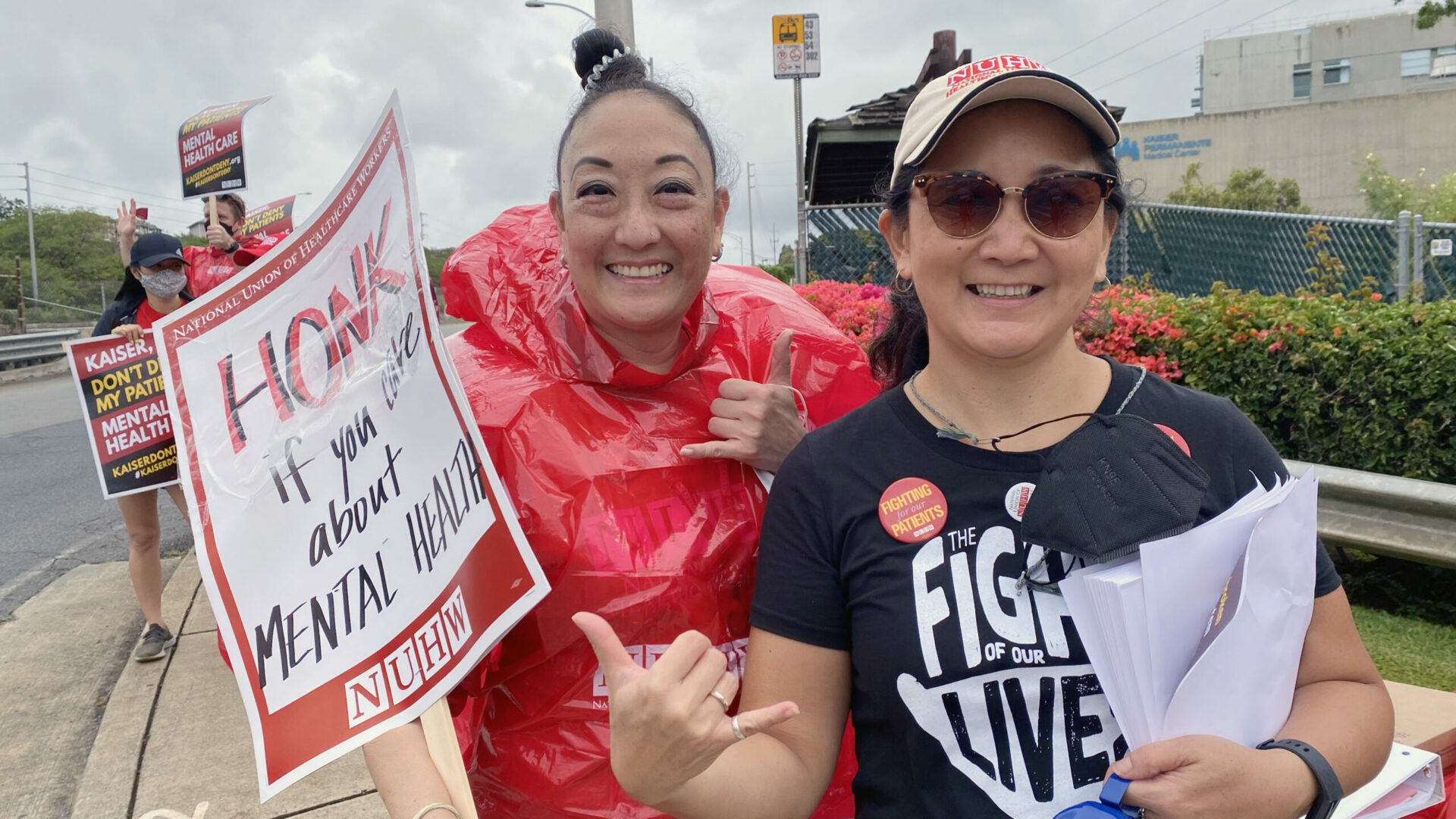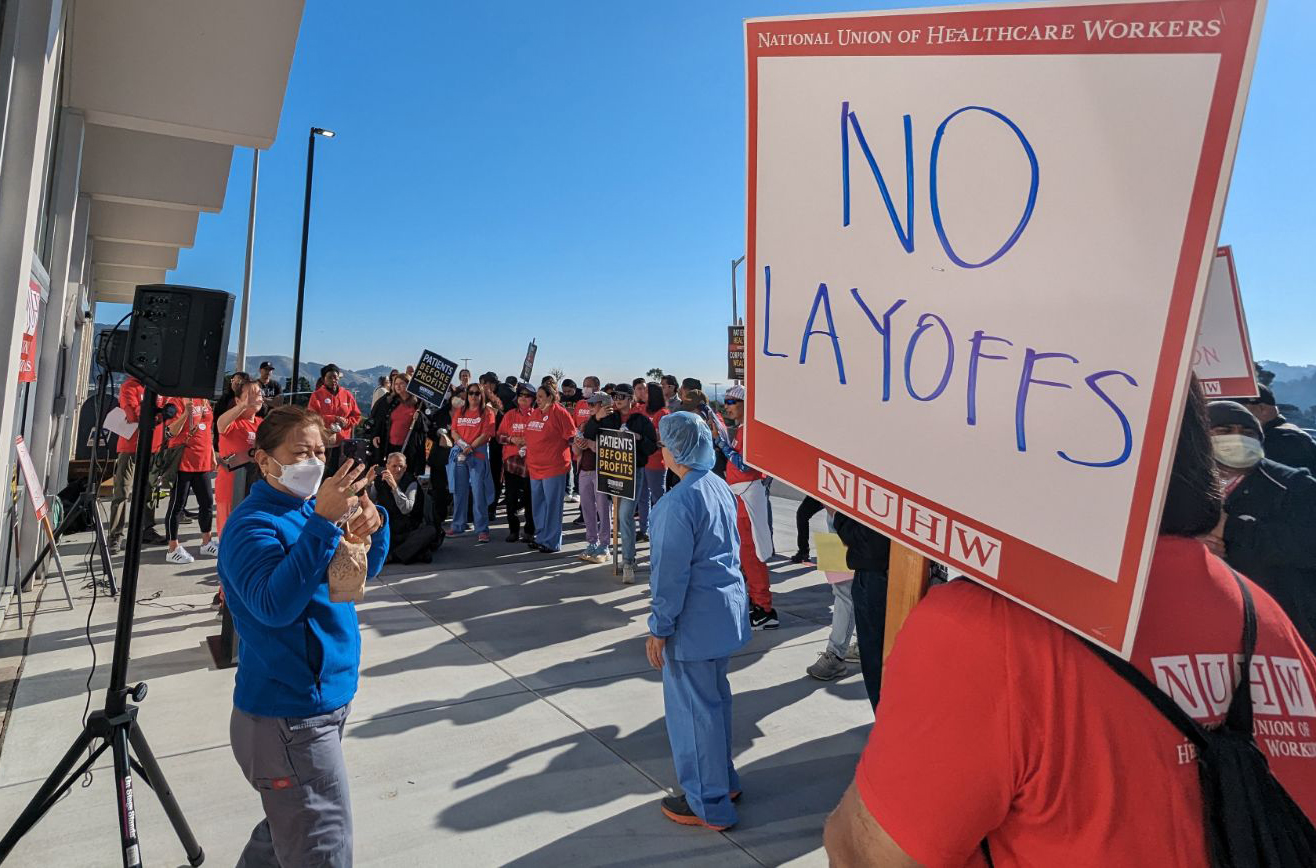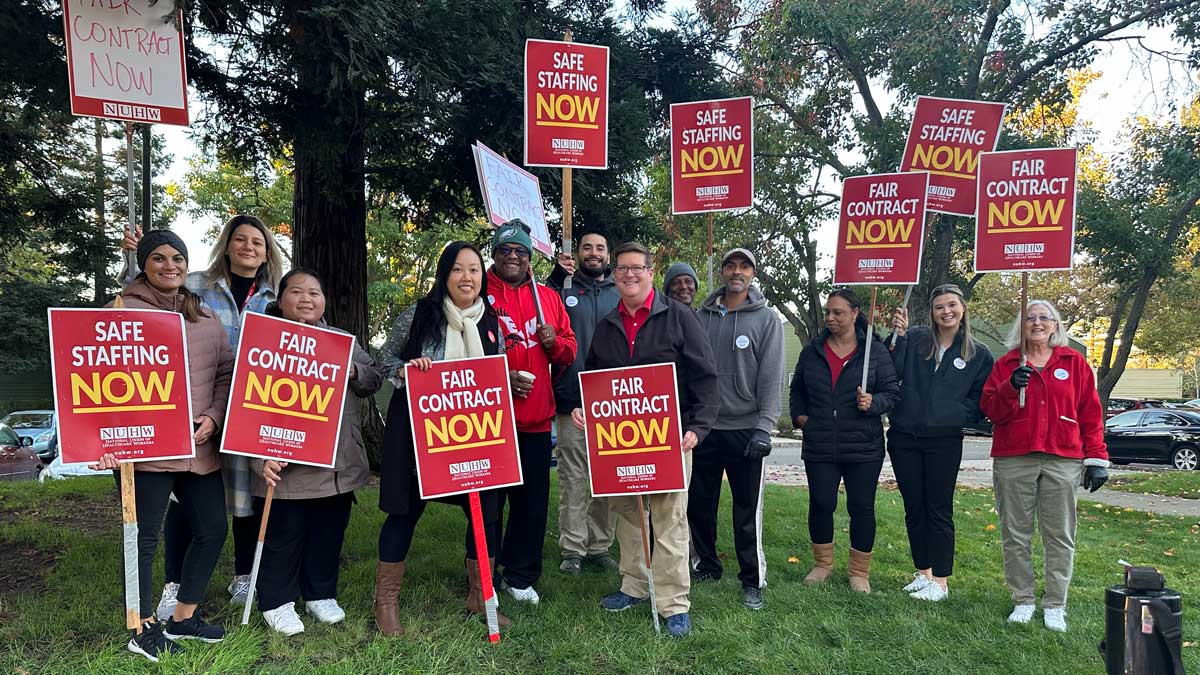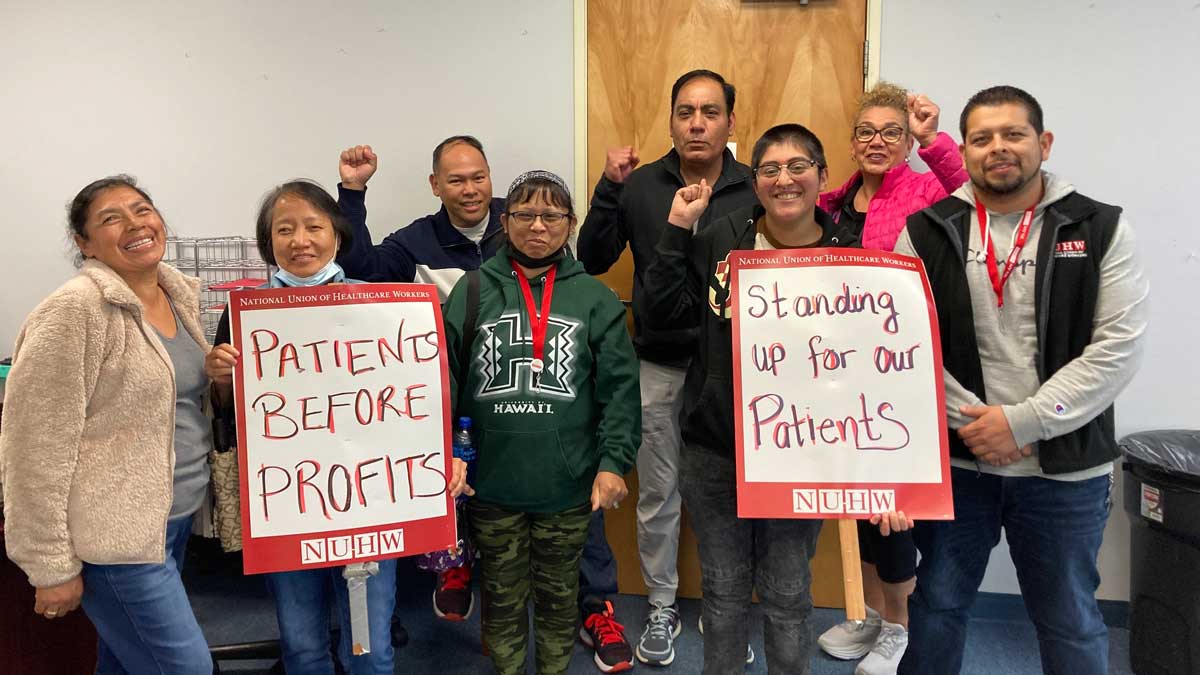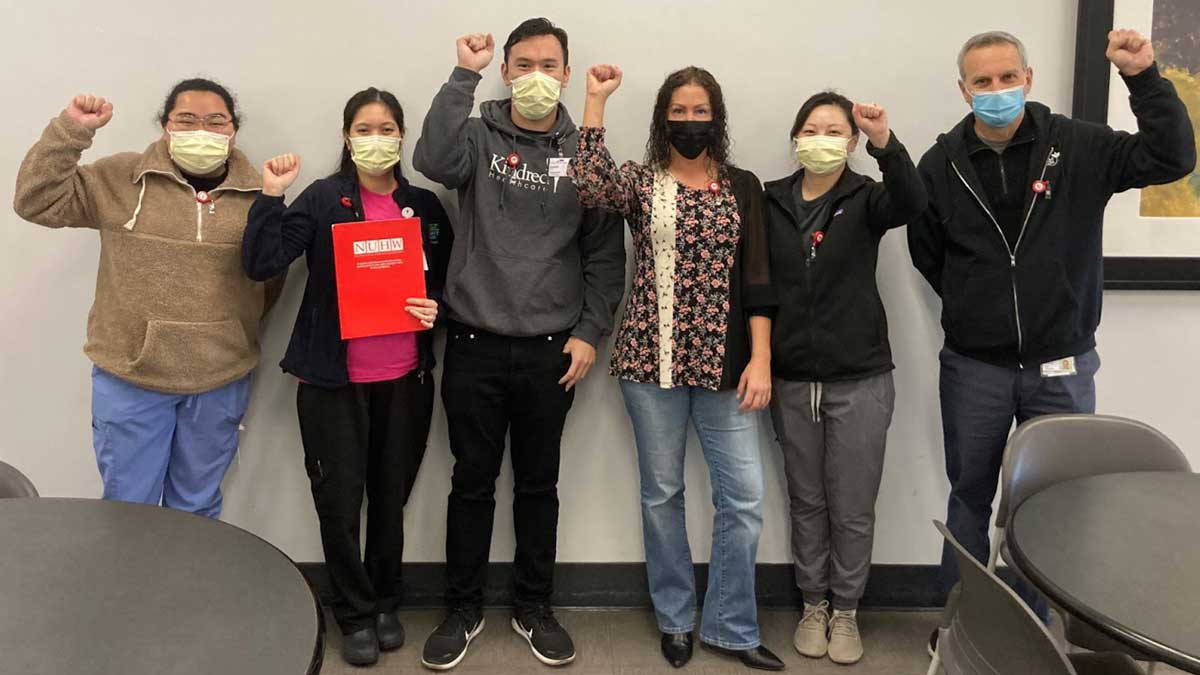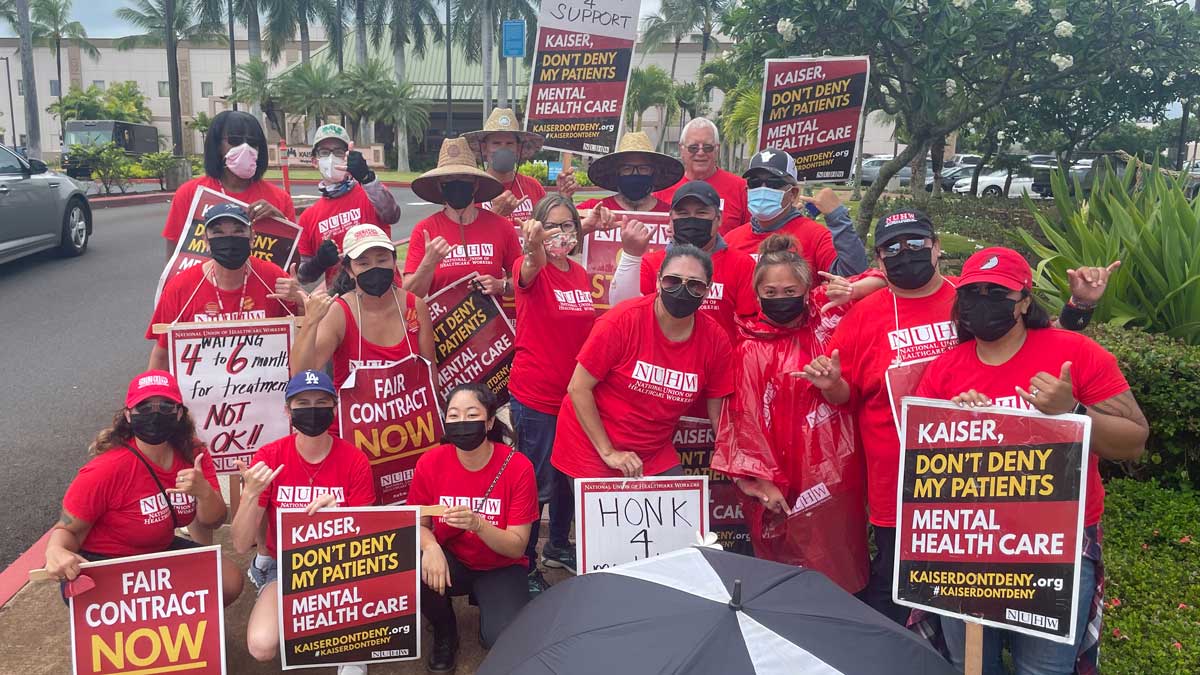
Less than four years after Kaiser mental health therapists in Hawai’i staged a 172-day strike, Kaiser members continue to endure excessive waits for treatment that violate clinical standards and exceed wait times for Kaiser members in California. In an NUHW member survey released earlier this month, 84 percent of clinicians said there wasn’t enough staff in their departments to provide appropriate and timely care for patients.
At the same time, 70 percent of adult and child therapists reported that every day they must schedule their patients’ return appointments further into the future than is clinically appropriate. A total of 62 percent of clinicians reported considering leaving Kaiser over the previous six months due to working conditions.
“At our clinics, patients who are struggling with depression or the loss of a loved one still have to wait more than a month for their first appointment and another month for their next appointment,“ said Kathleen Rubio, a therapist for Kaiser on Oahu. “We do everything we can to support our patients, including staying late and working extra hours, but the system keeps failing them, and Kaiser has no interest in making things better.”
The Honolulu Star-Advertiser, Hawai’i Public Radio, and Hawai’i Free Press reported on the survey.
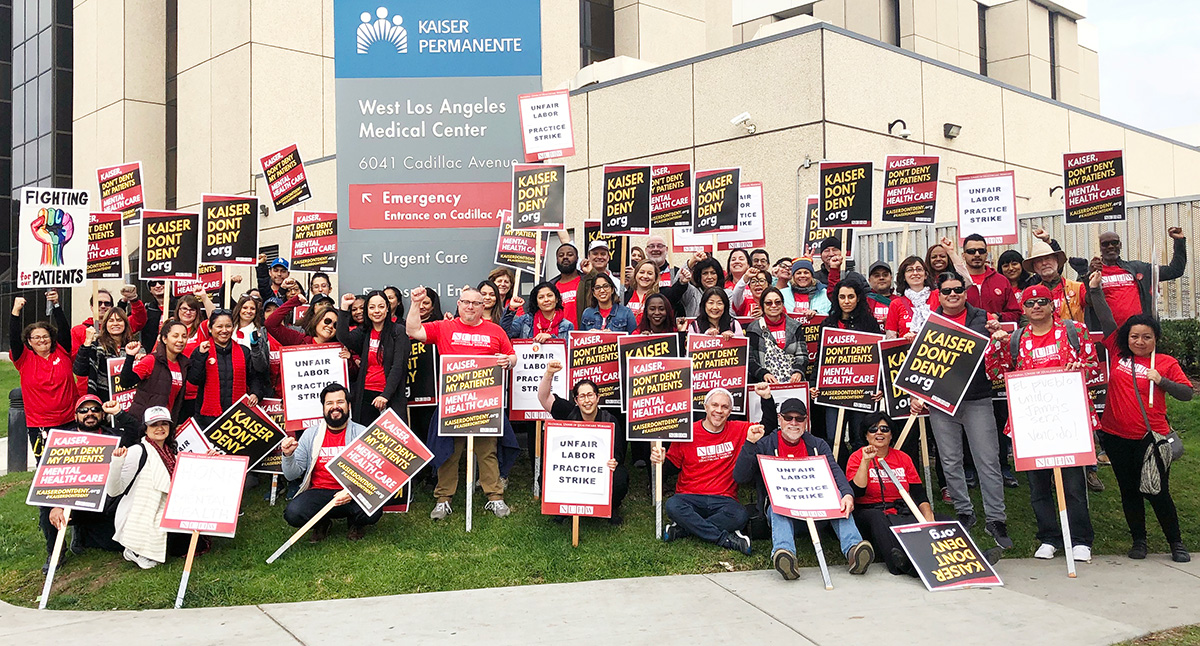
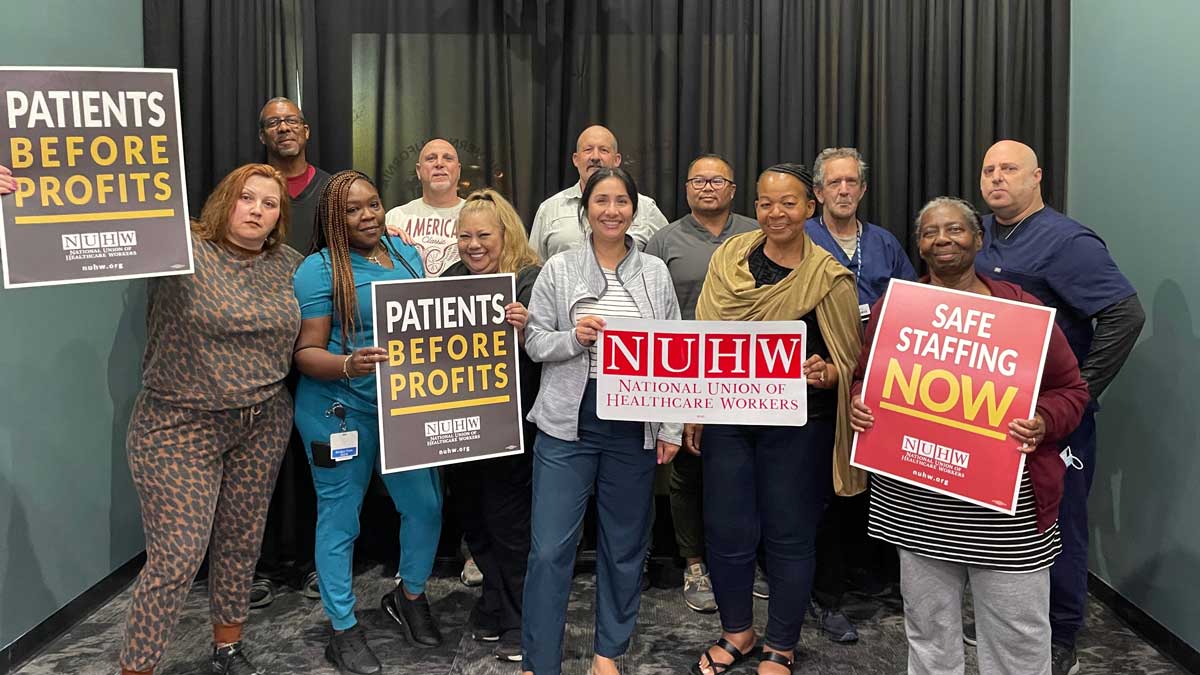
NUHW, which represents Kaiser mental health clinicians in both Hawai’i and California, administered the survey earlier this year to Kaiser’s approximately 50 social workers, psychologists, mental health therapists, and addiction medicine counselors in Hawai’i, who are in the midst of contract negotiations. Since bargaining began in November of 2025, Kaiser has insisted on lower raises than it gave other workers in Hawai’i, while slow-walking negotiations. After bargaining on May 4, Kaiser didn’t return to the table until June 15.
The survey found that Kaiser therapists are still struggling to provide timely, appropriate care to the HMO’s more than 275,000 members in Hawai’i. Eighty-five percent of therapists treating adults and children reported that their next available return appointment was at least 21 business days (approximately 30 calendar days) away, and 75 percent reported that their next available initial appointment for a new patient was at least 21 business days away. Clinical standards typically require therapy sessions at least every two weeks.
Because Kaiser severely understaffs its mental health clinics, many patients in Hawai’i are referred outside Kaiser for behavioral health treatment. These referrals deny patients the benefits of Kaiser’s integrated care model, in which therapists can easily communicate with other Kaiser providers, leaving patients often struggling to get the services they need. In the survey, 57 percent of respondents reported being aware of patients who had been referred to an outside provider but were not receiving timely access to treatment.
Despite its longstanding mental health understaffing crisis, Kaiser was seeking to freeze wages and eliminate pensions when clinicians went on strike in August 2022. The strike, which at the time was the longest work stoppage by behavioral health workers in U.S. history, succeeded in winning pay raises and preserving pensions, but Kaiser still staffs just about one mental health clinician for every 5,500 Kaiser members in Hawaii. By contrast, Kaiser staffs one mental health clinician for every 1,916 Kaiser members in Northern California. Of therapists polled in Northern California last year, 33 percent reported that their next available return appointment was at least 21 business days away, compared to 85 percent in Hawaii.
“Kaiser has a double standard that leaves patients in Hawai’i waiting much longer for behavioral health care than elsewhere in the Kaiser system,” said Rachel Kaya, a psychologist for Kaiser on Maui. We are determined to make Kaiser end that double standard because making patients wait weeks or months for treatment doesn’t help them get better, it only prolongs their struggles.”
SB 903
Meanwhile, in California, NUHW is part of a coalition advocating for SB 903, a bill that would regulate the use of artificial intelligence in mental health settings.
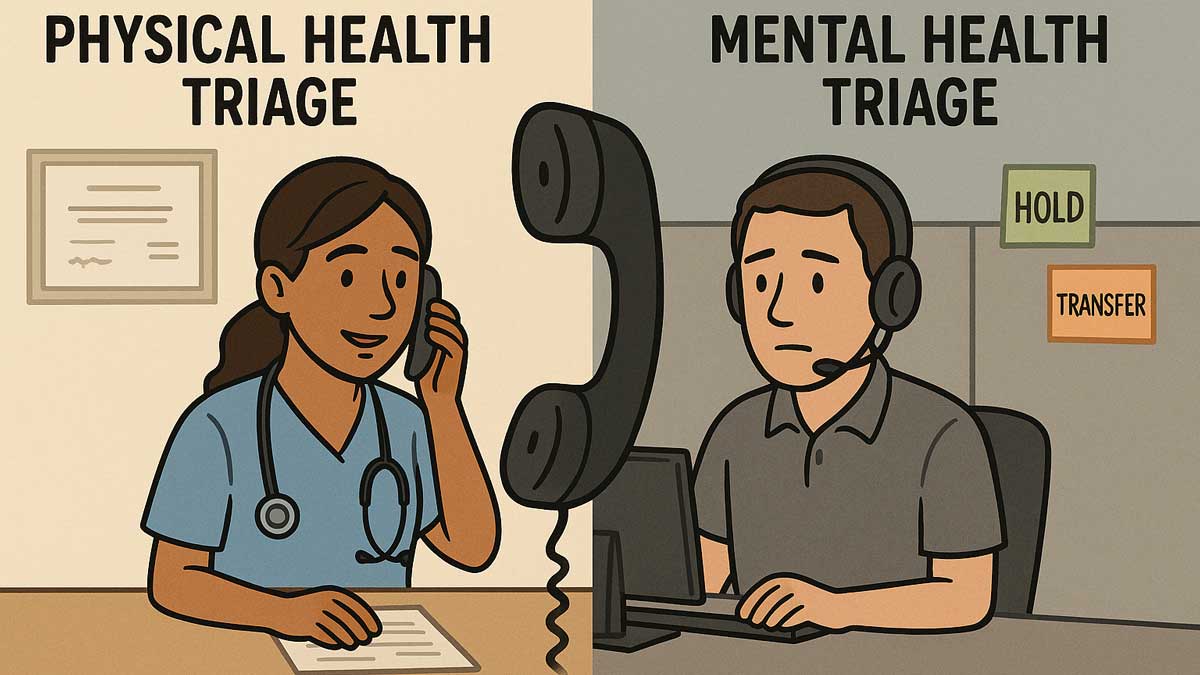
As a co-sponsor of the bill, NUHW introduced language that would prohibit health plans from using A.I. instead of licensed clinicians to screen patients seeking care — something Kaiser Permanente has already started doing in the state.
The bill sailed through the Senate last month, and it cleared the Assembly’s Privacy and Consumer Protection Committee without any opposition in June. It will face another committee hearing in July as it advances in the Assembly.