The San Francisco Board of Supervisors appears ready to formally oppose Kaiser’s “terrible three” contract proposal after conducting a July 21 special hearing on contract negotiations.
Supervisors criticized Kaiser for refusing to participate in the hearing as mental health clinicians and leaders of behavioral health advocacy organizations laid out the dangers posed by Kaiser’s contract proposals — not only for Kaiser patients and providers, but for behavioral health care in California.
“This is not a very good plan at all for quality care,” Linda Michaels, a psychologist and cofounder of the Psychotherapy Action Network, told board members. “And I think, while a lot of these policies may save Kaiser money in the short term… they will actually create new and higher costs in the long term. In terms of replacing therapists. It’s a very costly long-term gambit that Kaiser is playing here, and it’s not good for patients, for therapists, or really for Kaiser itself.”
Several news outlets covered the hearing, including KTVU-2, KPIX-5, KPFA, KQED, KALW, Behavioral Health Business, SFist, CalMatters, and the San Francisco Standard, which reported on a complaint NUHW filed against Kaiser for using digital algorithms — instead of licensed clinicians — to triage patients.
Check out the video on YouTube to watch the full hearing. The video description includes links to key moments, including remarks by NUHW members and allies.
The hearing was convened more than a year after negotiations began between Kaiser and its 2,400 NUHW-represented mental health clinicians, including psychologists, social workers, and marriage and family therapists.
Mediation is scheduled to start August 11 in an attempt to break a deadlock caused by Kaiser’s insistence on three contract demands, which center around:
- Artificial intelligence: Kaiser wants to be able to replace therapists with A.I. and exert total control over a technology that stands to dramatically shift how therapy is provided. Kaiser is already using A.I. to record therapy sessions and algorithms to screen patients seeking care, and is now unwilling to agree to language that it accepted in its Southern California contract, stating that the intention of new technologies like A.I. “is not to replace” clinicians.
- Layoffs and outsourcing: Kaiser is proposing language that would allow it to lay off clinicians in order to refer far more patients to third-party contractors for behavioral health services, divorcing behavioral health from the rest of Kaiser’s integrated model of care.
- Disempowering clinicians: Kaiser is demanding that the contract state that it has the “sole discretion” to “determine or modify the behavioral health operating and clinical models of care,” thereby ending any requirement that it work collaboratively with therapists to improve care.
NUHW members Tianna Lui, Molly Parsons, and Ilana Marcucci-Morris addressed those three issues with the board and answered questions.
Parsons noted that Kaiser’s outsourcing proposal flies in the face of its marketing pitch to patients that their doctors, pharmacists, and therapists are all under one roof with Kaiser and able to work together to support patients.
“In fairness, Kaiser’s integrated health care system is an excellent model,” Parsons told the supervisors. “That’s why I can’t understand why Kaiser wants to segregate behavioral health from it and treat it as a second-class service.”
Parsons added, “Kaiser clearly wants to radically downsize its behavioral health workforce and rely more on apps and external vendors. We want Kaiser to provide good care and good jobs — just like their ads say.”
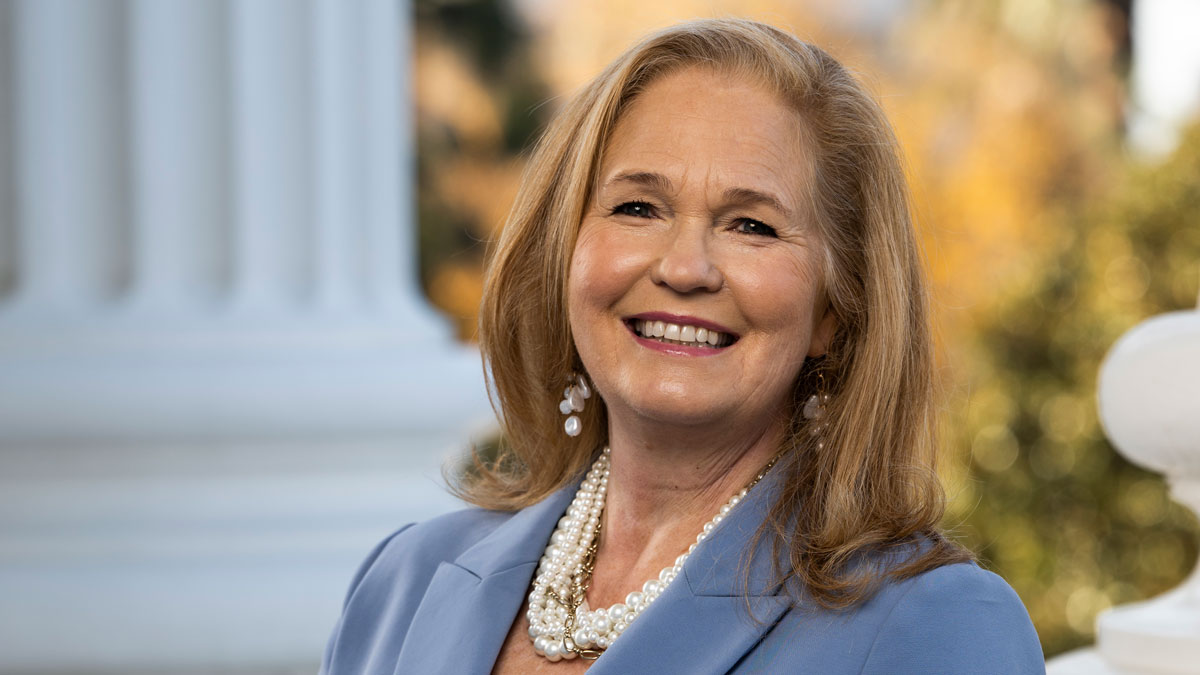
Supervisor Chyanne Chen, who called the hearing, said she was “shocked” and “very disappointed” that Kaiser refused to participate in the hearing. “Mental wellness is incredibly important and how we are taking care of our patients and workers, especially with emerging technology, is more important now than ever,” she said.
Chen has introduced a resolution that will go to a vote later this summer, putting the board on the record opposing Kaiser’s “terrible three” contract demands.
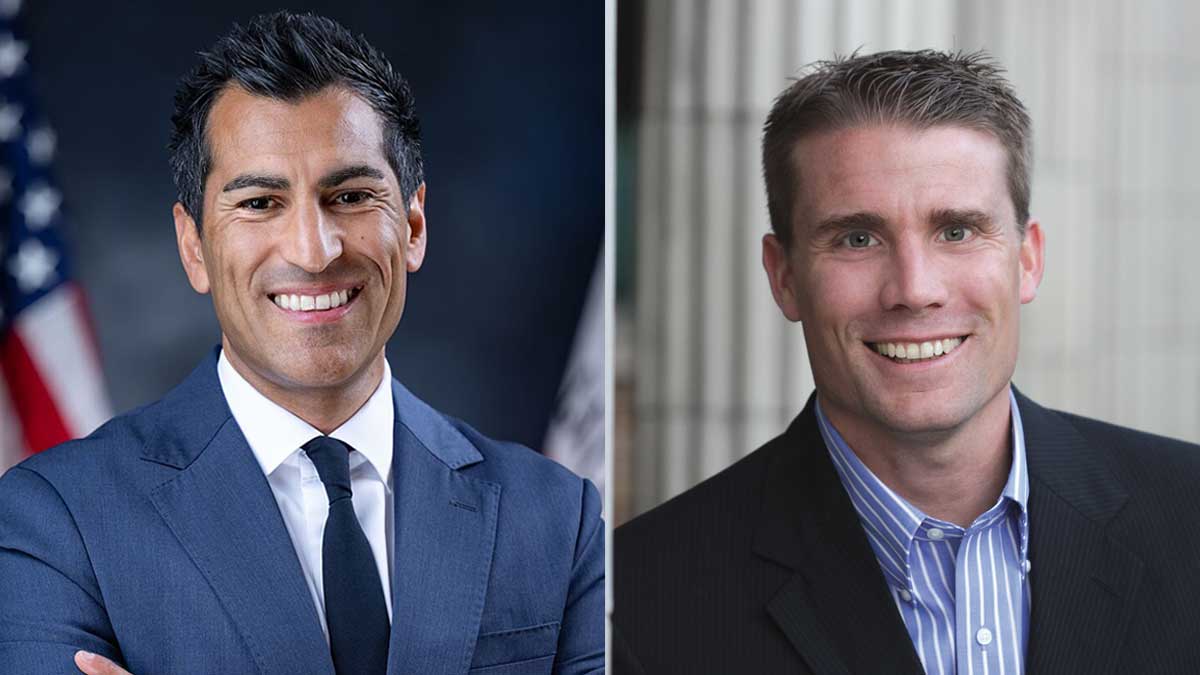
Board President Rafael Mandelman said that Kaiser’s refusal to participate in the hearing suggested “that the picture being painted by the workers is pretty accurate of a large business that is interested in squeezing efficiencies out of an under-resourced part of its operation.”
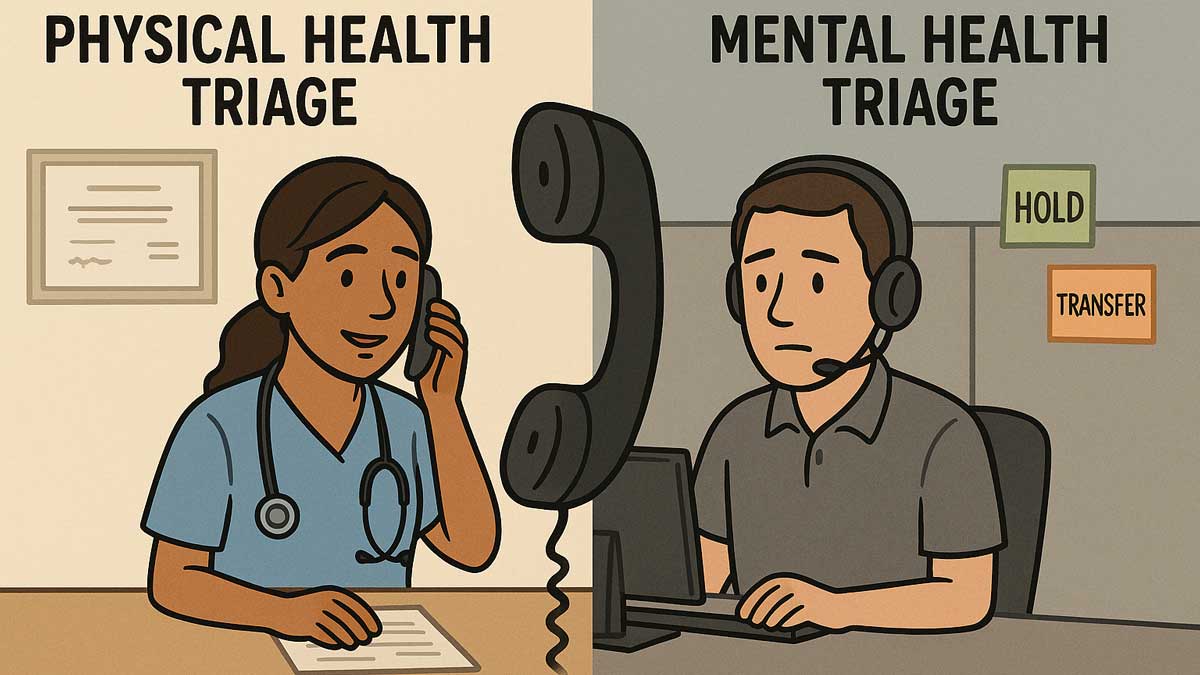
The hearing came one day after NUHW filed a complaint against Kaiser with state and federal regulators. The complaint documents how Kaiser is using digital algorithms to make immediate determinations for patients seeking mental health services, including deciding whether they need an urgent appointment or should receive therapy at all. This violates state law governing how health plans must triage patients and contradicts how Kaiser says its e-visits are supposed to work.
Tianna Lui, a therapist for Kaiser in San Francisco, told supervisors that the non-human-based triage makes it harder for patients to get the right care for themselves.
“I’ve had LGBTQ+ patients tell me they’ve waited forever to find a clinician with my background,” Lui said. “When patients are essentially told, ‘Here is your option, take it or leave it,’ that’s not ethical, and that’s not good clinical care. Not at all.”