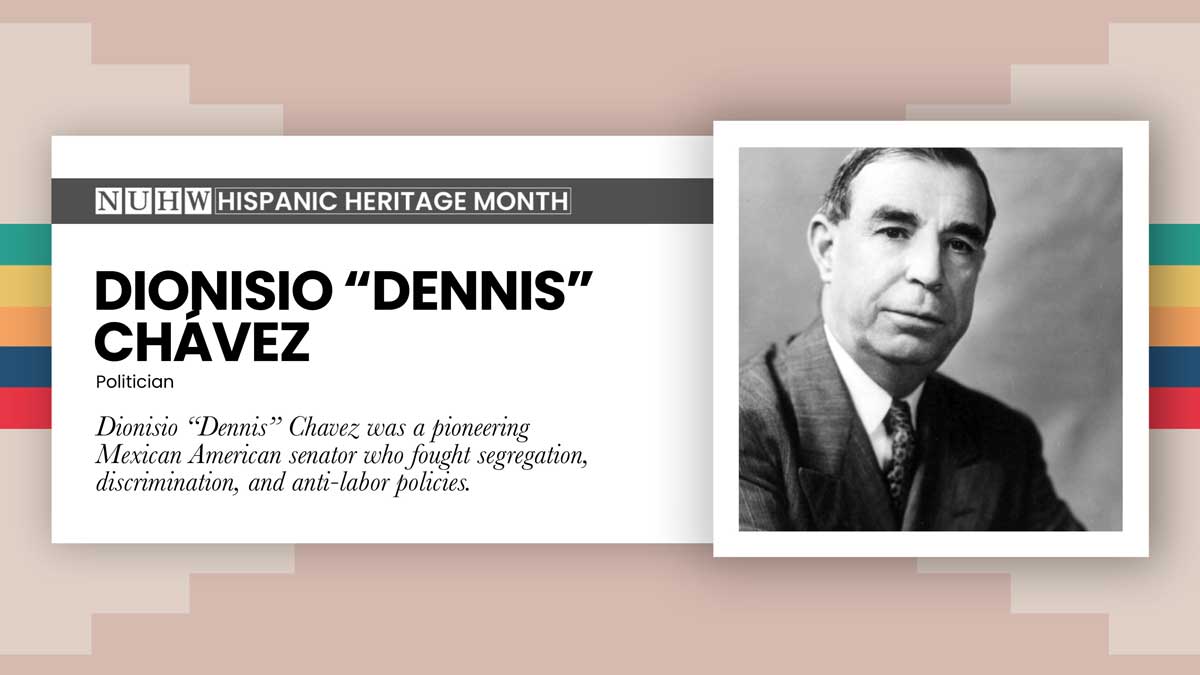
Dionisio “Dennis” Chávez was a trailblazing statesman and advocate for civil rights, labor protections, and public investment whose career helped reshape American politics in the twentieth century. Born in 1888 in Los Chaves, New Mexico Territory, to a Mexican American family, Chávez grew up working-class and left school as a teenager to help support his family. Through determination and perseverance, he returned to his studies, earned an engineering degree, and later attended Georgetown University Law School while working as a congressional clerk — an experience that set him on the path to public service.
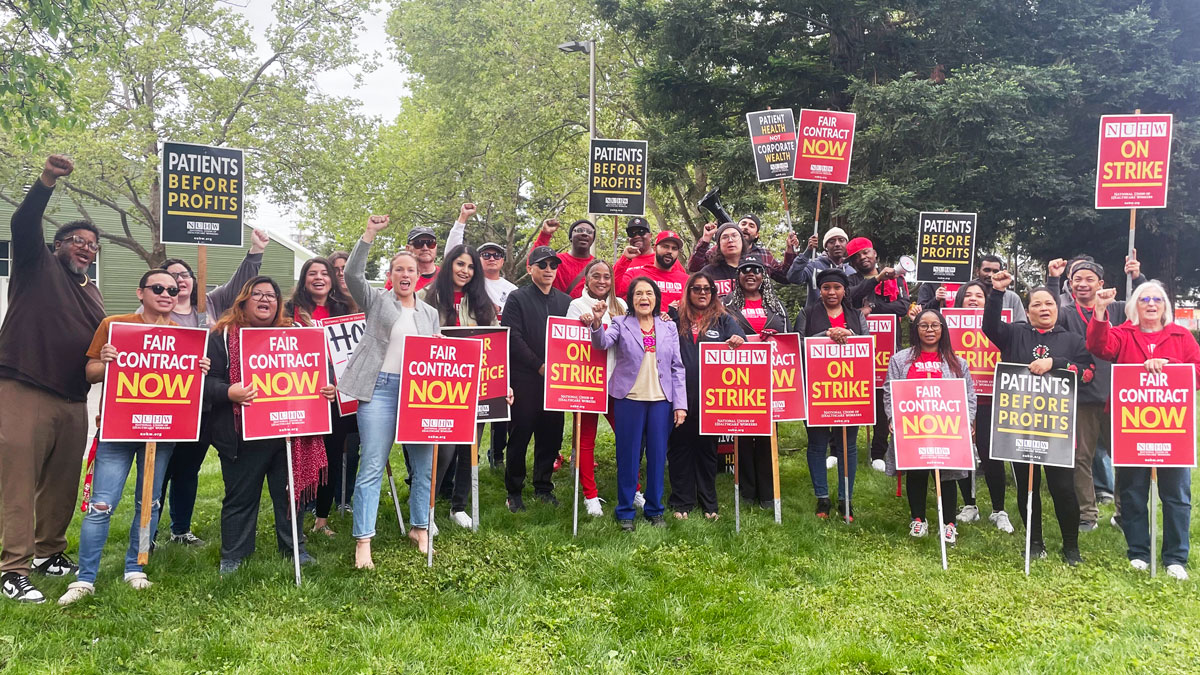
Chávez was elected to the U.S. House of Representatives in 1930 and, in 1935, became the first U.S.-born Hispanic American elected to the United States Senate. Over more than two decades in the Senate, he championed New Deal and postwar reforms that expanded infrastructure, education, healthcare access, and rural development — investments that strengthened communities across the Southwest and beyond. He was also a strong ally of working people, supporting labor rights, fair wages, and protections for vulnerable workers.
Years before the modern civil rights movement gained national momentum, Chávez spoke out forcefully against discrimination based on race, ethnicity, or religion. In 1944, he introduced one of the earliest federal civil rights bills, condemning segregation and unequal treatment and arguing that democracy must protect the dignity and equality of all people. Although the bill did not pass, it helped lay essential groundwork for later civil rights legislation.